

UK regulator suggests allowing developers to guide users away from payment systems of Apple and Google.
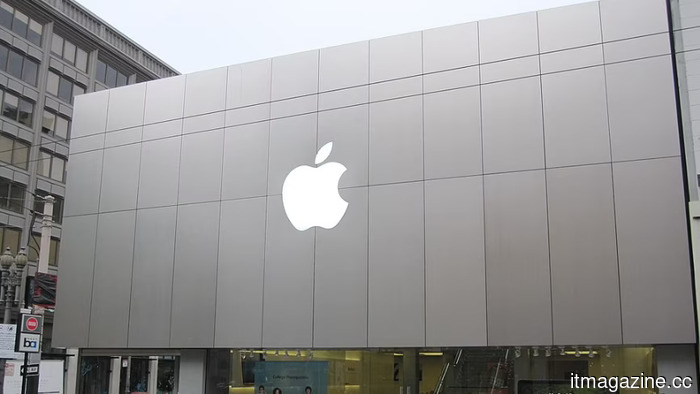
Britain's competition regulator has concluded that the lowest price for a digital subscription shouldn't be the one option that an app can't mention. On Tuesday, the Competition and Markets Authority (CMA) suggested permitting UK app developers to guide users to payment methods outside of Apple and Google's marketplaces, a change focused on the commissions that have made these stores highly profitable.
The proposed changes would lift current prohibitions preventing developers from directing users to external payment checkouts, a practice that Apple outright bans and Google places restrictions on.
At first glance, the mechanism seems modest, but it has significant implications: if developers can include a link in their apps indicating that payments are cheaper online, the 30% fee that underpins the mobile economy could begin to appear optional.
The CMA is not advocating for the elimination of fees but rather regulating them. Any fees imposed by the platforms for facilitating such guidance would need to be, according to the regulator, fair, reasonable, and lower than existing app store commissions, with the savings being passed on to consumers or reinvested in innovation.
The wording is important, as the history of these disputes often involves platforms substituting one banned fee for another of similar magnitude under a different name.
Additionally, the CMA is considering a requirement that extends beyond payments; it may compel Apple to grant access to the near-field communication chip used for contactless payments. This would enable developers to create tap-to-pay functionalities directly within iOS apps instead of going through Apple Pay.
This move touches on a competitive aspect that regulators in Brussels have also pursued, often eliciting a stronger reaction from Apple than adjustments to fees do.
The two companies approach the proposal from distinct angles. Google has stated that it has already implemented the changes described by the CMA, referencing new Play Store terms introduced earlier this month that allow developers to direct users off-platform to finalize transactions under certain conditions, in addition to adjustments to its fee structure.
Apple has not responded immediately to a request for comments, which aligns with the company's history of resisting steering regulations in various jurisdictions that have attempted to implement them.
The disparity between the companies is noteworthy. Google's Android has always allowed sideloading and some payment flexibility that Apple's iOS lacks, making the regulator's proposals impact Apple more significantly, as its business model is more reliant on the closed system the CMA is seeking to disrupt.
This action falls within a classification the CMA assigned to both companies earlier this year under the UK’s new digital markets framework, which permits the regulator to impose conduct requirements on firms with strategic market status instead of pursuing litigation for each infraction after it occurs.
This approach aligns more closely with a European perspective than Britain's traditional stance and coincides with the EU’s Digital Markets Act, which has already compelled Apple to accommodate competing app stores on iPhones throughout the bloc.
Developers have learned to interpret these victories cautiously. When the Netherlands mandated that Apple allow alternative payment methods for dating applications, the company's response included a fee structure that barely altered the economic landscape. Thus, the CMA's emphasis on ensuring any steering fees are lower than current commissions is perceived less as standard language and more as a lesson learned.
The EU has taken an even stronger stance, accusing Apple of violating antitrust laws regarding these anti-steering regulations.
The CMA's proposals are currently open for consultation, allowing the platforms to voice their opinions before anything is finalized. It is already evident, however, what direction is being taken. Regulators in London, Brussels, Tokyo, and Seoul are arriving at the same conclusion regarding the same toll gate, with the question shifting from whether developers can direct users to a more affordable option, to how much the platforms will be permitted to charge for allowing access to it.
Other articles
 The debate over Taiwan's drone defense intensifies as the opposition advocates for an alternative proposal.
Taiwan's opposition party, the KMT, is suggesting a budget of NT$240 billion for unmanned systems just days after blocking the government's proposal, highlighting a dispute that holds significant consequences for the island's defense.
The debate over Taiwan's drone defense intensifies as the opposition advocates for an alternative proposal.
Taiwan's opposition party, the KMT, is suggesting a budget of NT$240 billion for unmanned systems just days after blocking the government's proposal, highlighting a dispute that holds significant consequences for the island's defense.
 Digital Realty is set to acquire Blackstone’s interest in three data centers located in Virginia.
Digital Realty is acquiring Blackstone’s majority stake in three data centers located in Northern Virginia, with the deal valuing the assets at $7.8 billion, which includes a payment of $3.5 billion in cash and stock.
Digital Realty is set to acquire Blackstone’s interest in three data centers located in Virginia.
Digital Realty is acquiring Blackstone’s majority stake in three data centers located in Northern Virginia, with the deal valuing the assets at $7.8 billion, which includes a payment of $3.5 billion in cash and stock.
 Nebex secures $30 million from GV to establish a space exchange.
Google's GV has spearheaded a $30M seed investment in Nebex, a startup focused on creating market infrastructure to link space companies, governments, and investors across different countries.
Nebex secures $30 million from GV to establish a space exchange.
Google's GV has spearheaded a $30M seed investment in Nebex, a startup focused on creating market infrastructure to link space companies, governments, and investors across different countries.
 Apple announces that it will be releasing security updates sooner due to the accelerated pace of hacking driven by AI advancements.
Apple is separating security updates from its yearly iOS release schedule and deploying them earlier, citing that AI can shorten the time frame that attackers require.
Apple announces that it will be releasing security updates sooner due to the accelerated pace of hacking driven by AI advancements.
Apple is separating security updates from its yearly iOS release schedule and deploying them earlier, citing that AI can shorten the time frame that attackers require.
 Australia takes legal action against Amazon regarding Prime Video advertisements, alleging unfair contract conditions.
The ACCC claims that Amazon employed unjust Prime contract conditions to implement advertisements on Prime Video for more than a million yearly subscribers without providing refunds.
Australia takes legal action against Amazon regarding Prime Video advertisements, alleging unfair contract conditions.
The ACCC claims that Amazon employed unjust Prime contract conditions to implement advertisements on Prime Video for more than a million yearly subscribers without providing refunds.
 China’s Nexchip aims to raise as much as $890 million through a share sale in Hong Kong.
China's third-largest foundry is seeking to raise as much as $890 million in Hong Kong to finance a $5.1 billion facility in Hefei and advance towards 22nm technology, as Chinese chip manufacturers return to the city.
China’s Nexchip aims to raise as much as $890 million through a share sale in Hong Kong.
China's third-largest foundry is seeking to raise as much as $890 million in Hong Kong to finance a $5.1 billion facility in Hefei and advance towards 22nm technology, as Chinese chip manufacturers return to the city.
UK regulator suggests allowing developers to guide users away from payment systems of Apple and Google.
The CMA aims to allow UK app developers to direct users to less expensive payment alternatives outside of Apple and Google's platforms, with steering fees limited to levels lower than the current commissions.