
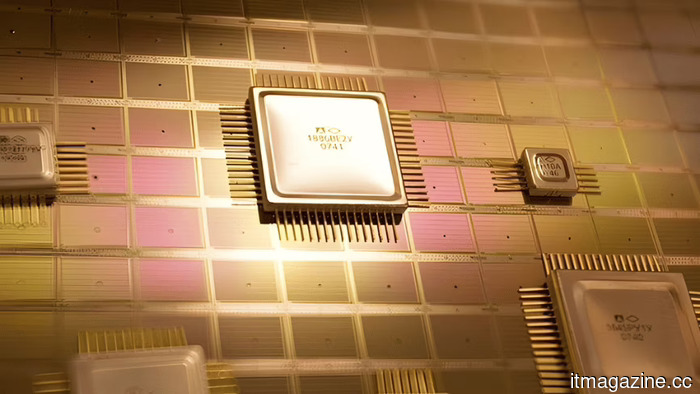
China’s Nexchip aims to raise as much as $890 million through a share sale in Hong Kong.
Nexchip Semiconductor is the third-largest pure-play foundry in China, a fact that, until recently, would not have facilitated a listing in Hong Kong. However, it does now. The state-supported chipmaker based in Hefei aims to raise up to HK$6.98 billion, approximately $890 million, through a share sale, contributing to a sudden influx of Chinese semiconductor companies entering a market that has been relatively dormant for years.
The details are established. Nexchip is offering 216.2 million shares at a maximum price of HK$32.30 each, with trading anticipated to commence on July 10. This listing is dual, combining Nexchip’s existing presence in Shanghai with a Hong Kong offering, which opens the company to international capital that is not easily accessible domestically, which is a significant reason for the Hong Kong listing.
In China's foundry landscape, Nexchip ranks just behind SMIC and Hua Hong Semiconductor, and its origins provide considerable insight into its character. Established in 2015 as a joint venture between Hefei's government-owned investment arm and Taiwan's Powerchip Technology, Nexchip embodies China's industrial policy, designed to fulfill state ambitions and domestic needs rather than pursuing cutting-edge chip technology.
The proceeds will primarily be used for capacity expansion. Nexchip is constructing a Phase IV facility in Hefei’s Xinzhan High-Tech Zone, an investment of 35.5 billion yuan, around $5.1 billion, aimed at producing 55,000 wafers monthly at the 28nm and 40nm nodes.
Installation of equipment is scheduled for the fourth quarter of this year, with full production expected by the second quarter of 2028, a timeline reflecting both the patience of state financing and engineering considerations.
These are mature nodes, as opposed to the advanced geometries that typically make headlines, and this choice is intentional. Mature-node chips power vehicles, appliances, industrial machinery, and the essential circuitry present in most electronics. This segment is where U.S. export controls impact the least and where Chinese self-sufficiency is most effective.
Nexchip intends to allocate more than half of the funds to developing its 22nm platform, representing a careful advancement up the technological ladder rather than a significant leap. This strategy aligns with that of its larger domestic competitors, who have focused investments on capacities that Beijing can finance and equip without encountering the most stringent U.S. restrictions, aiming to grow where political circumstances permit instead of pursuing nodes where they face barriers.
A portion of the investment is designated for production related to artificial intelligence applications, a term now essential in any Chinese chip prospectus, underscoring the demand propelling the entire sector.
China’s AI expansion has emerged as a significant contributor to its exports, with semiconductors and data center components playing a large role, as evidenced by the country earning around $500 million an hour from exports at its peak.
The listing also represents a broader market narrative beyond that of the individual company. Following a lean period, Chinese AI and chip firms are once again listing in Hong Kong, motivated by revived investor interest and government initiatives to direct capital into strategic sectors. The recent $752 million Hong Kong IPO of self-driving company Momenta demonstrates this trend, and the pipeline of mainland tech companies headed to the city has noticeably increased.
Nexchip's filing openly recognizes the inherent risks alongside the growth potential, such as the price competition that characterizes mature-node foundries and the geopolitical risks associated with being a state-backed Chinese chipmaker closely monitored by Washington. Despite these challenges, demand remains strong.
The share pricing will occur soon, with trading set to begin on July 10. Regardless of the outcome, the listing will serve as another indicator in an ongoing discussion within the market: how much capital Hong Kong can funnel into China’s chip aspirations, and at what pace.
Other articles
 The discussion on drone defense in Taiwan intensifies as the opposition advocates for an alternative proposal.
Taiwan's opposition party, the KMT, is suggesting a budget of NT$240 billion for unmanned systems just days after delaying the government's proposal, a move that has significant consequences for the island's defense.
The discussion on drone defense in Taiwan intensifies as the opposition advocates for an alternative proposal.
Taiwan's opposition party, the KMT, is suggesting a budget of NT$240 billion for unmanned systems just days after delaying the government's proposal, a move that has significant consequences for the island's defense.
 Digital Realty is set to acquire Blackstone’s interest in three data centers located in Virginia.
Digital Realty is acquiring Blackstone’s majority stake in three data centers located in Northern Virginia, with the deal valuing the assets at $7.8 billion, which includes a payment of $3.5 billion in cash and stock.
Digital Realty is set to acquire Blackstone’s interest in three data centers located in Virginia.
Digital Realty is acquiring Blackstone’s majority stake in three data centers located in Northern Virginia, with the deal valuing the assets at $7.8 billion, which includes a payment of $3.5 billion in cash and stock.
 Andreessen: Is it true that Doctor ChatGPT outperforms 99% of doctors?
Marc Andreessen claims that Doctor ChatGPT outperforms 99% of physicians. However, he did not provide any data or profit figures from health-AI, and studies indicate that the bot overlooked 50% of emergencies.
Andreessen: Is it true that Doctor ChatGPT outperforms 99% of doctors?
Marc Andreessen claims that Doctor ChatGPT outperforms 99% of physicians. However, he did not provide any data or profit figures from health-AI, and studies indicate that the bot overlooked 50% of emergencies.
 Apple announces that it will be releasing security updates sooner due to the accelerated pace of hacking driven by AI advancements.
Apple is separating security updates from its yearly iOS release schedule and deploying them earlier, citing that AI can shorten the time frame that attackers require.
Apple announces that it will be releasing security updates sooner due to the accelerated pace of hacking driven by AI advancements.
Apple is separating security updates from its yearly iOS release schedule and deploying them earlier, citing that AI can shorten the time frame that attackers require.
 Australia takes legal action against Amazon regarding Prime Video advertisements, alleging unjust contract conditions.
The ACCC claims that Amazon utilized unjust contract terms for Prime to implement advertisements in Prime Video for more than a million annual subscribers without providing refunds.
Australia takes legal action against Amazon regarding Prime Video advertisements, alleging unjust contract conditions.
The ACCC claims that Amazon utilized unjust contract terms for Prime to implement advertisements in Prime Video for more than a million annual subscribers without providing refunds.
 The debate over Taiwan's drone defense intensifies as the opposition advocates for an alternative proposal.
Taiwan's opposition party, the KMT, is suggesting a budget of NT$240 billion for unmanned systems just days after blocking the government's proposal, highlighting a dispute that holds significant consequences for the island's defense.
The debate over Taiwan's drone defense intensifies as the opposition advocates for an alternative proposal.
Taiwan's opposition party, the KMT, is suggesting a budget of NT$240 billion for unmanned systems just days after blocking the government's proposal, highlighting a dispute that holds significant consequences for the island's defense.
China’s Nexchip aims to raise as much as $890 million through a share sale in Hong Kong.
China's third-largest foundry is seeking to raise up to $890 million in Hong Kong to finance a $5.1 billion plant in Hefei and advance towards 22nm technology, as Chinese chip manufacturers return to the city.