
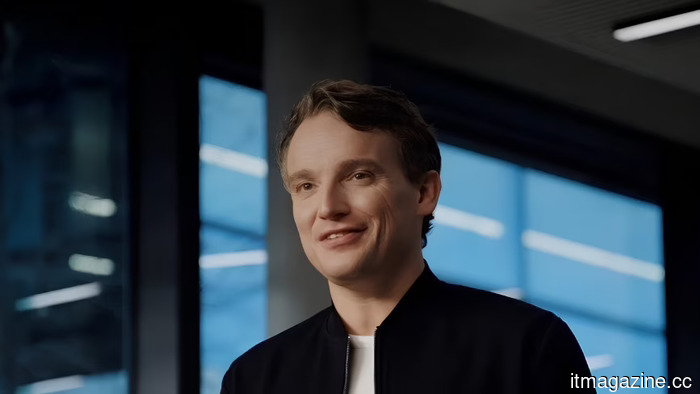
SAP has appointed its CEO and COO to oversee AI products in a recent organizational reshuffle.
Europe's largest software firm is reallocating its product and engineering responsibilities in a second major reorganisation this year, with a focus on AI. When a company reorganises its leadership once a year, it can be seen as routine management. However, doing so twice within the same year, particularly with the same emphasis on a specific theme, suggests a strategy under strain.
SAP is redistributing the oversight of its product and engineering functions, assigning more responsibility to its top executives during this second major restructuring of the year as it strives to keep up with competitors quickly advancing in the field of artificial intelligence. The recent changes aim to centralise product responsibilities at the highest levels, bringing AI oversight closer to CEO Christian Klein and the company’s operational leadership, rather than keeping it dispersed among lower tiers.
According to SAP’s communication surrounding these changes, the goal is to reduce the distance between those establishing the AI strategy and the teams executing it, based on the belief that this gap hinders momentum. This reorganisation follows a restructure in March that reflected a similar direction; during that earlier change, Klein assigned oversight of the sales department to Thomas Saueressig, who became chief customer officer in early April, enabling Klein to concentrate on AI.
The adjustments made in June extend this logic from sales to both product and engineering, which are the sections of the company where AI features are actually developed and delivered. Klein has clearly articulated the urgency of the situation, stating, “The AI evolution is moving rapidly, and we need to keep pace,” positioning the task as a requirement to “transform SAP end to end, going all in on AI.” For a company that supports the back offices of a significant portion of the corporate world, “end to end” represents a substantial promise, suggesting transformations that affect everything from the fundamental platform to customer-facing products.
The drive behind this urgency is partly influenced by investors. SAP has experienced scrutiny regarding whether its AI strategy is keeping up with a market that rewards rapid action while penalising delays, and frequent reorganisations signal to shareholders that management is actively responding to challenges rather than being passive.
However, two restructures within four months may suggest less decisive action and more an indication that the company is still seeking the optimal structure. SAP's position in the AI landscape is unique; it is not a model developer competing against labs, but rather the leading provider of enterprise resource planning software, which manages finance, supply chains, and operations for numerous large organisations.
SAP's opportunity lies in integrating automation into these workflows, while its challenge is that more agile competitors or model developers could embed intelligence into enterprise processes without relying on SAP. This dynamic is unfolding throughout the enterprise-software industry, where competitors are racing to incorporate AI agents into corporate systems, and the governance and security of these agents have become critical areas of competition.
Even companies close to SAP in the cloud space are reorganising in response to similar pressures, with Oracle cutting jobs as it pivots towards AI and data centres. These reorganisations reflect broader industry trends.
SAP has not disclosed how the new responsibilities will translate into specific products or timelines, and the tangible impact of elevating oversight will only become apparent in what the company delivers and the speed of those deliveries. What is clear from the reorganisation is its priority. Klein has focused his attention, along with a restructured organisational chart, on the belief that SAP’s future hinges on accelerating the integration of AI into its products faster than competitors can respond.
Other articles
 Following Harvey, the next $10B success for vertical AI could potentially be in the agriculture sector.
Harvey demonstrated that vertical AI is effective in the legal sector, valued at $11 billion. The $500 billion data gap in agriculture, coupled with a $300 million signal from the USDA and GrowersTech's agronomic ontology, indicates that the next leading category is likely to emerge from the agricultural field.
Following Harvey, the next $10B success for vertical AI could potentially be in the agriculture sector.
Harvey demonstrated that vertical AI is effective in the legal sector, valued at $11 billion. The $500 billion data gap in agriculture, coupled with a $300 million signal from the USDA and GrowersTech's agronomic ontology, indicates that the next leading category is likely to emerge from the agricultural field.
 Call center stocks decline as investors express concerns that AI could render them uninvestable.
Concentrix lowered its guidance for 2026, leading to a significant drop in its shares as well as those of Teleperformance, reinforcing the belief that AI is making the call-center industry unattractive for investment.
Call center stocks decline as investors express concerns that AI could render them uninvestable.
Concentrix lowered its guidance for 2026, leading to a significant drop in its shares as well as those of Teleperformance, reinforcing the belief that AI is making the call-center industry unattractive for investment.
 Meituan from China announced that its latest AI model was developed using domestic chips.
China reports that Meituan's LongCat-2.0, a model with 1.6 trillion parameters, is the first of its scale to be trained end-to-end on a domestic cluster of 50,000 chips, amidst the US export restrictions.
Meituan from China announced that its latest AI model was developed using domestic chips.
China reports that Meituan's LongCat-2.0, a model with 1.6 trillion parameters, is the first of its scale to be trained end-to-end on a domestic cluster of 50,000 chips, amidst the US export restrictions.
 Meta imposes restrictions on Claude Code and Codex due to concerns about copying.
Meta has limited the ways its engineers can utilize Anthropic's Claude Code and OpenAI's Codex, apprehensive that it might unintentionally incorporate elements of a competitor's model into its own.
Meta imposes restrictions on Claude Code and Codex due to concerns about copying.
Meta has limited the ways its engineers can utilize Anthropic's Claude Code and OpenAI's Codex, apprehensive that it might unintentionally incorporate elements of a competitor's model into its own.
 The discussion on drone defense in Taiwan intensifies as the opposition advocates for an alternative proposal.
Taiwan's opposition party, the KMT, is suggesting a budget of NT$240 billion for unmanned systems just days after delaying the government's proposal, a move that has significant consequences for the island's defense.
The discussion on drone defense in Taiwan intensifies as the opposition advocates for an alternative proposal.
Taiwan's opposition party, the KMT, is suggesting a budget of NT$240 billion for unmanned systems just days after delaying the government's proposal, a move that has significant consequences for the island's defense.
 OpenClaw is now available on Android and iOS, transforming your phone into a control center for your AI agent.
OpenClaw, the open source AI agent, has just released native apps for iOS and Android that connect with your self-hosted gateway.
OpenClaw is now available on Android and iOS, transforming your phone into a control center for your AI agent.
OpenClaw, the open source AI agent, has just released native apps for iOS and Android that connect with your self-hosted gateway.
SAP has appointed its CEO and COO to oversee AI products in a recent organizational reshuffle.
SAP is reallocating responsibility for product and engineering to its senior executives in its second leadership reshuffle of 2026, as CEO Christian Klein fully commits to AI.