
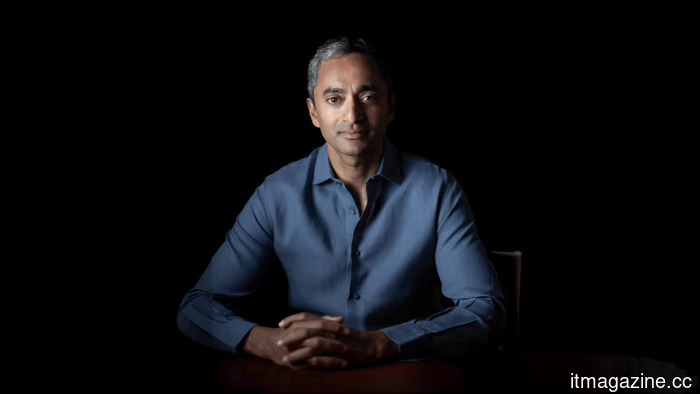
Chamath’s AI coding company 8090 secures $135 million in funding.
Salesforce led the Series A funding round that 8090 announced this week. The message is straightforward: while AI can already generate code, the real challenge lies in preventing enterprise software from becoming chaotic as numerous agents and engineers alter it weekly. TechCrunch was the first to cover the funding round, and the company has verified the details.
The list of investors is impressive. In addition to Salesforce, other backers include WNDR, Craft Ventures, The Production Board, and LAUNCH. Notable angel investors are Nikesh Arora, Cliff Robbins, Adam D’Angelo, and Thomas Laffont. The funds will be allocated to hiring efforts and the computational resources required to operate the product at scale.
What 8090 actually offers
8090 refers to its product as a “software factory.” The concept is a single governed workspace where humans and AI agents collaboratively build and modify enterprise software. It aims to connect the entire process, from business intentions and requirements to architecture, coding, testing, and ongoing production maintenance.
The key advantage is not speed but control. 8090 assures leaders of visibility, accountability, and a comprehensive audit trail from concept to deployment. This approach specifically addresses concerns that large companies have regarding AI. The primary fear is not that AI can write code, but whether it is possible to track what changes were made and the reasons behind them.
Additionally, the company operates a delivery division. It designs, builds, hosts, and maintains custom systems for clients in regulated sectors, including healthcare, insurance, life sciences, manufacturing, financial services, and government. According to 8090, this experience strengthens the platform against complicated legacy systems.
The figures it relies on
8090 supports its claims with a series of customer outcomes. It’s worth reiterating these figures, although they have not been independently verified.
According to 8090, it converted over 18 million lines of COBOL and Assembly into plain English, which formed the basis of a healthcare billing system. This resulted in over 300,000 understandable rules in just 40 days. The company claims that a listed health insurer subsequently reduced claims sent to a vendor by 80%, saving over $20 million over four years. It also mentions that a life sciences client decreased the time to market for a diagnostic from five years to four and that a manufacturer achieved real-time validation for over 10,000 parts.
If these results are valid beyond the press release, they highlight the real opportunity—not in developing new applications, but in addressing the costly, fragile systems that large companies find difficult to replace.
The significance of Chamath in a leadership role
The main story isn’t just the funding; it’s about the leadership role. Chamath Palihapitiya has spent his years since Facebook as an investor and a prominent sponsor of SPACs, becoming both wealthy and vocal. For many retail investors involved in his deals, however, it turned out to be a mixed bag, with several of his SPAC targets underperforming following their listings.
His shift back to a full-time operational role is noteworthy. In a blog post announcing the funding, he expressed that he had been waiting for the right moment to return to such a position, describing AI as “the grand equalizer” and stating that the coming years would establish the groundwork for the next two decades.
This is the optimistic viewpoint. The more skeptical perspective is straightforward: founder-investors with strong reputations tend to secure large investments based on narrative as much as actual progress, and 8090 is still quite young. Salesforce’s involvement lends credibility to the round that the founder’s reputation alone might not achieve.
A competitive and costly landscape
8090 enters a funding surge, with investors continuing to invest heavily in AI coding and agent startups despite rising operational costs. The demand is undeniable, and AI labs are quickly acquiring paying customers. Enterprises are feeling this pressure, with Amazon among those searching for more affordable options.
At the same time, competitors are motivated to develop in-house capabilities. Meta, for example, has limited its engineers' use of Anthropic’s Claude Code and OpenAI’s Codex while working on creating its own tool. 8090 aims to position itself one level higher, offering orchestration and oversight rather than the underlying model itself—reflecting the governance-first approach that is increasingly attracting investment in agentic security.
The unanswered question remains whether "a factory for agents" represents a tangible product or merely a catchy phrase. Many companies can incorporate a coding model into a workflow, but 8090 is wagering that the less glamorous, challenging aspects—such as governance, audit trails, and legacy systems—are where a sustainable business model lies. With Chamath dedicating his time to it, the company will certainly garner attention, but it will need to prove itself further.
Other articles
 AWS invests $1 billion in forward-deployed AI engineers.
AWS is investing $1 billion in a division that places forward-deployed engineers within client organizations to accelerate AI deployment, following the examples of OpenAI, Anthropic, and Palantir.
AWS invests $1 billion in forward-deployed AI engineers.
AWS is investing $1 billion in a division that places forward-deployed engineers within client organizations to accelerate AI deployment, following the examples of OpenAI, Anthropic, and Palantir.
 Another study demonstrates that injury advice found on TikTok is simply poor.
A recent study revealed that TikTok videos on ACL rehabilitation exercises were generally subpar, sparking new worries about teenagers relying on viral content for guidance on injury recovery.
Another study demonstrates that injury advice found on TikTok is simply poor.
A recent study revealed that TikTok videos on ACL rehabilitation exercises were generally subpar, sparking new worries about teenagers relying on viral content for guidance on injury recovery.
 The Japanese government is set to allocate up to $926 million in grants for Rakuten's satellite project.
Japan will support a satellite consortium led by Rakuten with up to ¥150 billion ($926 million) to establish a domestic low-Earth-orbit network and reduce dependence on Starlink.
The Japanese government is set to allocate up to $926 million in grants for Rakuten's satellite project.
Japan will support a satellite consortium led by Rakuten with up to ¥150 billion ($926 million) to establish a domestic low-Earth-orbit network and reduce dependence on Starlink.
 Kobo responds to Kindle's Goodreads feature by introducing automatic syncing with StoryGraph.
Kobo has activated its integration with StoryGraph, allowing your reading progress to sync automatically. There’s no need for manual updates anymore.
Kobo responds to Kindle's Goodreads feature by introducing automatic syncing with StoryGraph.
Kobo has activated its integration with StoryGraph, allowing your reading progress to sync automatically. There’s no need for manual updates anymore.
 Google begins testing Gmail Live, its new voice search feature for your inbox.
Google has begun testing Gmail Live, a voice-activated search feature that responds to spoken inquiries regarding your inbox and references the original email.
Google begins testing Gmail Live, its new voice search feature for your inbox.
Google has begun testing Gmail Live, a voice-activated search feature that responds to spoken inquiries regarding your inbox and references the original email.
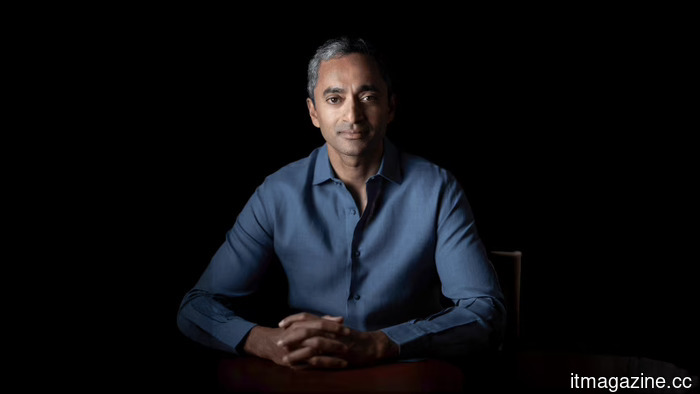 Chamath's AI coding startup, 8090, has secured $135 million in funding.
Chamath Palihapitiya has secured $135 million, with Salesforce leading the investment, for his AI coding startup, 8090, and is taking on the role of CEO for the first time since his tenure at Facebook.
Chamath's AI coding startup, 8090, has secured $135 million in funding.
Chamath Palihapitiya has secured $135 million, with Salesforce leading the investment, for his AI coding startup, 8090, and is taking on the role of CEO for the first time since his tenure at Facebook.
Chamath’s AI coding company 8090 secures $135 million in funding.
Chamath Palihapitiya has secured $135 million, with Salesforce as the leading investor, for his AI coding startup, 8090, and is taking on the role of CEO for the first time since his tenure at Facebook.