
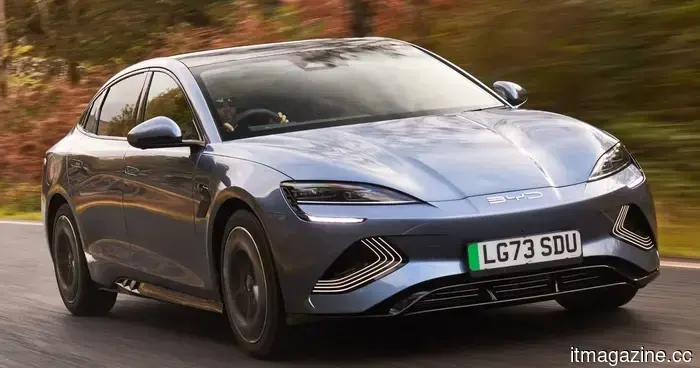
Tesla's main competitor has already succeeded in charging technology. Now, it is experimenting with a significant advancement in self-driving capabilities.
**BYD**
BYD has openly expressed its goal to develop more of its own technologies. This encompasses everything from batteries to electric motors, and even the AI chips that are utilized in advanced driver assistance systems. However, despite this momentum, the company's recent actions indicate that it is not yet ready to sever ties with external chip manufacturers. Instead, BYD seems to be opting for a more pragmatic approach.
**A wise detour before reaching the goal**
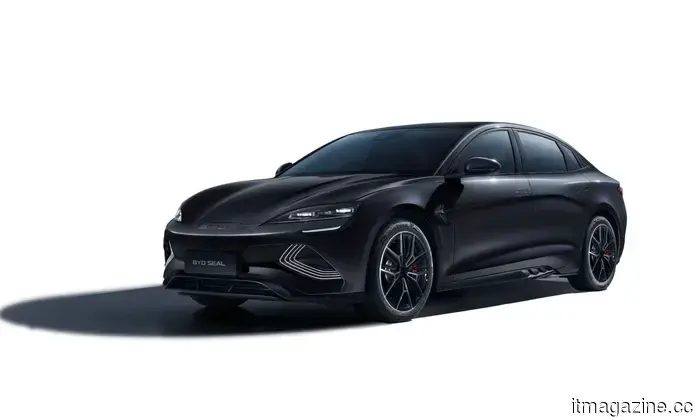
Recent reports from China suggest that the BYD Seal is currently undergoing tests with Horizon Robotics' forthcoming Super Drive 2.0 platform. BYD Chairman Wang Chuanfu was reportedly seen assessing the system alongside Horizon Robotics CEO Yu Kai, indicating that the software is approaching a more developed stage.
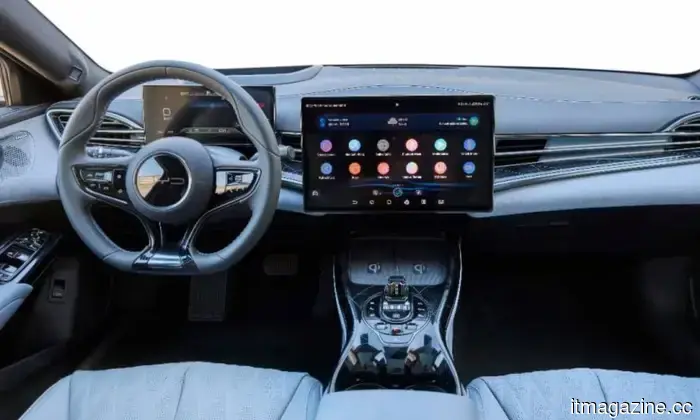
The focus is not merely on incorporating new driving functionalities. Engineers are said to be fine-tuning the interaction between the vehicle’s cameras and its central computing system, optimizing the performance of the current architecture ahead of the introduction of a new hardware generation. This is significant because BYD has already showcased its own custom AI processor — the 4nm Xuanji A3 — which promises an impressive 700 TOPS of computing capability. Many had anticipated that this chip would swiftly replace third-party suppliers across the board, but that is not unfolding anytime soon.
**Sometimes patience is the better choice**
According to recent industry insights, BYD's in-house silicon is not expected to enter production until 2027, starting with premium Denza models. In the meantime, Horizon Robotics and other chip suppliers will continue to power many of BYD’s high-volume vehicles. There is a practical financial rationale behind this approach: cost savings.
Reports indicate that utilizing established third-party processors can reduce manufacturing costs by approximately 1,500 to 4,000 yuan per vehicle. When producing cars at BYD’s scale, these savings accumulate quickly. Additionally, lower hardware costs facilitate the inclusion of advanced driver assistance features in more affordable models, rather than reserving them solely for high-end EVs. Another benefit is that Horizon has already supplied millions of processors for BYD’s driver-assistance efforts, providing the automaker with a mature supply chain ready for expansion without disrupting production.
The competition in the chip industry is still very active. NVIDIA remains dominant in the automotive AI market, while Horizon Robotics has consistently grown its presence. BYD clearly aims to join this landscape with its own silicon eventually. However, for the time being, the company seems more focused on delivering robust software to customers rather than rushing to demonstrate that it can handle everything independently. For consumers, this approach is likely the more sensible strategy.
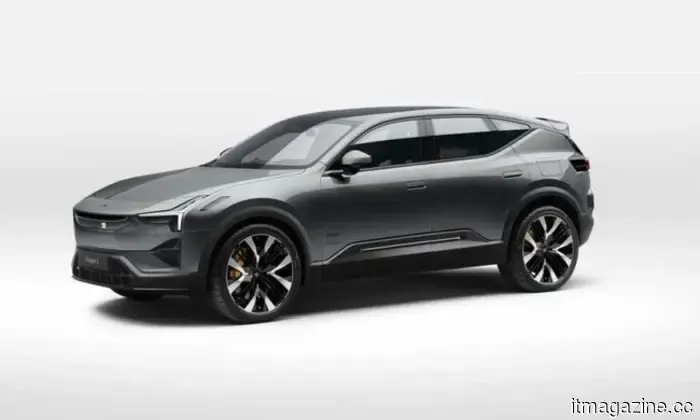
**Polestar forced to exit the US market. It’s unfortunate that its refined design will no longer be available**
Polestar, the Swedish electric vehicle brand owned by China's Geely, has been denied permission under the US Connected Vehicle Rule. Consequently, it will be unable to sell vehicles in the US starting with the 2027 model year. The company will not vanish from American roads immediately; Polestar has stated that it will continue to sell its existing US inventory of the Polestar 3 and Polestar 4, and current owners will still receive service support. However, for future models, the path is effectively closing unless circumstances change.
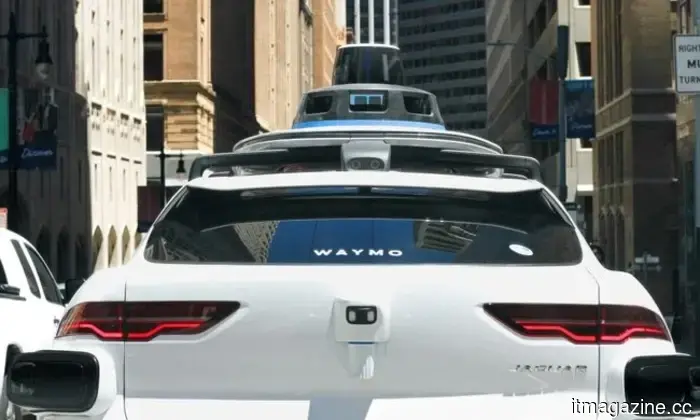
**The Wild West era of robotaxis is coming to an end**
New global regulations may replace the existing fragmented oversight with stricter safety requirements for driverless fleets. Robotaxi regulations have embarked on their first international phase. A UN vehicle standards forum has established the initial global framework for fully autonomous vehicles, creating a common safety baseline for driverless fleets across key markets. This shift occurs as robotaxis transition from testing phases into a more extensive commercial rollout. In the US and China, private fleets grew by more than double in 2025 to 8,000 vehicles across over two dozen major cities.
**Google Meet finally arrives on Android Auto, eliminating one more reason to skip a meeting**
Android users can now participate in scheduled meetings and audio calls from their car's dashboard, catching up to the features iPhone users have had for several months. Android Auto has at long last integrated Google Meet, several months after the video conferencing application launched on Apple CarPlay. Android users can now access scheduled meetings and recent contacts directly from their car's display instead of needing to reach for their phone.


Other articles
 Check out this awesome new app for those who approach every photo collection as if it's a magazine layout.
Mocha Frame is a free app for iPhone that enhances photos with stylish frames, watermarks, EXIF information, collages, and export options for sharing on social media.
Check out this awesome new app for those who approach every photo collection as if it's a magazine layout.
Mocha Frame is a free app for iPhone that enhances photos with stylish frames, watermarks, EXIF information, collages, and export options for sharing on social media.
 Here’s an interesting new app for those who approach every photo collection as if it's a magazine layout.
Mocha Frame is a complimentary iPhone application that enhances photos with stylish frames, watermarks, EXIF information, collages, and export features for social media sharing.
Here’s an interesting new app for those who approach every photo collection as if it's a magazine layout.
Mocha Frame is a complimentary iPhone application that enhances photos with stylish frames, watermarks, EXIF information, collages, and export features for social media sharing.
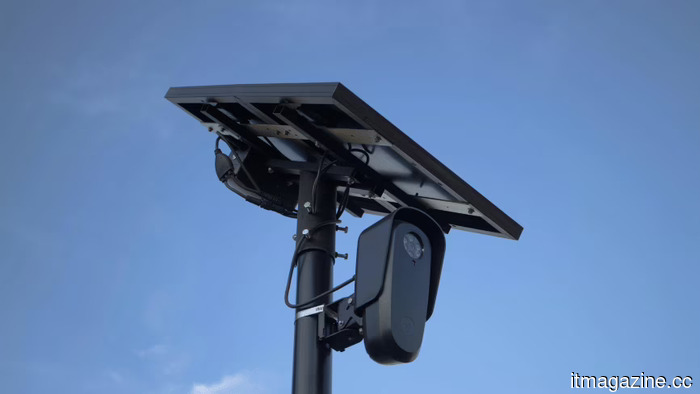 Flock surveillance cameras are being deployed throughout the United States.
More than 100,000 Flock surveillance cameras are currently keeping an eye on drivers in the US, raising concerns about security vulnerabilities, misuse by law enforcement, and the unexpected installation of poles in residential yards.
Flock surveillance cameras are being deployed throughout the United States.
More than 100,000 Flock surveillance cameras are currently keeping an eye on drivers in the US, raising concerns about security vulnerabilities, misuse by law enforcement, and the unexpected installation of poles in residential yards.
 This inexpensive Steam Machine replica seems too good to be real, and that's likely because it isn't.
A listing for a SteamOS-style mini PC from China asserts that it features desktop AMD graphics, 2TB of storage, and an affordable price, but the specifics of the hardware and the design of the chassis raise significant concerns.
This inexpensive Steam Machine replica seems too good to be real, and that's likely because it isn't.
A listing for a SteamOS-style mini PC from China asserts that it features desktop AMD graphics, 2TB of storage, and an affordable price, but the specifics of the hardware and the design of the chassis raise significant concerns.
 This affordable Steam Machine replica seems too good to be true, and likely is.
A mini PC listing from China, styled like SteamOS, boasts desktop AMD graphics, 2TB of storage, and an affordable price. However, significant concerns arise regarding the hardware specifications and chassis design.
This affordable Steam Machine replica seems too good to be true, and likely is.
A mini PC listing from China, styled like SteamOS, boasts desktop AMD graphics, 2TB of storage, and an affordable price. However, significant concerns arise regarding the hardware specifications and chassis design.
 South Korea's investment in AI: $880 billion for semiconductors and robotics.
South Korea's AI investment strategy allocates $880 billion towards chip manufacturing facilities, 18.4GW of data centers, and robotics, as Samsung and SK Hynix compete for leadership in the field.
South Korea's investment in AI: $880 billion for semiconductors and robotics.
South Korea's AI investment strategy allocates $880 billion towards chip manufacturing facilities, 18.4GW of data centers, and robotics, as Samsung and SK Hynix compete for leadership in the field.
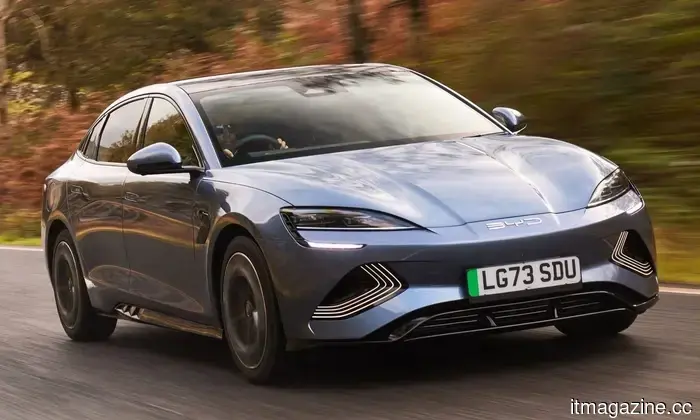
Tesla's main competitor has already succeeded in charging technology. Now, it is experimenting with a significant advancement in self-driving capabilities.
BYD might be developing its own advanced AI chip, but it is still relying on external partners for the time being. This postponement could lead to its upcoming smart driving capabilities being more affordable and simpler to implement.