
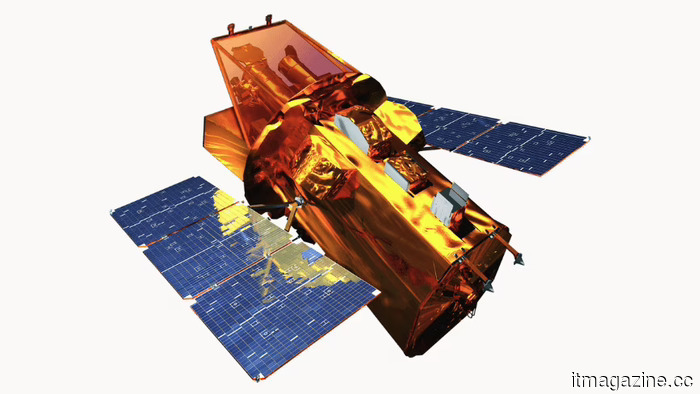
NASA's Swift telescope salvaged: a bold inaugural mission in orbit.
Swift has been observing the sky since 2004, documenting some of the universe’s largest explosions. However, it is now descending, and time is running out. According to the Associated Press, NASA is contracting Katalyst Space Technologies for around $30 million to rescue it, with a launch potentially happening as early as Tuesday.
The strategy appears straightforward but is far from it. The goal is to reach a satellite that was never intended for capture, grab it, and elevate its orbit.
Reasons for Swift’s descent
All satellites in low Earth orbit experience a gradual drag caused by the sparse atmosphere. The situation has worsened due to increased solar activity, which has expanded the atmosphere, leading to greater drag that is pulling Swift down more quickly than NASA anticipated.
Currently, Swift orbits at about 360 kilometers. If unaddressed, it is projected to drop below 300 kilometers by October, a point past which rescue would be ineffective. Following that, it would re-enter the atmosphere, resulting in a fiery demise for this functional observatory. NASA has already turned off Swift’s instruments to slow the descent, and scientific observations halted in February.
That would be a significant loss. Swift is recognized as one of the fastest observatories, rapidly focusing on gamma-ray bursts, the brief, intense flares indicative of dying stars and colliding neutron stars. “If we let Swift reenter, we would lose that telescope,” NASA science chief Nicky Fox informed the AP. “We currently lack the funding to build a replacement.”
The approach
Katalyst's solution is Link, an autonomous spacecraft about the size of a small refrigerator, equipped with 12-meter solar panels. It has three arms, each fitted with two pinching grippers. It is launched aboard an air-launched Pegasus rocket, which is released from a plane over the Marshall Islands in the Pacific.
Once in the air, it must pursue its target. NASA estimates Link will take roughly a month to reach the 1.4-ton Swift observatory and capture it, followed by a couple more months to elevate its orbit from approximately 360 kilometers to around 600 kilometers. If successful, Swift could resume its operations by September.
The challenge lies in the technical aspects. Swift lacks a docking port and any grip points since it was never designed for servicing. While astronauts have previously repaired Hubble manually, that required a space shuttle and a crew. This operation will rely solely on a robot.
A new kind of mission
The rapid progress is notable. NASA signed the contract only last September with two main directives: to expedite the process and avoid complications. Now, just nine months later, Katalyst is ready for the launch.
This mission also marks a first for the United States. In 2022, China maneuvered a dead satellite into a higher graveyard orbit, but capturing an operational telescope not designed for retrieval presents a greater challenge. “No one believed it would be possible,” stated Shawn Domagal-Goldman, NASA’s astrophysics director.
The implications extend well beyond Swift. A nascent industry aims to service, refuel, and reposition satellites in orbit instead of allowing them to become obsolete. A successful rescue under a tight deadline would provide the validation these companies have been seeking.
Significance of the mission
The financial aspect adds to its attraction. Thirty million dollars is only a small fraction of the expenses associated with building and launching a new space telescope. If a tug can prolong the life of a functioning instrument, the justification for preserving hardware rather than discarding it becomes more compelling.
Hubble could be next in line. Katalyst suggests that a larger robot, scheduled for launch next year, could reach satellites positioned much higher and provide the aging Hubble with its own elevation around 2028. Looking further ahead, the company envisions fleets of orbital robots able to repair, refuel, and even construct in space.
There's also a cleaner future on the horizon. Currently, most spacecraft simply fall and burn upon reaching the end of their operational life. A functioning fleet of tugs could elevate valuable satellites, intentionally deorbit the defunct ones, and begin to clear the debris cluttering low Earth orbit.
For now, everything hinges on a single launch and a meticulous capture. NASA and Katalyst will soon determine whether Swift continues to observe the cosmos or becomes a cautionary example. The countdown has already commenced.
Other articles
 California offers all state agencies access to Claude at a discounted rate through an agreement with Anthropic.
California reached an agreement with Anthropic that allows all state agencies to use Claude at a 50% discount, even though the federal government has classified it as a security risk.
California offers all state agencies access to Claude at a discounted rate through an agreement with Anthropic.
California reached an agreement with Anthropic that allows all state agencies to use Claude at a 50% discount, even though the federal government has classified it as a security risk.
 Arena, the AI leaderboard utilized by everyone, has now reached a valuation of 100 million dollars.
Arena, the crowdsourced AI leaderboard utilized by all leading labs, has attained an annualized revenue of 100 million dollars from its paid evaluation service.
TIDAL will stop paying royalties for music created by AI and will label every track it identifies as such.
TIDAL will label completely AI-generated songs with an AI badge and prevent them from generating royalties, as part of an increasing crackdown in the music streaming industry.
Arena, the AI leaderboard utilized by everyone, has now reached a valuation of 100 million dollars.
Arena, the crowdsourced AI leaderboard utilized by all leading labs, has attained an annualized revenue of 100 million dollars from its paid evaluation service.
TIDAL will stop paying royalties for music created by AI and will label every track it identifies as such.
TIDAL will label completely AI-generated songs with an AI badge and prevent them from generating royalties, as part of an increasing crackdown in the music streaming industry.
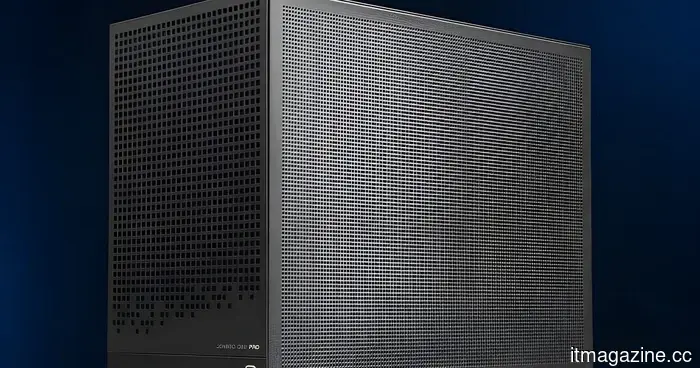 This $1,299 gaming PC aims to become a Steam Machine without having to wait for Valve.
MetaPCs has begun taking preorders for Steamroller, a $1,299 gaming desktop running SteamOS, constructed using standard PC components rather than a custom console-like design.
This $1,299 gaming PC aims to become a Steam Machine without having to wait for Valve.
MetaPCs has begun taking preorders for Steamroller, a $1,299 gaming desktop running SteamOS, constructed using standard PC components rather than a custom console-like design.
 Comcast's separation serves as the clearest indication that the cable bundle is losing its hold.
The separation of Comcast from NBCUniversal is unlikely to immediately affect Peacock or Xfinity, but it indicates a growing separation between internet services and streaming benefits as the traditional cable bundle diminishes in influence.
Comcast's separation serves as the clearest indication that the cable bundle is losing its hold.
The separation of Comcast from NBCUniversal is unlikely to immediately affect Peacock or Xfinity, but it indicates a growing separation between internet services and streaming benefits as the traditional cable bundle diminishes in influence.
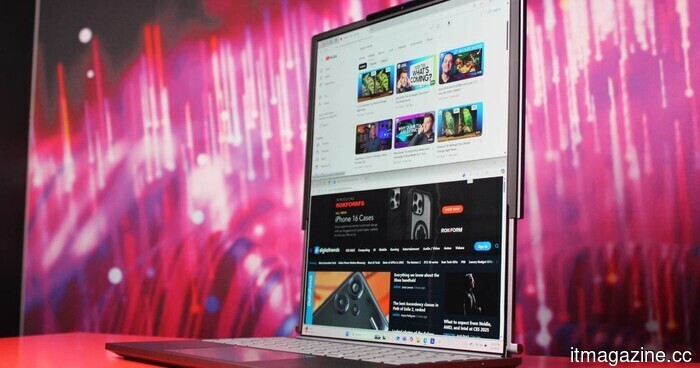 It seems that Samsung is developing a rollable phone. Let's hope it doesn't end up the same way as LG.
The speculated rollable Galaxy from Samsung may reach 10 inches by 2028. However, LG's withdrawal, Oppo's prototype, and the challenging engineering requirements illustrate why this phone design still requires validation prior to its release.
It seems that Samsung is developing a rollable phone. Let's hope it doesn't end up the same way as LG.
The speculated rollable Galaxy from Samsung may reach 10 inches by 2028. However, LG's withdrawal, Oppo's prototype, and the challenging engineering requirements illustrate why this phone design still requires validation prior to its release.
NASA's Swift telescope salvaged: a bold inaugural mission in orbit.
The NASA Swift telescope rescue involves a robotic spacecraft that will retrieve the descending observatory and elevate its orbit, marking a unique $30 million mission.