
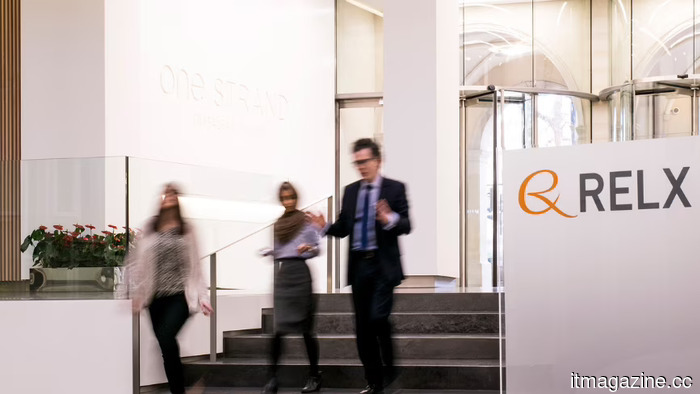
RELX announces an additional £100M buyback as its repurchase program for 2026 continues.
RELX doesn’t attract attention like a chip manufacturing plant or an AI research center, which is precisely the intention behind its business model. It offers data, analytics, and the predictability of consistent revenue, redistributing the earnings to shareholders on a steady basis. This week's announcement marked another tick of that steady beat.
The company revealed plans for a £100m share buyback to take place in July, which is part of the approximately £2.25bn it aims to allocate for repurchases throughout 2026.
The stated goal is the traditional one: to decrease the company’s capital, with the repurchased shares held in treasury. This program is managed by independent financial institutions under the typical market-abuse regulations of the UK and EU, maintaining a distance between the company and the actual trading.
This July initiative follows a continuous stream of buybacks earlier in the year, including a £200m program that occurred in the first half of June. Individually, none of these actions is significant in the market.
However, collectively, they reflect RELX's self-perception: a cash-generating entity with more capital than necessary for growth, opting to return the excess instead of retaining it.
Such an approach is more sustainable when the underlying business is thriving, and RELX’s performance has been solid. The organization encompasses scientific publishing via Elsevier, legal data through LexisNexis, risk and analytics, as well as its exhibitions division, with its segments that provide proprietary data for professional workflows proving resilient and, more recently, well-aligned with the AI trend.
Possessing extensive, structured, and difficult-to-replicate datasets is advantageous as software companies increasingly seek exactly that.
It hasn’t been entirely trouble-free. RELX experienced its sharpest single-day share price drop since 1988 after Anthropic launched its Claude assistant for legal contract review. Some analysts considered the market reaction excessive, given that the proprietary case-law databases maintained by LexisNexis and similar firms continue to serve as a significant competitive advantage.
Following this, LexisNexis integrated Anthropic’s legal features into its own Protégé AI suite, demonstrating a strategic decision by an incumbent to adopt the new tool rather than oppose it.
This context is essential for understanding the buybacks. A company that is returning £2.25bn to shareholders in one year conveys a strong belief that its core asset—the exclusive data it controls—will retain its value even as generative AI transforms the software built on it. The repurchases represent a financial endorsement that its competitive advantages remain solid.
For shareholders, the immediate outcome is straightforward. Buying back shares decreases their total number, which increases earnings per share and, all else being equal, bolsters the stock price. It’s a less flashy deployment of capital compared to a major acquisition, but it’s more dependable. RELX has consistently favored the dependable approach.
The July buyback will proceed as planned throughout the month under the same independent management as prior efforts. There’s no drama here, and that is deliberate. RELX is a company that thrives on predictable outcomes, and a £100m buyback in July perfectly exemplifies the kind of non-event it prefers to announce.
Other articles
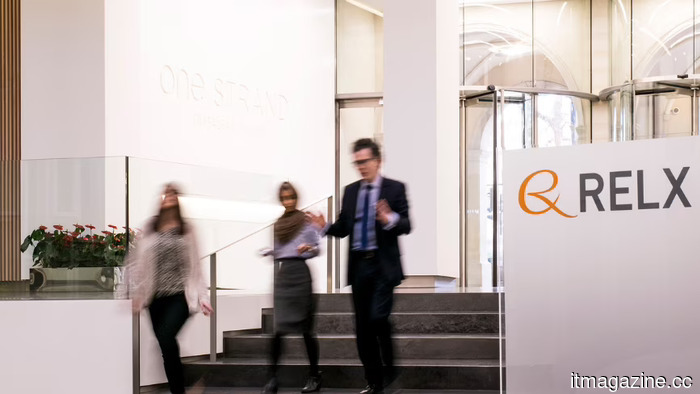 RELX announces an additional £100M buyback as its 2026 repurchase program continues.
RELX is set to initiate a £100m share buyback in July, marking the most recent phase of a £2.25bn plan, as the data company continues to distribute cash to its shareholders.
RELX announces an additional £100M buyback as its 2026 repurchase program continues.
RELX is set to initiate a £100m share buyback in July, marking the most recent phase of a £2.25bn plan, as the data company continues to distribute cash to its shareholders.
 A former Tesla Optimus engineer has resolved a trade secret lawsuit and secured $11 million to develop robotic hands.
Proception's founder, Jay Li, has reached a settlement in a lawsuit regarding Tesla's trade secrets and has secured $11 million from First Round Capital to deliver dexterous robotic hands to companies focused on humanoid robotics.
A former Tesla Optimus engineer has resolved a trade secret lawsuit and secured $11 million to develop robotic hands.
Proception's founder, Jay Li, has reached a settlement in a lawsuit regarding Tesla's trade secrets and has secured $11 million from First Round Capital to deliver dexterous robotic hands to companies focused on humanoid robotics.
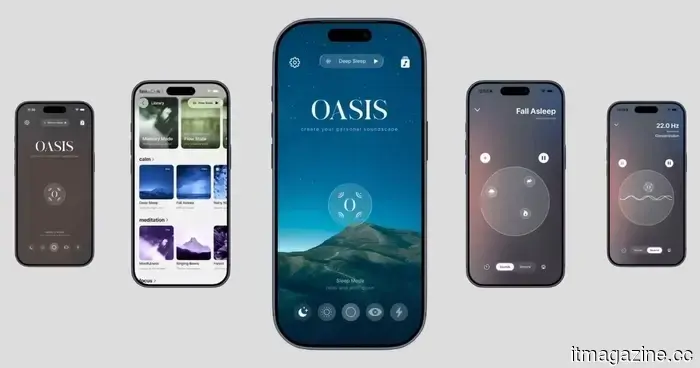 A free soundscape application has just introduced the kinds of controls that paid relaxation apps tend to keep hidden.
Oasis version 2.2 introduces presets, new audio sounds, mixed background audio, and session memory, enhancing the free soundscape application for improved focus, sleep, meditation, and relaxation routines.
A free soundscape application has just introduced the kinds of controls that paid relaxation apps tend to keep hidden.
Oasis version 2.2 introduces presets, new audio sounds, mixed background audio, and session memory, enhancing the free soundscape application for improved focus, sleep, meditation, and relaxation routines.
 I just played Ghost of Tsushima on my phone. I never imagined this day would come, and I'm not regretting this unexpected experience.
By utilizing GameHub on the RedMagic 11S Pro, I was able to play Ghost of Tsushima Director’s Cut on a phone with surprisingly good results after making some adjustments.
I just played Ghost of Tsushima on my phone. I never imagined this day would come, and I'm not regretting this unexpected experience.
By utilizing GameHub on the RedMagic 11S Pro, I was able to play Ghost of Tsushima Director’s Cut on a phone with surprisingly good results after making some adjustments.
 As a severe heatwave affects Europe, Rome relies on a bracelet to monitor its elderly population.
Rome has distributed approximately 700 elderly residents a bracelet that monitors heart rate, sleep patterns, and falls, along with daily check-in calls from social workers, amid an unprecedented heatwave.
As a severe heatwave affects Europe, Rome relies on a bracelet to monitor its elderly population.
Rome has distributed approximately 700 elderly residents a bracelet that monitors heart rate, sleep patterns, and falls, along with daily check-in calls from social workers, amid an unprecedented heatwave.
 As a severe heatwave envelops Europe, Rome utilizes a bracelet to monitor its senior citizens.
Rome has provided approximately 700 elderly residents with a bracelet that monitors heart rate, sleep, and falls, supported by daily calls from social workers, amid an unprecedented heatwave.
As a severe heatwave envelops Europe, Rome utilizes a bracelet to monitor its senior citizens.
Rome has provided approximately 700 elderly residents with a bracelet that monitors heart rate, sleep, and falls, supported by daily calls from social workers, amid an unprecedented heatwave.
RELX announces an additional £100M buyback as its repurchase program for 2026 continues.
RELX will initiate a £100 million share buyback in July, which is part of a £2.25 billion program, as the data company continues to distribute cash to its shareholders.