
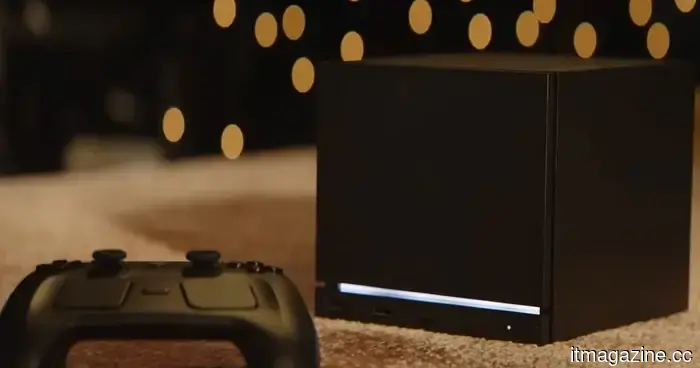
Forget about console wars. The Steam Machine could potentially put an end to lackluster PC gaming ports.
Valve's Steam Machine has become an easy target for criticism. The starting price is significantly higher than that of current consoles, and the hardware is situated between entry-level and mid-range gaming PCs rather than being top-of-the-line. Initial reviews have also indicated that demanding games require upscaling, reduced settings, and realistic expectations.
Given the ongoing memory crisis, now seems a challenging time to bring a PC to the living room. However, the Steam Machine does not need to outperform high-end gaming PCs or major consoles; its original aim was distinct. What sets it apart is its potential to transform the PC gaming landscape entirely.
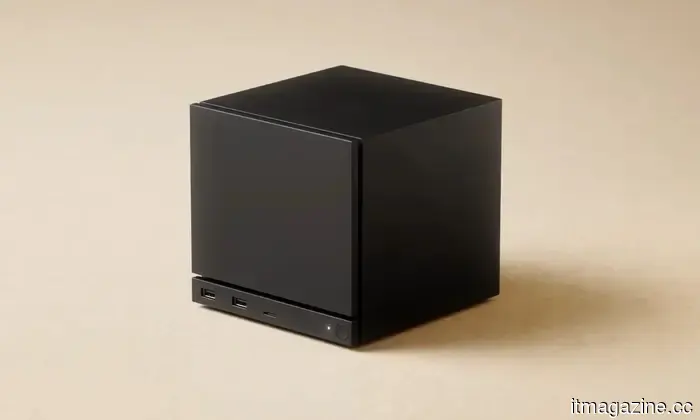
The Steam Machine represents a hybrid of PC and console that could provide developers with a clear, tangible target within the Steam ecosystem. If it gains sufficient popularity, Valve's compact device could even encourage better optimization across SteamOS, Linux, handhelds, budget PCs, and standard Windows machines.
A unified target is essential for PC gaming.
One of the greatest strengths of PC gaming also presents its biggest challenge. Developers releasing games for this platform must consider a vast array of different PC configurations. Factors like CPUs, GPUs, drivers, storage types and speeds, OS, and more all need to be accounted for. While player freedom is key, this complexity surpasses the simplicity of developing for a closed console with consistent hardware.
This complexity helps explain why many PC ports disappoint fans at launch. Unless you have high-end hardware—and sometimes even when you do—smooth performance is not guaranteed. Meanwhile, another gamer with a less powerful system might experience shader stutter, while someone else struggles with tweaking settings to achieve playable frame rates.
This confusion drives many players towards consoles. While the Steam Machine cannot simplify the entire PC landscape, it can provide significant benefits. Optimization for Valve’s mini box would still involve familiar PC issues like graphics settings, Proton compatibility, and more. Improvements in these areas generally benefit more than just one device.
Valve already possesses the platform.
With Steam, its money-making powerhouse, Valve does not need to construct a gaming ecosystem from the ground up. The platform already encompasses libraries, wishlists, cloud saves, friends lists, and other features that connect millions of PC gamers worldwide.
Developers now have more motivation than ever to enhance performance on the Steam Machine. Valve has the influence to boost visibility. A game receiving a Steam Machine badge signals to players that it functions well from the comfort of their couch. A problematic launch becomes more apparent when the store page can highlight controller issues, compatibility problems, or inadequate default performance before a purchase is made.
Valve is pursuing similar efforts with its Steam Deck Verified list.
Modest hardware fosters broader support across systems.
The Steam Machine's hardware is decent, not excessive. The price is frustrating, and it is indeed possible to build a traditional gaming PC with superior raw performance for a comparable cost. However, having a realistic performance baseline for optimization can be beneficial.
Developers are adept at making games shine on high-end GPUs. The more challenging task lies in ensuring that modern games run smoothly on older or lower-end hardware that most users possess. Greater stability, dedicated optimization, and reliable performance on day one could assist not just the Steam Machine owners but the wider gaming community.
An improved default settings profile aids Windows users. Enhanced upscaling presets serve budget desktops and laptops. Fewer launcher issues improve experiences on the Steam Deck, third-party SteamOS handhelds, Linux PCs, and setups with superior controller support. This trickle-down effect was already evident with the Steam Deck, which motivated developers to take portable gaming more seriously. The Steam Machine could further this trend into living room PC gaming, where both convenience and performance are equally vital.
SteamOS expands its reach.
The Steam Machine also provides Valve with another opportunity to expand SteamOS. Linux gaming has advanced significantly due to Proton, yet Steam's own hardware survey still indicates Windows as the dominant player in the PC gaming market. The Steam Deck has already demonstrated that a well-crafted device can make Linux gaming more accessible. Now, the Steam Machine has a chance to replicate this success with desktop-grade components.
It also positions SteamOS under the television, offering a smoother method for using the existing Steam library without requiring a Windows PC installation for the living room. The DIY aspect adds interest to the initiative. Valve is promoting SteamOS beyond its own hardware, suggesting that the Steam Machine could serve as a reference point rather than being viewed as a standalone product. A developer optimizing for Valve's device might also enhance the experience for custom SteamOS builds and future third-party devices.
None of this is guaranteed, of course. The Steam Machine must achieve significant adoption for the momentum to build, and its current price complicates that. Nevertheless, the concept is thrilling. If Valve can establish its compact living room PC as a target that developers care about, the Steam Machine may ultimately benefit the broader PC gaming market beyond just its immediate buyers.



Other articles
 Locating Android apps on the Google Play Store has become significantly simpler with the introduction of Gemini.
Google has introduced the Google Play connected app for Gemini, enabling users to find apps, make specific purchases, and acquire Play gift cards through AI.
Locating Android apps on the Google Play Store has become significantly simpler with the introduction of Gemini.
Google has introduced the Google Play connected app for Gemini, enabling users to find apps, make specific purchases, and acquire Play gift cards through AI.
 The leaked motherboard of the iPhone 18 Pro suggests an upcoming cooling enhancement from Apple.
A recent leak suggests that Apple's A20 Pro chip might have a revamped design aimed at improving thermal performance, but there are many reasons to be doubtful.
The leaked motherboard of the iPhone 18 Pro suggests an upcoming cooling enhancement from Apple.
A recent leak suggests that Apple's A20 Pro chip might have a revamped design aimed at improving thermal performance, but there are many reasons to be doubtful.
 Baidu's semiconductor division, Kunlunxin, is aiming for a $50 billion IPO in Hong Kong and has requested investors to purchase its chips.
According to The Information, Kunlunxin requested IPO investors to also agree to buy its AI chips. In the first half of 2026, Hong Kong generated nearly $44 billion from share sales.
Baidu's semiconductor division, Kunlunxin, is aiming for a $50 billion IPO in Hong Kong and has requested investors to purchase its chips.
According to The Information, Kunlunxin requested IPO investors to also agree to buy its AI chips. In the first half of 2026, Hong Kong generated nearly $44 billion from share sales.
 Researchers developed an AI therapist that analyzes data from your smartwatch and earbuds to identify signs of distress before you seek assistance.
The UbiMyTherapist program at the University of Ottawa utilizes heart rate, speech tone, and text data from wearables to create a digital twin and provide proactive mental health assistance.
Researchers developed an AI therapist that analyzes data from your smartwatch and earbuds to identify signs of distress before you seek assistance.
The UbiMyTherapist program at the University of Ottawa utilizes heart rate, speech tone, and text data from wearables to create a digital twin and provide proactive mental health assistance.
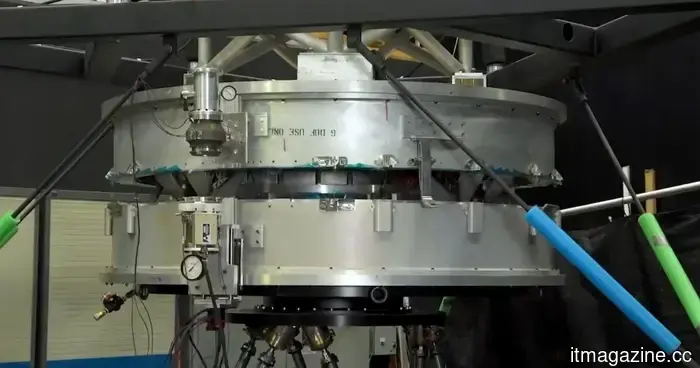 Reaching Mars might necessitate a stop in orbit, and NASA has recently tested the nozzle needed for that purpose.
NASA has recently tested a completely automated refueling coupler for spacecraft, and if it proves successful, it could revolutionize the operations of deep space missions.
Reaching Mars might necessitate a stop in orbit, and NASA has recently tested the nozzle needed for that purpose.
NASA has recently tested a completely automated refueling coupler for spacecraft, and if it proves successful, it could revolutionize the operations of deep space missions.
Forget about console wars. The Steam Machine could potentially put an end to lackluster PC gaming ports.
Although Valve’s Steam Machine might not be the most powerful gaming PC available, its set hardware specifications and the promotion of SteamOS could motivate developers to enhance the optimization of PC games.