

Ford brought back 350 engineers to correct the mistakes made by its AI systems.
Ford has brought back 350 engineers after its AI systems failed to match the quality expected by the company, leading to a notable achievement—securing the top position in JD Power's quality rankings for the first time in 16 years. Charles Poon, Ford’s VP of vehicle hardware engineering, indicated that the company overestimated its ability to integrate AI while maintaining high product quality. This revelation, originally reported by The Verge, coincides with Ford topping the mainstream brands in JD Power’s initial quality ranking.
The issue wasn't that the AI itself was broken, Poon clarified, but rather that seasoned employees departed before their valuable knowledge could be passed into the systems designed to take their place. Without the engineering insights built into the training data, Ford’s automated systems highlighted weak inputs instead of identifying design flaws. To address this, Ford rehired, newly hired, and promoted 350 experienced engineers.
While Poon did not specify why these engineers left, it's evident that Ford has reduced its workforce by approximately 5,300 salaried positions since its peak in 2020, reflecting a broader trend affecting Detroit's automotive sector, which has seen over 20,000 white-collar jobs eliminated. CEO Jim Farley has publicly stated that AI “will replace literally half of all white-collar workers in the US,” a statement that has been complicated by the ongoing quality issues the company faces.
The returning engineers are now mentoring junior staff, restoring data pipelines for Ford’s AI training, and improving the automated systems they were initially meant to replace. Ford has also established a dedicated software quality assurance team of 40 and added over 100,000 AI-driven automated tests to detect edge cases and reassess software changes late in the development process.
This improvement has allowed Ford to achieve the leading position in JD Power’s 2026 initial quality study, which tracks issues reported by vehicle owners in the first 90 days of ownership. Ford reported 152 problems per 100 vehicles, surpassing Nissan and Buick. The F-150, Mustang, and Super Duty have each been recognized as the best in their respective segments for the second consecutive year.
However, this victory does not erase Ford's troubled history. The automaker has led the industry in recalls this year, announcing 51 recalls that affect more than 11 million vehicles—over twice as many as the next largest manufacturer. This situation adds to a growing list of companies realizing that the absence of human judgment in AI-driven processes can lead to issues that the technology cannot independently resolve.
This situation arises during a period when AI firms and policymakers are urgently trying to understand the implications for workers. Recently, OpenAI, Anthropic, Amazon, and Microsoft supported RAISE US, a $500 million nonprofit led by former commerce secretary Gina Raimondo, aimed at retraining American workers for the AI-driven economy. Ford's experience indicates that the more challenging issue may not be retraining but identifying which employees are essential to retain.
Other articles
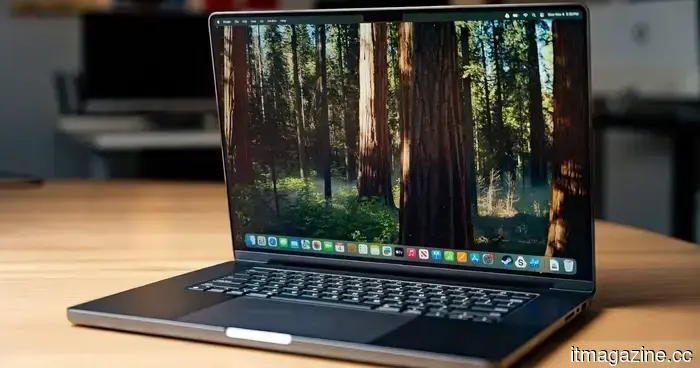 Apple's most significant MacBook Pro redesign in years might forgo the chip that was widely anticipated.
Reports suggest that Apple is working on a revamped MacBook Pro that will feature OLED and touch support; however, the anticipated M6 Pro and M6 Max chips might not be released.
Apple's most significant MacBook Pro redesign in years might forgo the chip that was widely anticipated.
Reports suggest that Apple is working on a revamped MacBook Pro that will feature OLED and touch support; however, the anticipated M6 Pro and M6 Max chips might not be released.
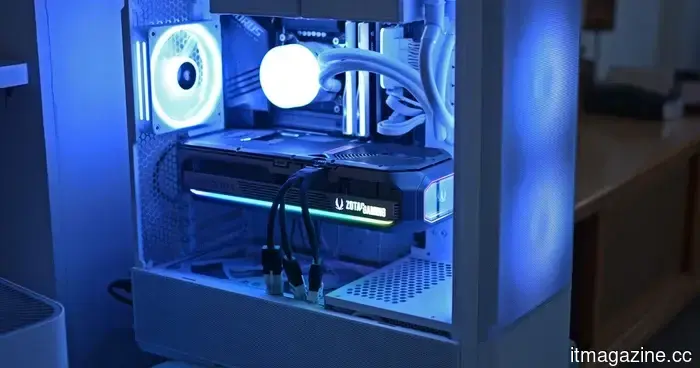 Bacteria might be the key ingredient to maintaining cooler temperatures in your computers.
A recent study reveals that bacteria can produce materials that cool electronics much more effectively than existing alternatives, providing an eco-friendly solution for overheating devices.
Bacteria might be the key ingredient to maintaining cooler temperatures in your computers.
A recent study reveals that bacteria can produce materials that cool electronics much more effectively than existing alternatives, providing an eco-friendly solution for overheating devices.
 Tired of reading academic papers? This AI tool transforms them into videos similar to TikTok.
Researchers at the University of Washington created PaperTok, an AI system designed to transform academic papers into short videos featuring editable scripts, storyboard scenes, and credits for the authors.
Tired of reading academic papers? This AI tool transforms them into videos similar to TikTok.
Researchers at the University of Washington created PaperTok, an AI system designed to transform academic papers into short videos featuring editable scripts, storyboard scenes, and credits for the authors.
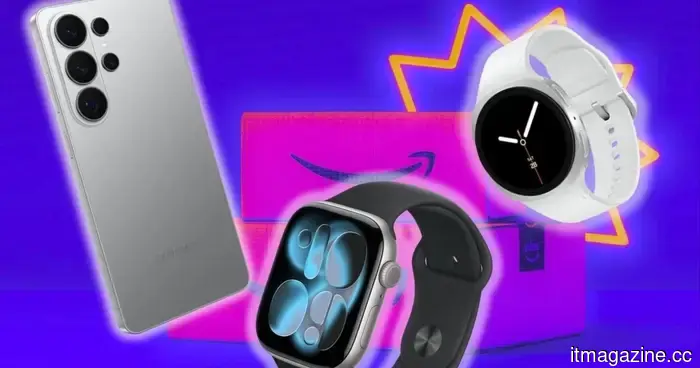 In the final hours of Prime Day, I discovered the best deals to help you avoid the disappointment of missing out.
Prime Day concludes tonight, and here are the deals I would personally invest in before the prices increase and the memory crisis drives them even higher.
In the final hours of Prime Day, I discovered the best deals to help you avoid the disappointment of missing out.
Prime Day concludes tonight, and here are the deals I would personally invest in before the prices increase and the memory crisis drives them even higher.
 OpenAI has unveiled its latest and most advanced model, GPT-5.6, but it is currently not available for access.
OpenAI has introduced GPT-5.6, the latest and most advanced AI model series to date, but the majority of users will need to be patient as access is still highly limited.
OpenAI has unveiled its latest and most advanced model, GPT-5.6, but it is currently not available for access.
OpenAI has introduced GPT-5.6, the latest and most advanced AI model series to date, but the majority of users will need to be patient as access is still highly limited.
 OpenAI has announced its latest GPT-5.6 model, but it is not yet available for public access.
OpenAI has introduced GPT-5.6, its latest and most sophisticated AI model family to date, but the majority of users will have to be patient as access is still very limited.
OpenAI has announced its latest GPT-5.6 model, but it is not yet available for public access.
OpenAI has introduced GPT-5.6, its latest and most sophisticated AI model family to date, but the majority of users will have to be patient as access is still very limited.
Ford brought back 350 engineers to correct the mistakes made by its AI systems.
Ford acknowledged that its AI was not capable of replacing seasoned engineers and brought back 350 experienced professionals, subsequently achieving the top position in JD Power's quality ranking for the first time in 16 years.