

OpenAI has announced its latest GPT-5.6 model, but it is not yet available for public access.
GPT-5.6 introduces enhanced reasoning, autonomy, and cybersecurity features, but its launch is presently restricted to government-approved users.
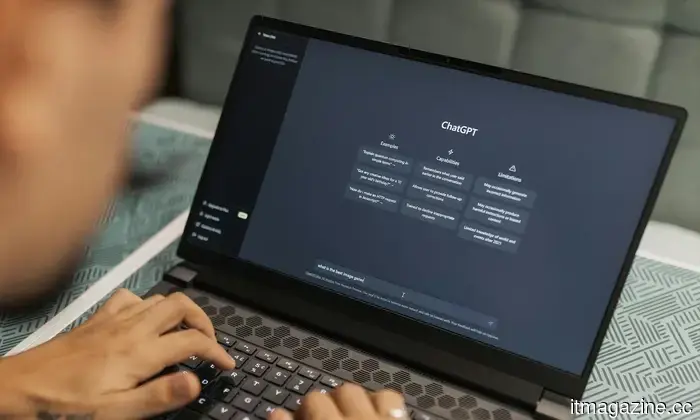
OpenAI has officially announced GPT-5.6, its most advanced series of AI models to date. However, there's a catch: unless you are part of a select group of approved clientele, you will not have the opportunity to use it soon. Rather than a widespread launch, the company is starting with a closely monitored preview while navigating a new U.S. government review process.
The GPT-5.6 series features three models: Sol, the flagship model for demanding tasks, Terra, which provides balanced reasoning and is suitable for everyday activities, and Luna, a quicker and more cost-effective solution. OpenAI claims that GPT-5.6 offers advancements in coding, scientific reasoning, cybersecurity, biology, and prolonged autonomous operations. The Sol model also presents new operating modes—Max for in-depth reasoning and Ultra for coordinating sub-agents across intricate workflows.
Nevertheless, the most significant aspect isn't the technology itself but rather who gets access to it. As reported initially by The Wall Street Journal, GPT-5.6 will be accessible only to a limited number of customers vetted by the Trump administration while further national security assessments are conducted. OpenAI has stated that this is a temporary measure during the launch of a new federal oversight procedure and aims to make GPT-5.6 widely available in the coming weeks.
In addition to governmental oversight, OpenAI seems to be emphasizing security from a technical perspective. Along with GPT-5.6 Sol, the company claims it has implemented its most comprehensive safety protocols yet, enhancing real-time defenses against high-risk cyber threats and repeated abuse attempts. OpenAI notes that the model underwent rigorous human red-teaming and over 700,000 A100 GPU-equivalent hours of automated safety testing before being released.
While the model is remarkable, the nature of its rollout might be the more noteworthy element.
The choice to limit access to GPT-5.6 and provide it to a select group of vetted customers is not particularly surprising. Just weeks ago, the U.S. government mandated Anthropic to limit access to its Claude Mythos 5 and Fable 5 frontier AI models due to national security issues. Although Mythos has since been reintroduced for a limited audience, Fable 5 remains unavailable to the public at large and is constrained to authorized U.S.-based entities. OpenAI appears to be following a similar approach.
"In line with our ongoing collaboration with the U.S. government, we shared our plans and the capabilities of the models prior to today’s launch. At their request, we will initiate a limited preview with a small group of trusted partners, whose involvement has been communicated to the government, before broader release," OpenAI stated in its announcement.
The company indicated it will continue to navigate the necessary security vetting procedure before expanding access to GPT-5.6, although no timeline for a wider rollout has been provided. OpenAI also emphasized that it does not think this method of government approval should become the norm for launching frontier AI models.
Moreover, OpenAI has reason to tread carefully beyond governmental oversight. Earlier this week, Anthropic accused the Chinese tech giant Alibaba of utilizing thousands of user accounts to systematically access Claude and refine its responses to enhance the Qwen family of AI models. Similar allegations have emerged previously, highlighting the increased worry that frontier AI models could be cloned or misused before their developers adequately secure them. Whether this directly influences OpenAI’s cautious rollout is uncertain, but it is becoming increasingly evident that launching the world’s most advanced AI models is not solely a technological challenge; it is rapidly evolving into a geopolitical issue.
Stanford scientists have developed an AI that can create healthier, more sustainable burgers.
Artificial intelligence has already contributed to code writing, drug discovery, and video generation. Now, it’s aiming to improve burger recipes. Researchers at Stanford University have introduced BurgerAI, a new AI system designed to create burger recipes by balancing taste, nutrition, sustainability, and cost. Interestingly, in blind taste tests, some of the AI-generated burgers were favored by diners just as much as, and sometimes more than, popular fast-food options.
BurgerAI is intended to generate unique recipes rather than replicate existing ones.
Also, scientists have discovered that bacteria can be utilized to create thermal materials that surpass current cooling technologies.
As PCs and laptops increasingly run hotter, particularly with the demanding use of AI tools and resource-intensive software, managing heat has become a significant performance bottleneck. In an innovative study, researchers have shown a less extreme solution to this issue involving bacteria (as reported by TechXplore).
They have developed a novel method to cultivate thermal interface materials—the substances that sit between chips and cooling systems to facilitate quicker heat dissipation—by feeding bacteria sugar and metal ions, allowing the microbes to naturally produce the material rather than relying on conventional chemical manufacturing methods.
A new AI tool is transforming academic papers into Tik




Other articles
 Ford brought back 350 engineers to correct the mistakes made by its AI systems.
Ford acknowledged that its AI was not capable of replacing seasoned engineers and brought back 350 experienced professionals, subsequently achieving the top position in JD Power's quality ranking for the first time in 16 years.
Ford brought back 350 engineers to correct the mistakes made by its AI systems.
Ford acknowledged that its AI was not capable of replacing seasoned engineers and brought back 350 experienced professionals, subsequently achieving the top position in JD Power's quality ranking for the first time in 16 years.
 OpenAI has unveiled its latest and most advanced model, GPT-5.6, but it is currently not available for access.
OpenAI has introduced GPT-5.6, the latest and most advanced AI model series to date, but the majority of users will need to be patient as access is still highly limited.
OpenAI has unveiled its latest and most advanced model, GPT-5.6, but it is currently not available for access.
OpenAI has introduced GPT-5.6, the latest and most advanced AI model series to date, but the majority of users will need to be patient as access is still highly limited.
 Apple's most significant MacBook Pro redesign in years might overlook the chip that everyone anticipated.
Reports suggest that Apple is working on a redesigned MacBook Pro featuring OLED displays and touch functionality, although the anticipated M6 Pro and M6 Max chips might not be released.
Apple's most significant MacBook Pro redesign in years might overlook the chip that everyone anticipated.
Reports suggest that Apple is working on a redesigned MacBook Pro featuring OLED displays and touch functionality, although the anticipated M6 Pro and M6 Max chips might not be released.
 Here are the Prime Day power bank deals I would suggest if you haven't made a decision yet.
Anker and Baseus are offering two excellent Prime Day power bank deals for those who still require portable charging before the sale concludes.
Here are the Prime Day power bank deals I would suggest if you haven't made a decision yet.
Anker and Baseus are offering two excellent Prime Day power bank deals for those who still require portable charging before the sale concludes.
 In the final hours of Prime Day, I discovered the best deals to help you avoid the disappointment of missing out.
Prime Day concludes tonight, and here are the deals I would personally invest in before the prices increase and the memory crisis drives them even higher.
In the final hours of Prime Day, I discovered the best deals to help you avoid the disappointment of missing out.
Prime Day concludes tonight, and here are the deals I would personally invest in before the prices increase and the memory crisis drives them even higher.
 Here are the Prime Day power bank offers I would suggest if you're still uncertain.
Anker and Baseus are offering two excellent Prime Day power bank promotions for those who still require portable charging before the sale concludes.
Here are the Prime Day power bank offers I would suggest if you're still uncertain.
Anker and Baseus are offering two excellent Prime Day power bank promotions for those who still require portable charging before the sale concludes.
OpenAI has announced its latest GPT-5.6 model, but it is not yet available for public access.
OpenAI has introduced GPT-5.6, its latest and most sophisticated AI model family to date, but the majority of users will have to be patient as access is still very limited.