
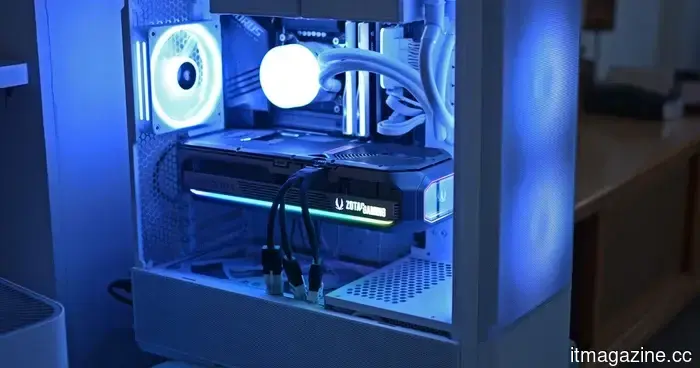
Bacteria might be the key ingredient to maintaining cooler temperatures in your computers.
Researchers have discovered that bacteria can produce thermal materials that surpass the effectiveness of current cooling technologies.
As computers and laptops continue to heat up, particularly with the increasing demand from AI tools and resource-intensive software, overheating has become a significant performance hindrance. In an attempt to mitigate this issue, some individuals have resorted to extreme measures, such as attaching ice machines to GPUs. However, a recent study suggests a more viable solution involving bacteria (as reported by TechXplore).
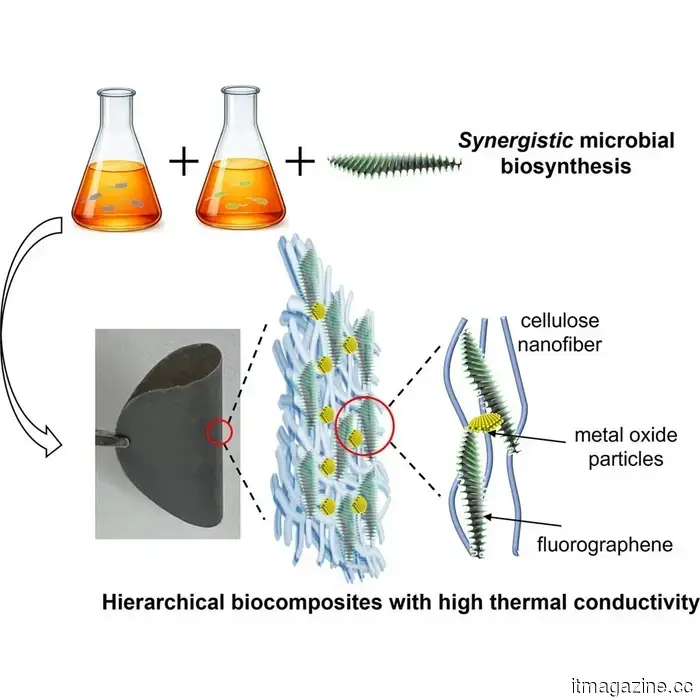
The study indicates that researchers have found a new method for cultivating thermal interface materials, which are the substances that facilitate heat dissipation between a chip and its cooling system. This process utilizes sugar and metal ions to nourish bacteria, allowing them to organically develop the material rather than depending on conventional chemical manufacturing techniques.
Why are scientists utilizing microbes to produce cooling materials?
Science Direct
This innovative approach is referred to as synergistic microbial biosynthesis, which essentially employs living microorganisms to create valuable materials. The biocomposite generated has a thermal conductivity that is 5 to 10 times greater than that of existing thermal interface materials used in electronics. Additionally, this method avoids the harsh chemicals and extreme temperatures typically required in standard manufacturing, as the bacteria operate in a water medium at room temperature.
These results were published in the journal Matter, and DARPA has reportedly expressed significant interest in this type of high-performance, environmentally friendly material, particularly for its importance in military electronics and energy storage solutions.
What are the potential future applications of this technology?
The implications of this research extend far beyond just computer chips. A similar microbial method is already being investigated for the recovery of rare earth elements, and some of the structures produced by bacteria may even be applicable in biomedical fields, such as tissue engineering.
Jacob Roach / Digital Trends
Presently, the main challenge lies in the production speed, as the current process takes anywhere from several days to weeks to yield a completed material. Researchers are collaborating with industry partners to reduce costs and expedite production, focusing on applications in electronics, electric vehicle batteries, and drones.
Although this research is still in its initial stages, it suggests a promising future where the materials used for cooling devices are cultivated rather than manufactured. In the meantime, users can continue to apply traditional methods to enhance their PC's cooling efficiency for optimal performance.




Other articles
 Here are the Prime Day power bank deals I would suggest if you haven't made a decision yet.
Anker and Baseus are offering two excellent Prime Day power bank deals for those who still require portable charging before the sale concludes.
Here are the Prime Day power bank deals I would suggest if you haven't made a decision yet.
Anker and Baseus are offering two excellent Prime Day power bank deals for those who still require portable charging before the sale concludes.
 Ford brought back 350 engineers to correct the mistakes made by its AI systems.
Ford acknowledged that its AI was not capable of replacing seasoned engineers and brought back 350 experienced professionals, subsequently achieving the top position in JD Power's quality ranking for the first time in 16 years.
Ford brought back 350 engineers to correct the mistakes made by its AI systems.
Ford acknowledged that its AI was not capable of replacing seasoned engineers and brought back 350 experienced professionals, subsequently achieving the top position in JD Power's quality ranking for the first time in 16 years.
 Apple's most significant MacBook Pro redesign in years might forgo the chip that was widely anticipated.
Reports suggest that Apple is working on a revamped MacBook Pro that will feature OLED and touch support; however, the anticipated M6 Pro and M6 Max chips might not be released.
Apple's most significant MacBook Pro redesign in years might forgo the chip that was widely anticipated.
Reports suggest that Apple is working on a revamped MacBook Pro that will feature OLED and touch support; however, the anticipated M6 Pro and M6 Max chips might not be released.
 Here are the Prime Day power bank offers I would suggest if you're still uncertain.
Anker and Baseus are offering two excellent Prime Day power bank promotions for those who still require portable charging before the sale concludes.
Here are the Prime Day power bank offers I would suggest if you're still uncertain.
Anker and Baseus are offering two excellent Prime Day power bank promotions for those who still require portable charging before the sale concludes.
 While Spotify integrates AI, Deezer will allow users to remix tracks with approval from artists and proper royalties.
Deezer's Remix Lab is a newly introduced in-app feature initially available in France, allowing fans to remix certain songs with the artists' approval, ensuring rights compliance, and providing compensation for each stream.
While Spotify integrates AI, Deezer will allow users to remix tracks with approval from artists and proper royalties.
Deezer's Remix Lab is a newly introduced in-app feature initially available in France, allowing fans to remix certain songs with the artists' approval, ensuring rights compliance, and providing compensation for each stream.
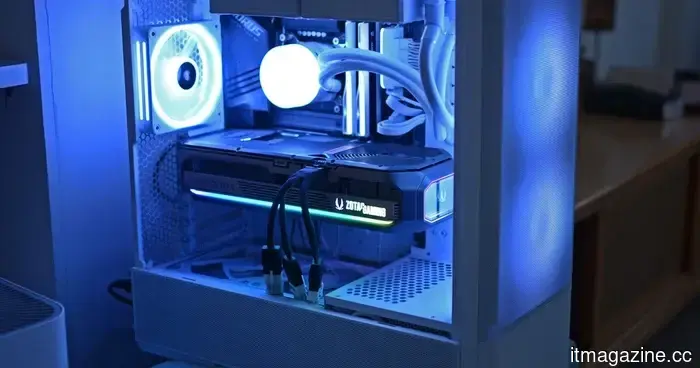 Bacteria may hold the key to maintaining the coolness of your computers.
A recent study reveals that bacteria are capable of producing materials that are significantly more effective at cooling electronics than existing alternatives, providing an eco-friendly solution for overheating devices.
Bacteria may hold the key to maintaining the coolness of your computers.
A recent study reveals that bacteria are capable of producing materials that are significantly more effective at cooling electronics than existing alternatives, providing an eco-friendly solution for overheating devices.
Bacteria might be the key ingredient to maintaining cooler temperatures in your computers.
A recent study reveals that bacteria can produce materials that cool electronics much more effectively than existing alternatives, providing an eco-friendly solution for overheating devices.