
SpaceX intends to offer Starlink phone service directly to consumers in the United States.
Eventually, every satellite company looks to the substantially larger market on the ground, and SpaceX seems prepared to take that step. According to a report by the Financial Times on June 26, the company has informed investors of its intentions to launch a Starlink mobile service for consumers in the US, based on insights from sources close to the situation. If realized, this would pit SpaceX against Verizon, AT&T, and T-Mobile directly.
This information emerged from an unexpected source. President Gwynne Shotwell revealed during a recent IPO roadshow that SpaceX is contemplating the introduction of a Starlink retail product and might establish its own terrestrial mobile network in the US, as noted by the FT's sources.
This ambition represents a significantly more aggressive goal than the company's current setup, indicating a broader market that has remained largely untapped. Currently, SpaceX has a partnership with T-Mobile, providing direct-to-cell connectivity in the US by extending service from space to rural areas where terrestrial towers are absent.
A retail Starlink offering would allow SpaceX to sell directly to consumers, thereby decreasing its dependence on the telecom partners that are currently positioned between its satellite network and end users. The business also serves as SpaceX's revenue generator, and the calculations surrounding its growth are becoming more complex, underscoring the need to access new customers.
Last year, the hardware rationale for this ambition solidified. Speculation regarding SpaceX's mobile aspirations heightened after the company purchased wireless spectrum licenses from EchoStar for $17 billion, a transaction approved by the FCC, which equipped it with the terrestrial spectrum necessary for an independent network. Such a significant asset isn't typically acquired by a company intending to remain a wholesale supplier to other carriers.
The financial rationale behind this move is simple and explains the interest. The US mobile market consists of hundreds of millions of subscribers and generates tens of billions of dollars in annual revenue, representing a much larger opportunity than the satellite-broadband business Starlink has developed to date. By selling directly to consumers instead of wholesaling capacity to a carrier that subsequently resells it, SpaceX would be able to capture a larger share of that revenue per user, provided it can entice users to switch from their existing networks.
However, the challenges are equally apparent. Verizon, AT&T, and T-Mobile have invested decades and substantial resources in constructing thick terrestrial networks, retail presences, and customer loyalty, and while satellite connectivity is remarkable, it still does not fully replace a comprehensive mobile network in urban environments. SpaceX's current direct-to-cell service acts as supplementary coverage for areas lacking connectivity rather than as a substitute for a conventional phone plan.
At present, this is a proposal communicated to investors, not an official product with a price tag or launch timetable, and the information is based on the FT’s sources rather than an official SpaceX statement. The companies SpaceX would be competing against have spent years and enormous amounts on developing their networks. What SpaceX possesses is an operational satellite constellation, $17 billion in spectrum, and the intention to leverage both resources. Context matters too: the announcement was made during an IPO roadshow, suggesting that investors will receive further updates before consumers do.
Other articles
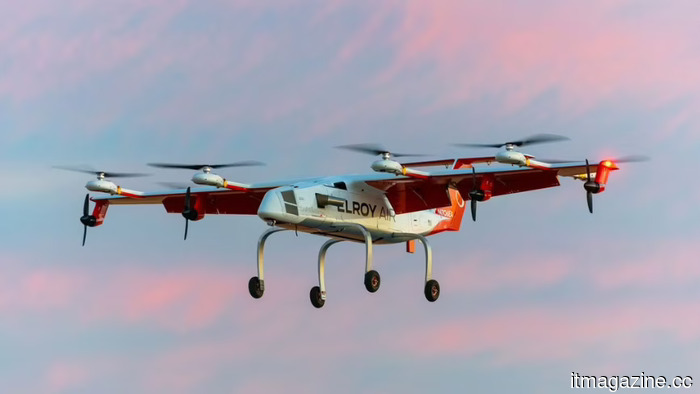 Cargo drone company Elroy Air is approaching an $800 million SPAC agreement.
Elroy Air, the producer of the autonomous Chaparral cargo drone, is engaged in advanced discussions to become a public company through a SPAC merger that would value it at approximately $1 billion.
Cargo drone company Elroy Air is approaching an $800 million SPAC agreement.
Elroy Air, the producer of the autonomous Chaparral cargo drone, is engaged in advanced discussions to become a public company through a SPAC merger that would value it at approximately $1 billion.
 The US government requests that OpenAI delays the launch of its upcoming model.
The Trump administration has requested that OpenAI delay the release of GPT-5.6, granting access to customers individually due to security concerns.
The US government requests that OpenAI delays the launch of its upcoming model.
The Trump administration has requested that OpenAI delay the release of GPT-5.6, granting access to customers individually due to security concerns.
 Samsung's $647 billion home investment is set to move toward the chip-deficient southwest.
Samsung is anticipated to announce an investment of 1,000 trillion won ($647.5 billion) over the next decade in South Korea, with plans for chip manufacturing facilities located outside of Seoul.
Samsung's $647 billion home investment is set to move toward the chip-deficient southwest.
Samsung is anticipated to announce an investment of 1,000 trillion won ($647.5 billion) over the next decade in South Korea, with plans for chip manufacturing facilities located outside of Seoul.
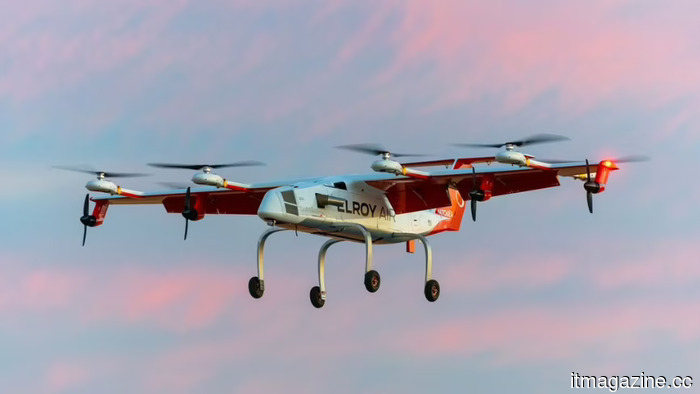 Cargo drone company Elroy Air is close to finalizing an $800 million SPAC agreement.
Elroy Air, the producer of the autonomous Chaparral cargo drone, is in deep discussions to become a public company through a SPAC merger, which would value the company at approximately $1 billion.
Cargo drone company Elroy Air is close to finalizing an $800 million SPAC agreement.
Elroy Air, the producer of the autonomous Chaparral cargo drone, is in deep discussions to become a public company through a SPAC merger, which would value the company at approximately $1 billion.
 Italy initiates an antitrust investigation into the price increase of Microsoft 365's AI services.
Italy’s competition authority is investigating the increase in Microsoft 365 prices that occurred following the inclusion of Copilot and Designer AI tools.
Italy initiates an antitrust investigation into the price increase of Microsoft 365's AI services.
Italy’s competition authority is investigating the increase in Microsoft 365 prices that occurred following the inclusion of Copilot and Designer AI tools.
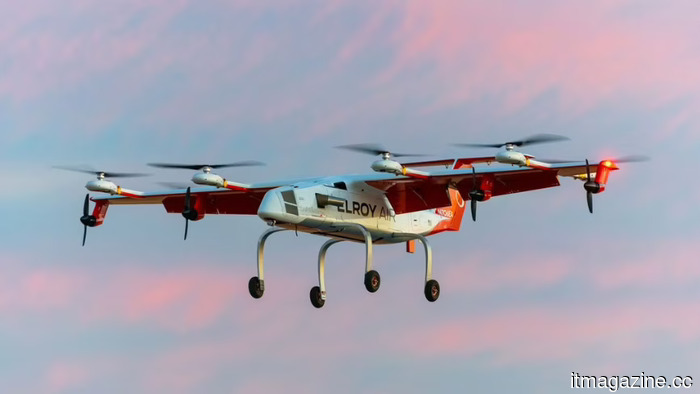 Cargo drone company Elroy Air is approaching an $800 million agreement with a SPAC.
Elroy Air, the company behind the autonomous Chaparral cargo drone, is in advanced discussions to become public through a SPAC merger, which would value the company at around $1 billion.
Cargo drone company Elroy Air is approaching an $800 million agreement with a SPAC.
Elroy Air, the company behind the autonomous Chaparral cargo drone, is in advanced discussions to become public through a SPAC merger, which would value the company at around $1 billion.
SpaceX intends to offer Starlink phone service directly to consumers in the United States.
SpaceX has informed investors of its intention to launch a Starlink mobile service for consumers in the US, positioning itself to compete directly with Verizon, AT&T, and T-Mobile.