
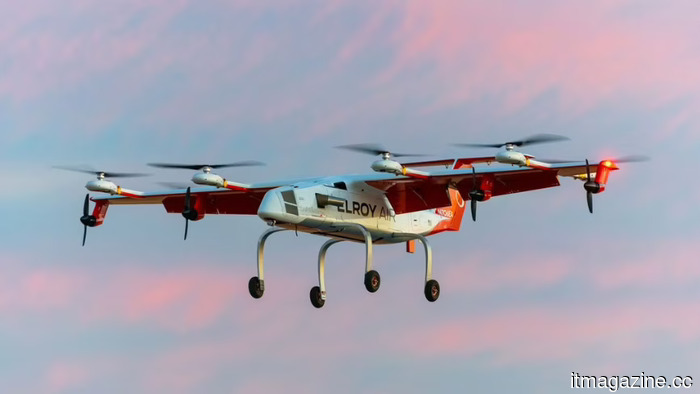
Cargo drone company Elroy Air is approaching an $800 million agreement with a SPAC.
The creator of the autonomous Chaparral is engaged in advanced negotiations to go public via a blank-cheque merger that would value the combined entity at approximately $1 billion. The SPAC, which has been declared defunct multiple times in recent years, continues to find new applications, the latest being a cargo drone.
Elroy Air, a startup based in California aiming to replace certain delivery trucks with autonomous drones, is in advanced discussions to merge with a blank-cheque company for its public listing. This agreement would establish a company with an enterprise value nearing $1 billion and could be publicly announced as soon as today.
The merging partner is Columbus Circle Capital Corp. II, a special-purpose acquisition corporation managed and supported by the team from Inflection Point Asset Management. The fundraising related to this transaction is approximately $800 million, although specifics regarding the structure had not been disclosed when the discussions were reported.
Elroy Air’s product explains the interest in the company. Founded in 2017 by David Merrill and Clint Cope, it manufactures the Chaparral, a hybrid-electric drone designed for middle-mile logistics, featuring vertical take-off and landing capabilities. This aircraft is intended to autonomously carry 300 pounds of cargo over 300 miles, bridging the gap between distribution hubs and local depots that are too distant for a van to serve economically but too close for a traditional aircraft.
It is a heavier-payload variant of the grocery and parcel drones currently in commercial operation in Europe. The company’s order book provides a basis for its valuation. Elroy Air reports around 1,500 preorders from clients like FedEx and Bristow Group, along with active contracts and interest from U.S. and allied military forces.
In January 2026, the company entered into a $200 million joint venture with Abu Dhabi’s Barq Group to produce the Chaparral, with a goal for commercial deployment this year. The defense aspect has gained significance. Earlier this year, Elroy Air was chosen to deliver autonomous aerial cargo as part of a new White House initiative, and interest from U.S. and allied militaries complements the commercial orders.
The use of autonomous logistics in contested or hard-to-access areas is a scenario that militaries are eager to develop, especially as Europe’s first licensed cargo drone moves closer to functioning, and a drone capable of carrying 300 pounds without a pilot aligns with both military and middle-mile delivery needs.
Taking a pre-revenue or early-revenue hardware enterprise public through a merger with a blank-cheque vehicle allows for raising capital and securing a listing without the scrutiny of a traditional IPO roadshow. This has been the reason for the rise and subsequent decline of such deals among capital-seeking aerospace and mobility startups.
The broader drone delivery sector has spent a decade promising deployments that have largely remained just out of reach. Elroy Air’s manufacturing goals are costly, and going public is one method to finance the development necessary for deployment.
Preorders do not equate to revenue, and while targeting commercial deployment in 2026 is an aspiration, it remains unfulfilled. The merger, as mentioned, is still under negotiation and has not yet been finalized, with potential changes to the terms before any announcement.
What is currently proposed is a valuation of about $1 billion for a company whose aircraft is progressing towards deployment but has not yet achieved it, facilitated by a vehicle whose backers are placing a bet. The next indication to watch for is whether the deal is announced as scheduled or if there are delays.
Other articles
 The US government requests that OpenAI delay the release of its upcoming model.
The Trump administration has requested that OpenAI phase the release of GPT-5.6, allowing access to customers one at a time due to security issues.
The US government requests that OpenAI delay the release of its upcoming model.
The Trump administration has requested that OpenAI phase the release of GPT-5.6, allowing access to customers one at a time due to security issues.
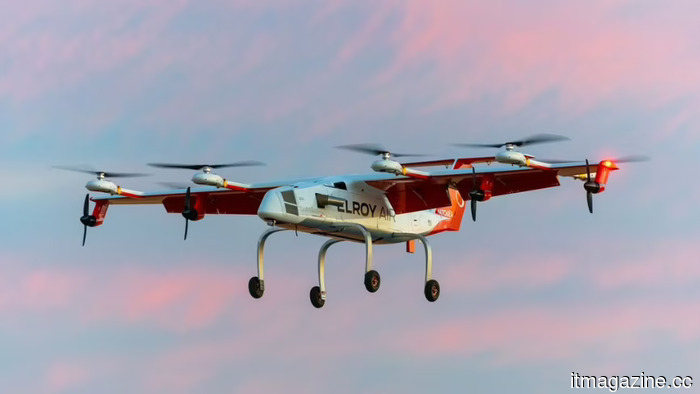 Cargo drone company Elroy Air is close to finalizing an $800 million SPAC agreement.
Elroy Air, the producer of the autonomous Chaparral cargo drone, is in deep discussions to become a public company through a SPAC merger, which would value the company at approximately $1 billion.
Cargo drone company Elroy Air is close to finalizing an $800 million SPAC agreement.
Elroy Air, the producer of the autonomous Chaparral cargo drone, is in deep discussions to become a public company through a SPAC merger, which would value the company at approximately $1 billion.
 Italy launches an antitrust investigation into the price increase of Microsoft 365's AI features.
Italy's antitrust authority is investigating Microsoft's increase in Microsoft 365 prices following the inclusion of Copilot and Designer AI tools.
Italy launches an antitrust investigation into the price increase of Microsoft 365's AI features.
Italy's antitrust authority is investigating Microsoft's increase in Microsoft 365 prices following the inclusion of Copilot and Designer AI tools.
 Kobo turned down 45% of self-published books last year, largely due to issues related to AI.
In 2025, Rakuten Kobo turned down 45% of the titles submitted to its self-publishing platform, primarily citing low-quality AI-generated writing as the reason for most rejections.
SpaceX aims to offer Starlink phone service directly to consumers in the United States.
SpaceX has informed investors of its intention to launch a Starlink mobile service for consumers in the United States, creating direct competition with Verizon, AT&T, and T-Mobile.
Kobo turned down 45% of self-published books last year, largely due to issues related to AI.
In 2025, Rakuten Kobo turned down 45% of the titles submitted to its self-publishing platform, primarily citing low-quality AI-generated writing as the reason for most rejections.
SpaceX aims to offer Starlink phone service directly to consumers in the United States.
SpaceX has informed investors of its intention to launch a Starlink mobile service for consumers in the United States, creating direct competition with Verizon, AT&T, and T-Mobile.
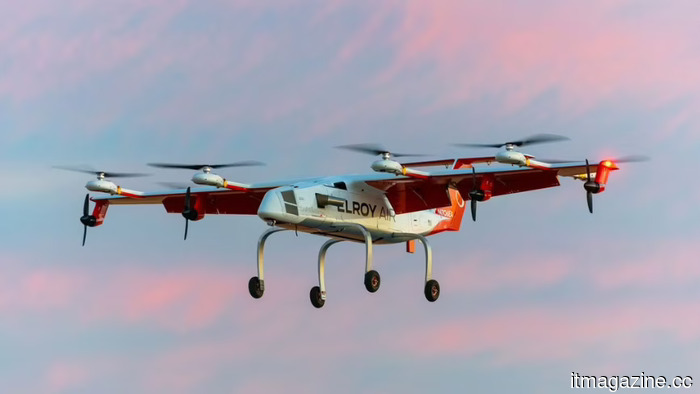 Cargo drone company Elroy Air is approaching an $800 million SPAC agreement.
Elroy Air, the producer of the autonomous Chaparral cargo drone, is engaged in advanced discussions to become a public company through a SPAC merger that would value it at approximately $1 billion.
Cargo drone company Elroy Air is approaching an $800 million SPAC agreement.
Elroy Air, the producer of the autonomous Chaparral cargo drone, is engaged in advanced discussions to become a public company through a SPAC merger that would value it at approximately $1 billion.
Cargo drone company Elroy Air is approaching an $800 million agreement with a SPAC.
Elroy Air, the company behind the autonomous Chaparral cargo drone, is in advanced discussions to become public through a SPAC merger, which would value the company at around $1 billion.