
SpaceX aims to market Starlink phone service directly to consumers in the United States.
Every satellite company eventually turns its attention to the much larger market on the ground, and SpaceX seems poised to make that leap. According to a June 26 report by the Financial Times, the company has informed investors of its intentions to introduce a Starlink mobile service for consumers in the US, citing sources familiar with the situation. If implemented, this would place SpaceX in direct competition with Verizon, AT&T, and T-Mobile.
The information emerged from a somewhat unexpected source. During a recent IPO roadshow, President Gwynne Shotwell indicated to investors that SpaceX is contemplating the launch of a retail Starlink product and might create its own terrestrial mobile network in the US, as reported by FT’s sources.
This represents a notably more ambitious vision than the company's current operations, pointing towards a broader market that has been out of reach so far. Currently, SpaceX has a partnership with T-Mobile to provide direct-to-cell connectivity in the US, delivering additional coverage from space to remote areas lacking tower service.
A retail Starlink product would enable SpaceX to sell directly to consumers, minimizing its dependency on telecom partners currently mediating between its satellite network and the end users. This business is also crucial for SpaceX's finances, and as its growth dynamics become more complex, the need to attract new customers intensifies.
The hardware foundation for this ambition solidified last year. Speculation surrounding SpaceX’s mobile intentions grew after it acquired wireless spectrum licenses from EchoStar for $17 billion, an acquisition approved by the FCC, which provided the necessary terrestrial spectrum for a standalone network. Such a substantial purchase suggests that the company is not aiming to remain merely a wholesale provider for other carriers.
The rationale behind this move is straightforward. The US mobile market comprises hundreds of millions of subscribers and tens of billions of dollars in annual revenue, a significantly larger opportunity than the satellite-broadband market Starlink has developed so far. By selling directly to consumers instead of wholesaling capacity to a carrier, SpaceX could tap into more revenue per user, provided it can convince users to switch from their existing networks.
However, the challenges are equally evident. Verizon, AT&T, and T-Mobile have invested decades and significant resources into constructing extensive terrestrial networks, retail operations, and customer relationships. While satellite connectivity is noteworthy, it has yet to replace a complete mobile network in urban environments. SpaceX’s current direct-to-cell service is intended as supplementary coverage for dead zones rather than a substitute for traditional mobile plans.
At this stage, this is merely a proposal shared with investors, not a finalized product with pricing or a launch date. The information relies on FT’s sources instead of an official SpaceX announcement. The established carriers have spent years and enormous amounts building their networks. What SpaceX possesses is an existing satellite constellation, $17 billion in spectrum, and, according to these reports, plans to utilize both. The context is significant as well: the announcement was made during an IPO roadshow, suggesting that investors might learn more before consumers do.
Other articles
 Samsung's $647 billion home investment is expected to focus on the chip-needy southwest region.
Samsung is anticipated to announce a decade-long investment of 1,000 trillion won ($647.5 billion) in South Korea, with plans for chip manufacturing facilities located outside of Seoul.
Samsung's $647 billion home investment is expected to focus on the chip-needy southwest region.
Samsung is anticipated to announce a decade-long investment of 1,000 trillion won ($647.5 billion) in South Korea, with plans for chip manufacturing facilities located outside of Seoul.
 TikTok and YouTube removed 4.7 million accounts belonging to users under the age of 16 in Indonesia.
TikTok and YouTube have disabled around 4.7 million accounts belonging to users under 16 in Indonesia following a regulation regarding high-risk platforms implemented in March.
TikTok and YouTube removed 4.7 million accounts belonging to users under the age of 16 in Indonesia.
TikTok and YouTube have disabled around 4.7 million accounts belonging to users under 16 in Indonesia following a regulation regarding high-risk platforms implemented in March.
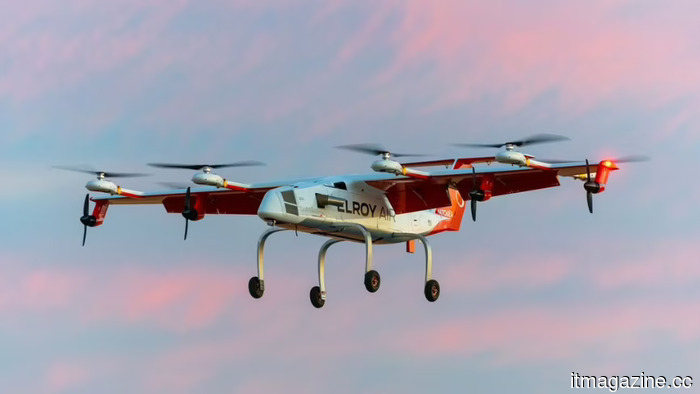 Cargo drone company Elroy Air is close to finalizing an $800 million SPAC agreement.
Elroy Air, the producer of the autonomous Chaparral cargo drone, is in deep discussions to become a public company through a SPAC merger, which would value the company at approximately $1 billion.
Cargo drone company Elroy Air is close to finalizing an $800 million SPAC agreement.
Elroy Air, the producer of the autonomous Chaparral cargo drone, is in deep discussions to become a public company through a SPAC merger, which would value the company at approximately $1 billion.
 The US government requests that OpenAI delays the launch of its upcoming model.
The Trump administration has requested OpenAI to delay the release of GPT-5.6, granting customer access in a staggered manner due to security issues.
SpaceX intends to offer Starlink phone service directly to consumers in the United States.
SpaceX has informed investors of its intention to launch a Starlink mobile service for consumers in the US, positioning itself to compete directly with Verizon, AT&T, and T-Mobile.
The US government requests that OpenAI delays the launch of its upcoming model.
The Trump administration has requested OpenAI to delay the release of GPT-5.6, granting customer access in a staggered manner due to security issues.
SpaceX intends to offer Starlink phone service directly to consumers in the United States.
SpaceX has informed investors of its intention to launch a Starlink mobile service for consumers in the US, positioning itself to compete directly with Verizon, AT&T, and T-Mobile.
 The US government requests that OpenAI delay the release of its upcoming model.
The Trump administration has requested that OpenAI phase the release of GPT-5.6, allowing access to customers one at a time due to security issues.
The US government requests that OpenAI delay the release of its upcoming model.
The Trump administration has requested that OpenAI phase the release of GPT-5.6, allowing access to customers one at a time due to security issues.
SpaceX aims to market Starlink phone service directly to consumers in the United States.
SpaceX has informed investors of its intention to launch a Starlink mobile service targeting US consumers, which will directly compete with Verizon, AT&T, and T-Mobile.