
Samsung's $647 billion home investment is expected to focus on the chip-needy southwest region.
When dealing with numbers in the trillions, it's easy to lose perspective, so it’s valuable to pause and consider this one. Samsung is anticipated to unveil plans to invest 1,000 trillion won, approximately $647.5 billion, in South Korea over the next decade, according to various local media reports from June 25. If realized as described, this commitment would rank among the largest corporate investment pledges in the country’s history. The announcement is slated for June 29 at the presidential office, where executives will likely appear with President Lee Jae Myung.
Samsung Electronics won't be the only semiconductor manufacturer present. Executives from SK Hynix, its domestic competitor, are also expected to be there to present their own investment strategies, focusing on areas outside Seoul and its surrounding cities. This geographical aspect is significant; South Korea’s two leading chipmakers have historically concentrated their production around the capital and are under increasing pressure to diversify their operations and job creation to other regions.
Out of the total investment, an estimated 300 trillion won is earmarked for establishing chip plants in the country’s southwest, a region that has mostly observed the semiconductor boom from afar. The government has been in discussions with both companies regarding a second chip cluster in that exact area. The remainder of the investment encompasses sectors that illustrate Samsung’s aspirations: artificial intelligence data centers, batteries, and displays. This portfolio resembles less a chipmaker’s shopping list and more an industrial strategy, which reflects the nature of such a large investment being announced in this context.
The decade-long timeframe plays a role in interpreting the number. When spread over 10 years, 1,000 trillion won translates to an annual investment that, while still substantial, aligns more closely with Samsung's current capital expenditures than the headline figure suggests. Companies often consolidate multi-year investment plans into a singular amount for announcements like this one, and the meeting on June 29 serves as much as a political gathering as a financial one.
For SK Hynix, this day presents an opportunity to present a counter to its larger competitor in front of a shared audience. The company has benefited from the same increase in demand for high-bandwidth memory—the specialized chips used in AI accelerators—and has recently surpassed Samsung as South Korea’s most valuable publicly listed company based on this growth. Earlier this year, Samsung reached a $1 trillion market capitalization. The specifics of SK Hynix’s plans hadn't been disclosed prior to the meeting, and how its announced figure will compare to Samsung's is a key point to observe when the announcements occur.
A word of caution is necessary. The figure stems from media sources rather than an official Samsung announcement, and as of the reports' publication, the company had not officially confirmed the plan. While details are consistent across news outlets, the formal announcement is set for June 29, and the exact allocations may change in the interim.
What remains clear is the timing. The investment comes in response to an AI-driven surge in demand for high-end memory, altering the strategies of both Samsung and SK Hynix, as Seoul encourages its leading companies to expand domestically rather than overseas. The magnitude of this expected investment has prompted a warning from Korea's policy chief about potential increases in regional housing costs. The June 29 meeting will clearly frame the scenario, bringing together a president, two major chipmakers, and a substantial figure that signifies a declaration of intent.
Other articles
 Samsung's $647 billion home investment is set to move toward the chip-deficient southwest.
Samsung is anticipated to announce an investment of 1,000 trillion won ($647.5 billion) over the next decade in South Korea, with plans for chip manufacturing facilities located outside of Seoul.
Samsung's $647 billion home investment is set to move toward the chip-deficient southwest.
Samsung is anticipated to announce an investment of 1,000 trillion won ($647.5 billion) over the next decade in South Korea, with plans for chip manufacturing facilities located outside of Seoul.
 TikTok and YouTube removed 4.7 million accounts belonging to users under 16 in Indonesia.
TikTok and YouTube have disabled approximately 4.7 million accounts belonging to users under 16 in Indonesia following a regulation on high-risk platforms issued in March.
TikTok and YouTube removed 4.7 million accounts belonging to users under 16 in Indonesia.
TikTok and YouTube have disabled approximately 4.7 million accounts belonging to users under 16 in Indonesia following a regulation on high-risk platforms issued in March.
 The US government requests that OpenAI delays the launch of its upcoming model.
The Trump administration has requested that OpenAI delay the release of GPT-5.6, granting access to customers individually due to security concerns.
The US government requests that OpenAI delays the launch of its upcoming model.
The Trump administration has requested that OpenAI delay the release of GPT-5.6, granting access to customers individually due to security concerns.
 Italy launches an antitrust investigation into the price increase of Microsoft 365's AI features.
Italy's antitrust authority is investigating Microsoft's increase in Microsoft 365 prices following the inclusion of Copilot and Designer AI tools.
Italy launches an antitrust investigation into the price increase of Microsoft 365's AI features.
Italy's antitrust authority is investigating Microsoft's increase in Microsoft 365 prices following the inclusion of Copilot and Designer AI tools.
 TikTok and YouTube removed 4.7 million accounts belonging to users under the age of 16 in Indonesia.
TikTok and YouTube have disabled around 4.7 million accounts belonging to users under 16 in Indonesia following a regulation regarding high-risk platforms implemented in March.
TikTok and YouTube removed 4.7 million accounts belonging to users under the age of 16 in Indonesia.
TikTok and YouTube have disabled around 4.7 million accounts belonging to users under 16 in Indonesia following a regulation regarding high-risk platforms implemented in March.
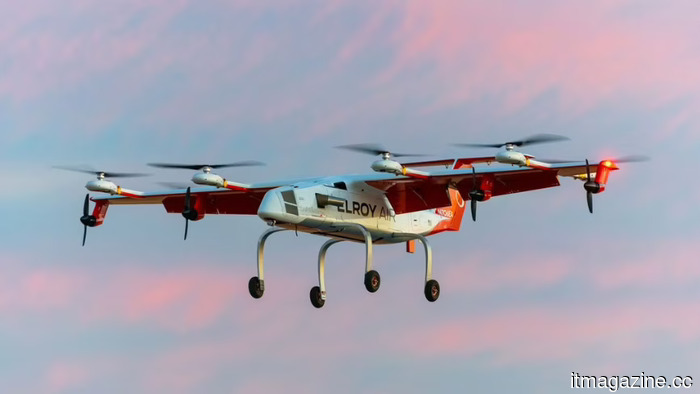 Cargo drone company Elroy Air is approaching an $800 million agreement with a SPAC.
Elroy Air, the company behind the autonomous Chaparral cargo drone, is in advanced discussions to become public through a SPAC merger, which would value the company at around $1 billion.
Cargo drone company Elroy Air is approaching an $800 million agreement with a SPAC.
Elroy Air, the company behind the autonomous Chaparral cargo drone, is in advanced discussions to become public through a SPAC merger, which would value the company at around $1 billion.
Samsung's $647 billion home investment is expected to focus on the chip-needy southwest region.
Samsung is anticipated to announce a decade-long investment of 1,000 trillion won ($647.5 billion) in South Korea, with plans for chip manufacturing facilities located outside of Seoul.