
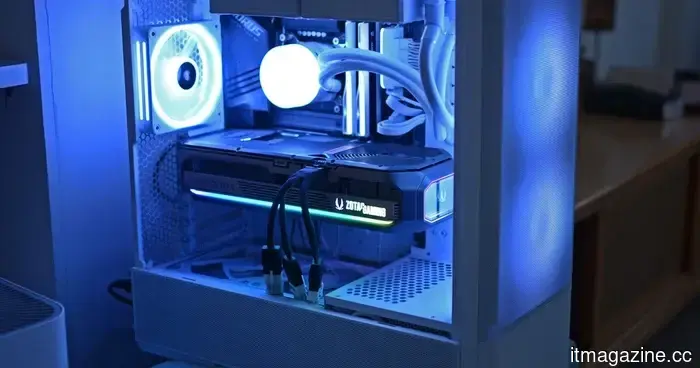
Bacteria may hold the key to maintaining the coolness of your computers.
Scientists discover that bacteria can produce thermal materials that surpass existing cooling technologies.
Your PC and laptop heat up more each year, especially now that AI tools and demanding software stress them more than ever. Heat remains a significant hurdle for performance, prompting extreme measures like attaching actual ice machines to RTX GPUs. A recent study suggests a much less extreme solution involving bacteria (as reported by TechXplore).
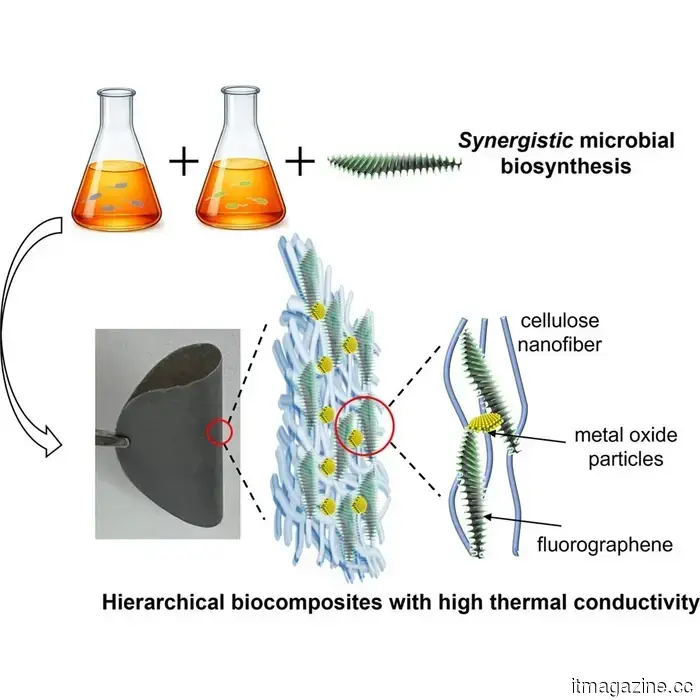
Researchers have introduced a novel method for cultivating thermal interface materials, which are the substances placed between a chip and its cooling system to facilitate quicker heat dissipation. This method involves providing bacteria with sugar and metal ions, allowing the microbes to naturally create the material instead of relying on conventional chemical manufacturing.
Why are researchers utilizing microbes to develop cooling materials?
The technique, known as synergistic microbial biosynthesis, harnesses living microbes to generate valuable materials. The resulting biocomposite conducts heat 5 to 10 times more effectively than the currently used thermal interface materials in electronics. Furthermore, it avoids the harsh chemicals and high temperatures typical of standard manufacturing processes, as the bacteria function at room temperature in water.
These findings were published in the journal Matter, and DARPA has reportedly expressed significant interest in this type of high-performance, eco-friendly material, given that effective thermal management is crucial for military electronics and energy storage systems.
What are the potential future applications of this technology?
The possibilities extend far beyond computer chips. A similar microbial method is already under consideration for the recovery of rare earth elements, and some structures formed by bacteria may even have applications in biomedicine, such as tissue engineering.
Currently, the main challenge is the speed of production, as the existing process can take from a few days to several weeks to yield a finished material. Researchers are collaborating with industry partners to reduce costs and expedite production, eyeing applications in electronics, electric vehicle batteries, and drones.
This research is still in its preliminary stages, but it indicates a promising future where the materials responsible for cooling devices are cultivated instead of manufactured. In the meantime, you can always use the suggested methods to enhance your PC’s cooling and maintain smooth operation.
Manisha Priyadarshini is a technology and entertainment writer with over nine years of editorial experience.
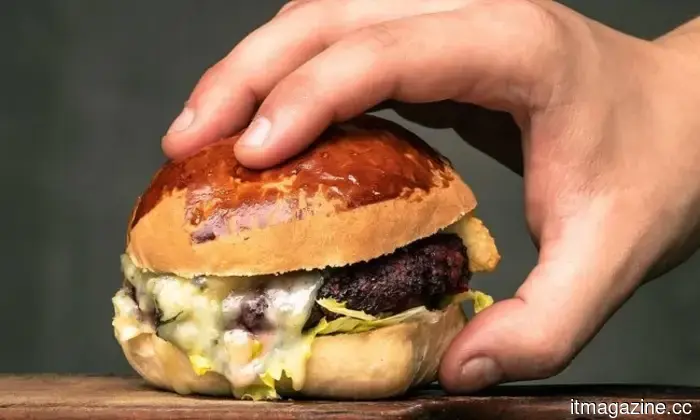
Stanford scientists have developed an AI capable of designing healthier, more environmentally friendly burgers.
The new system balances nutrition, taste, cost, and environmental impact to create improved recipes.
Artificial intelligence has already been utilized to write code, discover pharmaceuticals, and generate videos. Now, it is venturing into improving burgers. Researchers at Stanford University have introduced BurgerAI, a new AI system that formulates burger recipes by balancing factors such as taste, nutrition, sustainability, and cost. Surprisingly, during blind taste tests, some diners preferred the AI-generated burgers as much as, or even more than, a popular fast-food burger.
BurgerAI is designed to create recipes rather than replicate them.
OpenAI has unveiled its latest GPT-5.6 model, but access is limited.
GPT-5.6 introduces enhanced reasoning, autonomy, and cybersecurity features, but its availability is currently restricted to government-approved clients.
OpenAI has officially launched GPT-5.6, its most advanced line of AI models to date. However, there's a catch: unless you're one of a select few approved customers, you won't be able to access it in the near future. Rather than a wide rollout, the company is initiating a controlled preview while it navigates a new U.S. government review process.
GPT-5.6 is available, but access remains exclusive to a select audience.
Tired of sifting through academic papers? This AI tool transforms them into TikTok-style videos.
PaperTok makes academic research more accessible to those with short attention spans.
Typically, academic papers are not considered entertaining reading. For many, the lengthy, dense, and field-specific language can be quite overwhelming. These documents usually come in PDF format that tests one's determination to engage with the material. A team of researchers from the University of Washington believes there’s a better method to present this work to the general public. They are converting academic papers into short videos.
The tool, named PaperTok, employs AI to assist researchers in transforming academic papers into concise, social media-friendly videos. Think of it as TikTok, but with the goal of explaining research rather than sharing trivial content. The most appealing aspect? PaperTok is developing a platform centered around the scientists and researchers involved, rather than merely using AI to summarize the papers.



Other articles
 While Spotify integrates AI, Deezer will allow users to remix tracks with approval from artists and proper royalties.
Deezer's Remix Lab is a newly introduced in-app feature initially available in France, allowing fans to remix certain songs with the artists' approval, ensuring rights compliance, and providing compensation for each stream.
While Spotify integrates AI, Deezer will allow users to remix tracks with approval from artists and proper royalties.
Deezer's Remix Lab is a newly introduced in-app feature initially available in France, allowing fans to remix certain songs with the artists' approval, ensuring rights compliance, and providing compensation for each stream.
 OpenAI has launched GPT-5.6 Sol to 20 government-approved partners in a limited preview.
OpenAI introduced Sol, its most advanced model, to approximately 20 partners sanctioned by Washington following Trump's AI executive order. Wider access will be available at a later time.
OpenAI has launched GPT-5.6 Sol to 20 government-approved partners in a limited preview.
OpenAI introduced Sol, its most advanced model, to approximately 20 partners sanctioned by Washington following Trump's AI executive order. Wider access will be available at a later time.
 During the final hours of Prime Day, I discovered the top deals to help you avoid the disappointment of missing out.
Prime Day concludes tonight, and these are the deals I would personally invest in before the prices increase again and the memory crisis causes them to rise even further.
During the final hours of Prime Day, I discovered the top deals to help you avoid the disappointment of missing out.
Prime Day concludes tonight, and these are the deals I would personally invest in before the prices increase again and the memory crisis causes them to rise even further.
 Russian hackers were responsible for the JLR cyberattack that resulted in a $2.5 billion loss for the UK economy.
According to the New York Times, the JLR cyberattack that halted production for six weeks and led to a $2 billion bailout in the UK was executed by Russian hackers.
Russian hackers were responsible for the JLR cyberattack that resulted in a $2.5 billion loss for the UK economy.
According to the New York Times, the JLR cyberattack that halted production for six weeks and led to a $2 billion bailout in the UK was executed by Russian hackers.
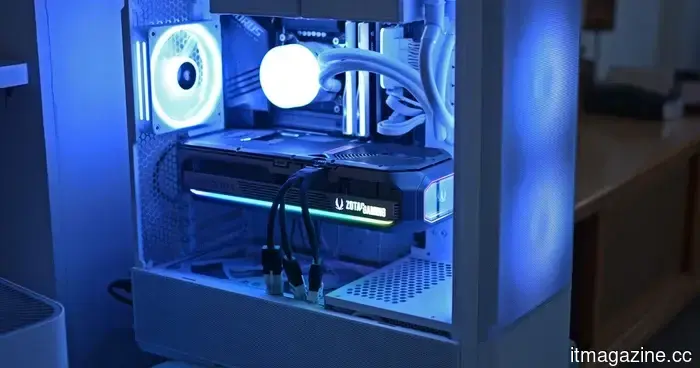 Bacteria might be the key ingredient to maintaining cooler temperatures in your computers.
A recent study reveals that bacteria can produce materials that cool electronics much more effectively than existing alternatives, providing an eco-friendly solution for overheating devices.
Bacteria might be the key ingredient to maintaining cooler temperatures in your computers.
A recent study reveals that bacteria can produce materials that cool electronics much more effectively than existing alternatives, providing an eco-friendly solution for overheating devices.
 In the final hours of Prime Day, I discovered the best deals to help you avoid the disappointment of missing out.
Prime Day concludes tonight, and here are the deals I would personally invest in before the prices increase and the memory crisis drives them even higher.
In the final hours of Prime Day, I discovered the best deals to help you avoid the disappointment of missing out.
Prime Day concludes tonight, and here are the deals I would personally invest in before the prices increase and the memory crisis drives them even higher.
Bacteria may hold the key to maintaining the coolness of your computers.
A recent study reveals that bacteria are capable of producing materials that are significantly more effective at cooling electronics than existing alternatives, providing an eco-friendly solution for overheating devices.