

Solo-maxxing: How technology has shown Generation Z how to profit from solitude.
We can no longer act as if the gap between generations is non-existent; it is increasingly visible, widening each day, becoming more challenging to cross and even to articulate. We also cannot ignore the role of technology in this divide, as it has transformed not only the tools we use but also the speed of our thinking, the nature of our desires, and how we perceive ourselves in relation to others. Each time I see my feed filled with news about innovation, disruption, automation, and intelligence, I grapple with a simple yet difficult question: is this truly beneficial for us?
I do not oppose evolution, as it is fundamental to our existence and the societies we have built. However, there is something unsettling about our current era; it seems that as technology progresses, individuals increasingly withdraw from the world around them. What was once seen as collective progress now often appears to be a private confinement where the individual becomes central yet somehow diminished.
We no longer merely live; we categorize our existence. Time is no longer something we inherit but something we brand. Every instinct, habit, and feeling of loneliness now requires a name, polished into a trend, and returned to us as if it were a revelation. I am no longer traditional; I am a baby boomer. I am not young and restless; I belong to Generation Z. I am not ambitious; I am optimized. I am not alone; I am independent. I am not going on a trip by myself; I am solo-maxxing.
Perhaps this highlights a significant aspect of our identity: even solitude, that final private refuge, must now be marketed as a strategy. Sooner or later, the suffix finds you, whether mentioned by a colleague discussing sleepmaxxing, a teenager referring to looksmaxxing, or a fitness account encouraging gymmaxxing.
Solo-maxxing refers to maximizing your solitude. This term, tracked in various media outlets during the spring and summer of 2026, describes the conscious decision to focus your time, money, and energy on yourself rather than on a relationship and to view single life not as a transitional period but as the ultimate goal. Practically speaking, it involves solo travel, dining alone, redirecting funds towards fitness and savings, and organizing days around independence, all documented and shared online.
It would be easy to dismiss this as a fleeting internet trend, a hashtag that will fade, but that viewpoint misses the deeper connection. Solo-maxxing represents the moment when a cultural logic that has been evolving for a decade finally intersects with companionship, and the technology that facilitated this shift is already gearing up to market the next concept.
To understand this, it's key to trace the origin of the term. The suffix has a surprisingly clear origin, starting from 1940s game theory, which focused on maximizing a single variable at the expense of others, evolving into "min-maxing" in tabletop role-playing games, where players concentrated all their resources on one characteristic. In the early to mid-2010s, it took on a darker tone within incel forums, where men began applying optimization language to their bodies.
The initial concept was looksmaxxing, aimed at enhancing physical attractiveness to increase what those forums referred to as "sexual market value." Linguist Adam Aleksic, who has documented this evolution in *The Washington Post* and his book *Algospeak*, points out that the terms that transitioned from incel forums to mainstream usage were precisely those that shed their overt misogyny while retaining a competitive, quantitative aspect. Terms like maxxing, sigma, and chad became popular, while more crude expressions were left behind. By late 2023, this suffix had gone viral, largely through TikTok, where women adapted it for makeup tutorials, often unaware of its origins.
Aleksic noted that in early 2024, around 40% of students in a Georgetown lecture hall recognized these terms, and by two months later at Stanford, that number had risen to 80%. This is the legacy of solo-maxxing. The framing did not soften as it entered the mainstream but merely found new elements to optimize, while retaining the chilling assumption that human life can be reduced to metrics, with the logical step being to maximize those numbers.
None of this would hold significance if the trend weren't gaining traction in a culture where young people, by various measures, are stepping back from the complexities of romance, and they have their reasons.
The first is financial; the average cost of a comprehensive date in the United States, accounting for dinner, drinks, transportation, and pre-date grooming, has reportedly risen to around $189, with Gen Z spending closer to $205. The second reason is fatigue; a multinational survey of roughly 14,380 adults revealed that nearly half of those aged 18 to 34 felt that being single was more serene than being in a relationship, and 46% believed dating apps made relationships seem more disposable. Surveys have consistently shown that
Other articles
 Amazon plans to invest an additional $13 billion in cloud and AI in India by 2030.
Amazon plans to invest an additional $13 billion in cloud and AI infrastructure in India, raising its commitment for the 2026-2030 period to $48 billion, as announced during Jassy's meeting with Modi.
Amazon plans to invest an additional $13 billion in cloud and AI in India by 2030.
Amazon plans to invest an additional $13 billion in cloud and AI infrastructure in India, raising its commitment for the 2026-2030 period to $48 billion, as announced during Jassy's meeting with Modi.
 Berlin's Almetra secures €16.3M to transform factory video into real-time data.
The Berlin startup Almetra, previously known as Deltia, has secured a €16.3 million Series A funding round to transform factory floor video into real-time production data and to expand its presence in the US.
Berlin's Almetra secures €16.3M to transform factory video into real-time data.
The Berlin startup Almetra, previously known as Deltia, has secured a €16.3 million Series A funding round to transform factory floor video into real-time production data and to expand its presence in the US.
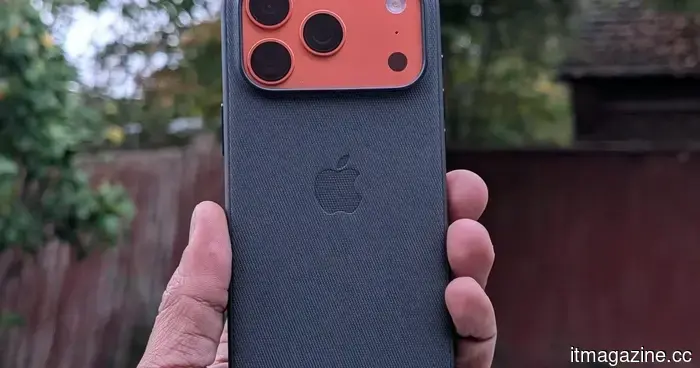 I skipped most of the iPhone accessory deals during Prime Day, but these five are definitely worth investing in.
Five iPhone accessories at Prime Day 2026 pricing, each selected for their ability to address genuine issues instead of merely appearing impressive on a specifications list.
I skipped most of the iPhone accessory deals during Prime Day, but these five are definitely worth investing in.
Five iPhone accessories at Prime Day 2026 pricing, each selected for their ability to address genuine issues instead of merely appearing impressive on a specifications list.
 Gemini in Chrome can now precisely observe what you are viewing on your screen.
Google is launching a new "Select from screen" feature for Gemini in Chrome, while Gemini 3.5 Flash incorporates integrated computer usage functionalities.
Gemini in Chrome can now precisely observe what you are viewing on your screen.
Google is launching a new "Select from screen" feature for Gemini in Chrome, while Gemini 3.5 Flash incorporates integrated computer usage functionalities.
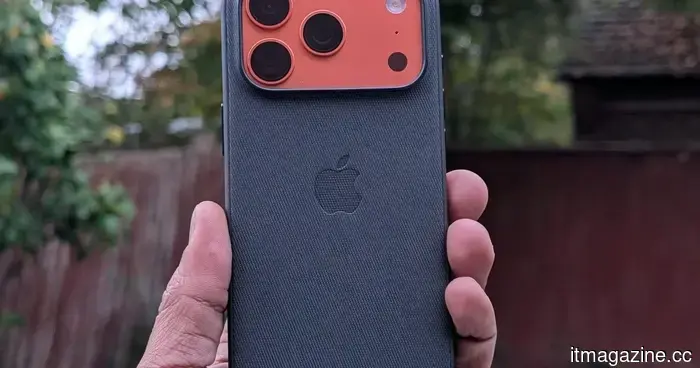 I skipped most of the Prime Day deals on iPhone accessories, but these five are worth the investment.
Five iPhone accessories available at Prime Day 2026 prices, each chosen for its ability to address a genuine issue rather than merely appealing to specifications.
I skipped most of the Prime Day deals on iPhone accessories, but these five are worth the investment.
Five iPhone accessories available at Prime Day 2026 prices, each chosen for its ability to address a genuine issue rather than merely appealing to specifications.
 According to reports, Apple has addressed the problems with the hinge of the foldable iPhone, so you can feel a bit more at ease now.
Apple has allegedly addressed the majority of the hinge problems that raised concerns about delays for its first foldable iPhone, with mass production expected to start next month.
According to reports, Apple has addressed the problems with the hinge of the foldable iPhone, so you can feel a bit more at ease now.
Apple has allegedly addressed the majority of the hinge problems that raised concerns about delays for its first foldable iPhone, with mass production expected to start next month.
Solo-maxxing: How technology has shown Generation Z how to profit from solitude.
Solo-maxxing transforms solitude into an endeavor. The same technology that has gamified relationships now profits from the withdrawal from them. Who truly gains from this?