
Amazon plans to invest an additional $13 billion in cloud and AI in India by 2030.
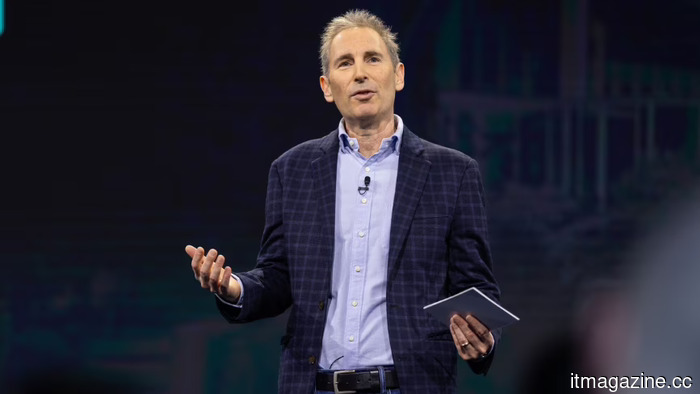
On June 25, Amazon announced it will invest an additional $13 billion in India by 2030, bringing its total planned expenditure in the country to $48 billion during this period and directing the new funds towards its cloud and artificial intelligence businesses, which are crucial to its operations. Chief Executive Andy Jassy shared this news in New Delhi while meeting with Prime Minister Narendra Modi, indicating that this investment has both commercial and diplomatic significance.
This new investment builds on the $35 billion Amazon pledged to India last year, resulting in a total of $48 billion earmarked for 2026 to 2030. The funds will enhance the capacity of Amazon Web Services (AWS) data centers located in Mumbai and Hyderabad, where the company currently operates its cloud infrastructure in India. The goal is to provide startups, enterprises, and government agencies with access to customized AI chips, managed AI services, and the necessary development tools.
India is a key battleground for the global expansion of AI infrastructure, and Amazon is not alone in making substantial investments. Microsoft and Google Cloud are investing similar amounts, each expressing confidence that India's large developer community, a government committed to an independent AI strategy, and limited existing data center capacity present significant opportunities.
This investment is the tangible counterpart to ongoing competition in the field, as the infrastructure—comprising chips, facilities, and energy—must precede the sale of the services built on it. Jassy described the investment as aligned with the Indian government's goals of making AI more accessible, digitizing small enterprises, creating jobs, and facilitating exports.
As usual, Amazon has included longer-term objectives in this announcement: the creation of 3.8 million jobs by 2030, $80 billion in cumulative exports, AI advantages for 15 million small businesses, and AI education for four million students in government schools. While these goals are optimistic, they are more aspirational than easily verifiable commitments.
This new focus on cloud infrastructure signifies a shift in Amazon's narrative regarding India. For many years, the focus was on retail and the competitive struggle to dominate the Indian e-commerce market against local competitors and Walmart-owned Flipkart, which led to earlier commitments like the $5 billion offered by Jeff Bezos during his visits.
The focus has now transitioned to AWS, the segment responsible for the majority of Amazon's operating profit, which is increasingly linked to the demand generated by the AI boom. This demand drives the investment figures, as AWS continues to heavily invest in data centers globally to accommodate AI workloads, while the parent company has made several strategic investments in the AI model layer itself.
Amazon has invested up to $25 billion into Anthropic, and this investment has sometimes positively influenced its quarterly results. The upcoming Indian spending is part of the same strategy, building infrastructure in a market that Amazon anticipates will expand significantly.
Whether the planned $48 billion investment materializes as intended will unfold over the next four years, and such multi-year commitments often undergo adjustments based on changing circumstances. For now, the main takeaway is the overall direction of the investment.
According to Amazon's estimates, its cumulative investment in India from 2010 to 2030 will exceed $88 billion, with this latest investment strategically targeting the segment the company believes will be most vital. The figures will be reviewed during each earnings call and ministerial visit, but the narrative is expected to remain consistent. Amazon, which started as an online bookstore, is now primarily focused on selling computing power.
Other articles
 Gemini in Chrome can now accurately detect what you're viewing on your screen.
Google is launching a new "Select from screen" feature for Gemini in Chrome, and Gemini 3.5 Flash is acquiring integrated computer-use functionalities.
Gemini in Chrome can now accurately detect what you're viewing on your screen.
Google is launching a new "Select from screen" feature for Gemini in Chrome, and Gemini 3.5 Flash is acquiring integrated computer-use functionalities.
 H.B. Fuller is close to finalizing a $628 million agreement to acquire the UK-based wound-care company AMS, despite opposition from its own investors.
H.B. Fuller has accepted a cash offer of 285p per share for AMS, which values its equity at approximately $628 million, while activist group Ancora is urging the board to reject the offer.
H.B. Fuller is close to finalizing a $628 million agreement to acquire the UK-based wound-care company AMS, despite opposition from its own investors.
H.B. Fuller has accepted a cash offer of 285p per share for AMS, which values its equity at approximately $628 million, while activist group Ancora is urging the board to reject the offer.
 South Korean semiconductor stocks rise following Micron's positive earnings report.
On June 25, Samsung and SK Hynix drove a 4% increase in the KOSPI following Micron's impressive quarter and forecast, which boosted optimism regarding AI memory demand.
South Korean semiconductor stocks rise following Micron's positive earnings report.
On June 25, Samsung and SK Hynix drove a 4% increase in the KOSPI following Micron's impressive quarter and forecast, which boosted optimism regarding AI memory demand.
 The camera setup on the OPPO Find X9 Ultra wasn't necessary to make a strong impression on me.
From the show floors of Computex to the neon-lit streets of Taipei, the OPPO Find X9 Ultra showcased impressive photos, remarkable zoom, and top-tier camera performance without requiring its optional camera kit.
The camera setup on the OPPO Find X9 Ultra wasn't necessary to make a strong impression on me.
From the show floors of Computex to the neon-lit streets of Taipei, the OPPO Find X9 Ultra showcased impressive photos, remarkable zoom, and top-tier camera performance without requiring its optional camera kit.
 An innovative Mac application allows you to experience vibrations via the trackpad whenever you click on a link or button.
HapticPad utilizes your Mac's Force Touch trackpad to provide vibrations on links, buttons, and web inputs as you hover over them in Chrome.
An innovative Mac application allows you to experience vibrations via the trackpad whenever you click on a link or button.
HapticPad utilizes your Mac's Force Touch trackpad to provide vibrations on links, buttons, and web inputs as you hover over them in Chrome.
 Solo-maxxing: How technology has shown Generation Z how to profit from solitude.
Solo-maxxing transforms solitude into an endeavor. The same technology that has gamified relationships now profits from the withdrawal from them. Who truly gains from this?
Solo-maxxing: How technology has shown Generation Z how to profit from solitude.
Solo-maxxing transforms solitude into an endeavor. The same technology that has gamified relationships now profits from the withdrawal from them. Who truly gains from this?
Amazon plans to invest an additional $13 billion in cloud and AI in India by 2030.
Amazon plans to invest an additional $13 billion in cloud and AI infrastructure in India, raising its commitment for the 2026-2030 period to $48 billion, as announced during Jassy's meeting with Modi.