
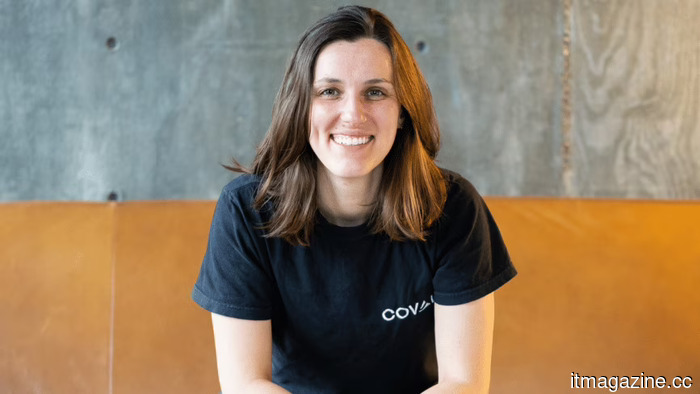
Coval secures $28 million to evaluate the performance of AI voice agents under pressure.
Coval has successfully secured $28 million to evaluate AI voice agents prior to their use with live callers. The founder, who previously established safety measures for Waymo’s autonomous vehicles, believes that voice technology requires similar precautions.
An AI voice agent may perform perfectly in demonstrations but can falter during actual calls, struggling with accents, background noise, and unexpected conversational turns. Coval aims to identify these issues before they reach customers. Investors are optimistic about the company's potential.
The San Francisco-based startup raised $28 million in a Series A funding round led by Norwest, with participation from Base10 Partners, Twilio Ventures, and Y Combinator. This funding raises Coval's total investment to $31 million since its inception in 2024. The company is a Y Combinator graduate.
Coval's premise is straightforward. As more companies implement voice agents to interact with customers, they require evidence that these agents function effectively. Coval provides that assurance.
The concept is inspired by autonomous vehicles. Coval's founder and CEO, Brooke Hopkins, developed evaluation systems at Waymo, Google’s self-driving division. Her team conducted millions of simulated miles for every software modification, as any failure on public roads was unacceptable.
Hopkins contends that voice agents require the same level of scrutiny. A voice agent operates multiple models simultaneously: one transcribes the conversation, another formulates a response, and a third vocalizes it. This process resembles the sensory, planning, and control systems found in autonomous vehicles.
The conclusion drawn from this comparison is clear: neither system can be feasibly tested manually on a large scale. Simulation is the effective approach. Coval employs the simulation-first strategy that Hopkins acquired at Waymo to tackle the unpredictable nature of phone interactions.
In practice, Coval conducts tens of millions of simulated assessments on a voice agent. It identifies factors that can disrupt real conversations, including accents, interruptions, background noise, and unexpected queries. These evaluations occur before any customer interacts with the system.
The evaluation doesn't stop after deployment. Coval continually monitors agents in use and automatically incorporates failed calls back into testing. For instance, a bank can simulate thousands of callers with conflicting information or who hang up prematurely, all before a single real customer connects.
The company asserts that the benefits are significant. Clients can reduce manual quality assurance efforts by up to 30 times, and they can implement agents up to 10 times quicker. More than 60 organizations, including Zoom and the voice-AI infrastructure company Deepgram, currently utilize the platform.
The involvement of these two prominent companies highlights the credibility of Coval's focus on a genuine issue concerning voice AI failures.
The timing of Coval's rise is significant, coinciding with substantial investments pouring into voice AI. Coval cites data indicating that over $7 billion was invested in the sector during the first quarter of 2026 alone, with projections suggesting the market might exceed $20 billion by 2031.
This boom has spurred competition. Startups like Bland have received substantial funding to develop voice agents, and Twilio's voice-AI revenue has been rapidly increasing. As more agents are deployed, a higher incidence of failures in public settings is anticipated, making testing a crucial yet unglamorous necessity.
Coval isn't alone in its pursuit; competitors include Hamming, which concentrates on regulatory edge cases in healthcare and finance, and Roark, another Y Combinator startup that has replayed over 10 million minutes of calls incorporating updated logic. Coval, however, claims to provide a comprehensive solution, covering everything from pre-launch simulations to live monitoring and human evaluations.
This category resonates with a recognizable trend. Other startups, such as Solidroad, are developing quality assurance tools for AI support agents across various channels. Coval is making a similar investment, but in the more complex area of live audio.
One noteworthy investor in Coval is Twilio Ventures, which also provides the voice infrastructure many of these agents operate on. While Twilio could have developed its own testing tool, it opted to invest in Coval.
“Trust is essential to scaling these experiences,” stated Andy O’Dower, Twilio's field chief technology officer. He described comprehensive evaluation tools as "foundational" to the current wave of voice AI. This endorsement comes from a company that witnesses the entire market's flow through its systems.
This decision raises an important industry question: Will voice-AI testing remain independent, or be integrated into the platforms it evaluates? Twilio’s choice to support an external tool instead of creating one suggests that at least one major player prefers to keep evaluation separate.
There is merit to this distinction. An unbiased referee is more effective; an independent evaluator can assess agents based on any model or platform, which enterprises managing multiple vendors specifically desire.
Looking ahead, the new funding is focused on expansion. Coval plans to hire for its sales and solutions engineering teams while enhancing its product with improved simulations, additional integrations, and more robust
Other articles
 Taktile secures $110 million to entrust AI with banking decisions.
Taktile has secured $110 million in a Series C funding round led by Goldman Sachs, enabling banks and insurers to automate their most critical decisions using AI agents.
Taktile secures $110 million to entrust AI with banking decisions.
Taktile has secured $110 million in a Series C funding round led by Goldman Sachs, enabling banks and insurers to automate their most critical decisions using AI agents.
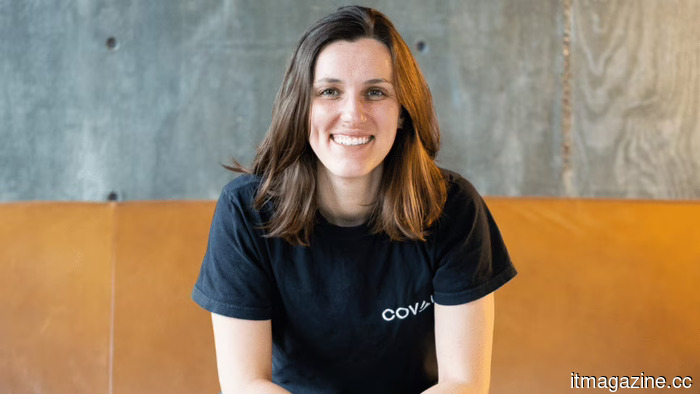 Coval secures $28 million to evaluate AI voice agents under pressure.
Coval has secured $28 million in funding, spearheaded by Norwest, to model and assess enterprise AI voice agents prior to their performance in actual customer calls.
Coval secures $28 million to evaluate AI voice agents under pressure.
Coval has secured $28 million in funding, spearheaded by Norwest, to model and assess enterprise AI voice agents prior to their performance in actual customer calls.
 The Trump administration prevents Polestar from launching new electric vehicles in the US due to the Connected Vehicle Rule.
The Commerce Department rejected Polestar's request for authorization under the Connected Vehicle Rule, despite the fact that its Polestar 3 is manufactured in South Carolina.
The Trump administration prevents Polestar from launching new electric vehicles in the US due to the Connected Vehicle Rule.
The Commerce Department rejected Polestar's request for authorization under the Connected Vehicle Rule, despite the fact that its Polestar 3 is manufactured in South Carolina.
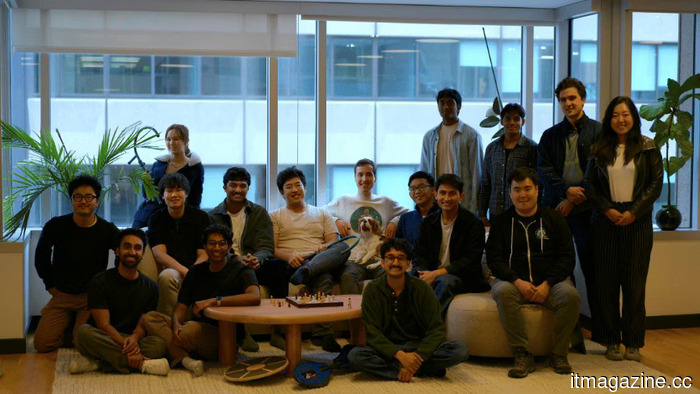 Sail secures $80 million to reduce the operational costs of AI agents.
Sail Research has secured $80 million, with funding led by Sequoia and Kleiner Perkins, to operate long-horizon AI agents at costs per token that are up to 10 times lower.
Sail secures $80 million to reduce the operational costs of AI agents.
Sail Research has secured $80 million, with funding led by Sequoia and Kleiner Perkins, to operate long-horizon AI agents at costs per token that are up to 10 times lower.
 Microsoft increases Xbox prices for the third time in 13 months, as the memory shortage pushes the cost of the Series X to $800.
Starting August 1, Xbox consoles will see a price increase of $100 to $150, raising the Series X’s price to $800. Microsoft attributes this hike to the more than doubled costs of memory.
Microsoft increases Xbox prices for the third time in 13 months, as the memory shortage pushes the cost of the Series X to $800.
Starting August 1, Xbox consoles will see a price increase of $100 to $150, raising the Series X’s price to $800. Microsoft attributes this hike to the more than doubled costs of memory.
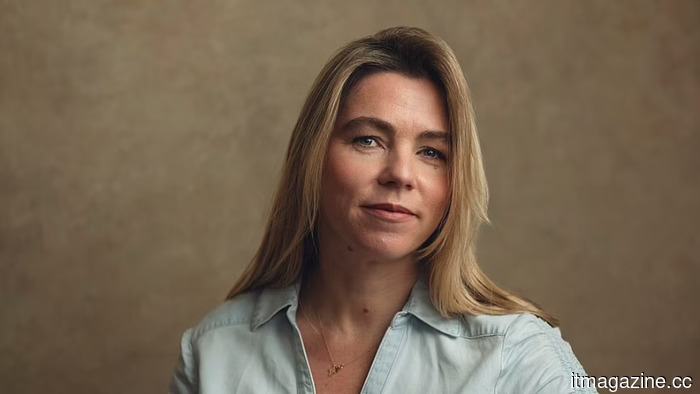 Sarah Wynn-Williams takes legal action against Meta for attempts to silence her.
Whistleblower Sarah Wynn-Williams is taking legal action against Meta for its attempts to suppress her, following a gag order that imposed a $50,000 fine for each public criticism of the company.
Sarah Wynn-Williams takes legal action against Meta for attempts to silence her.
Whistleblower Sarah Wynn-Williams is taking legal action against Meta for its attempts to suppress her, following a gag order that imposed a $50,000 fine for each public criticism of the company.
Coval secures $28 million to evaluate the performance of AI voice agents under pressure.
Coval has secured $28 million in funding, led by Norwest, to replicate and evaluate enterprise AI voice agents prior to their performance in actual customer calls.