
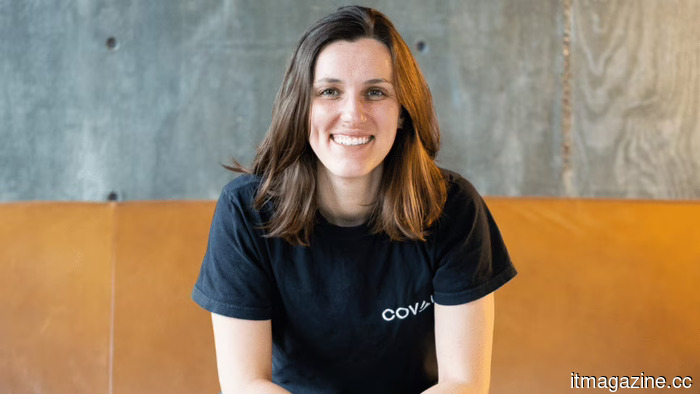
Coval secures $28 million to evaluate AI voice agents under pressure.
Coval has secured $28 million to evaluate AI voice agents before they interact with actual callers. Its founder previously established similar safety measures for Waymo’s self-driving cars and believes that voice technology needs comparable precautions.
An AI voice agent might seem perfect in a demonstration but can break down during a real conversation. It may struggle with accents, get drowned out by background noise, and stall when a caller deviates from the script. Coval aims to identify these issues before a customer experiences them. Investors are optimistic about its potential.
The San Francisco startup has raised $28 million in a Series A funding round led by Norwest, with participation from Base10 Partners, Twilio Ventures, and Y Combinator. This funding brings Coval’s total investment to $31 million since its inception in 2024. The company is an alumnus of Y Combinator.
The proposition is straightforward. As more businesses deploy voice agents for customer interaction, they require a method to demonstrate that these agents function effectively. Coval provides that assurance.
The concept is derived from the realm of autonomous vehicles. Coval's founder and CEO, Brooke Hopkins, developed evaluation systems at Waymo, Alphabet’s self-driving division. Her team executed millions of simulated miles for every modification in the code, as any failure on public roads was unacceptable.
Hopkins contends that voice agents need similar rigor. Each voice agent operates multiple models concurrently: one transcribes speech, another formulates a response, and a third vocalizes it. This process is analogous to the perception, planning, and control systems found in self-driving cars.
The inference from this analogy is clear. Neither system can be tested manually at scale. Simulation is the most feasible approach. Coval applies the simulation-first strategy Hopkins adopted at Waymo to the chaotic environment of phone calls.
Coval conducts tens of millions of simulated tests on voice agents, examining factors that hinder real conversations: accents, interruptions, background noise, and unexpected requests. These assessments occur before any customer ever engages with the agents.
The process does not cease upon launch. Coval continues to monitor the agents in actual use and automatically incorporates unsuccessful calls into testing. For example, a bank can simulate thousands of callers providing contradictory information or terminating the call early, all before a single actual customer interacts.
The company claims significant benefits. Customers can reduce manual quality assurance tasks by up to 30 times and deploy agents up to 10 times quicker. Currently, over 60 organizations utilize the platform, including Zoom and the voice-AI infrastructure firm Deepgram.
These two companies are significant players. Both Zoom and Deepgram possess extensive experience regarding the shortcomings of voice AI. Their endorsement signifies that the issue Coval addresses is genuine.
The timing is no coincidence. Investment in voice AI is surging, with Coval noting that over $7 billion was invested in the sector in the first quarter of 2026 alone. One projection estimates the market will exceed $20 billion by 2031.
This surge attracts attention. Startups like Bland have raised substantial funds to create the agents themselves, and Twilio’s voice-AI revenue is rising rapidly. As more agents become active, it's expected that many will falter publicly. Testing is becoming the less glamorous yet essential task beneath the excitement.
Coval is not alone in pursuing this market. Competing firms include Hamming, which concentrates on regulatory edge cases in healthcare and finance, and Roark, another Y Combinator startup that has analyzed over 10 million minutes of calls using updated logic. Coval claims to provide a complete solution, including pre-launch simulation, active monitoring, and human review.
This category reflects a known trend. Other startups, such as Solidroad, are developing quality-assurance tools for AI support agents in chat and email. Coval is making a similar wager but for the more challenging issue of live audio.
One investor on the cap table stands out. Twilio Ventures supported the funding round, and Twilio provides the voice infrastructure that many of these agents operate on. It had the option to create its own testing tool but opted to invest in Coval instead.
“Trust is crucial for expanding these experiences,” expressed Andy O’Dower, Twilio’s field chief technology officer. He referred to comprehensive evaluation tools as “foundational” for the ongoing wave of voice AI. This endorsement comes from a company that monitors the entire market's flow through its systems.
This choice raises a broader industry question: Will voice AI testing remain independent or be absorbed by the platforms it evaluates? Twilio’s decision to back an external tool, rather than produce its own, suggests that at least one major player prefers to keep evaluation independent.
There is rationale behind such detachment. An impartial referee is more effective than one affiliated with a specific team. An independent evaluator can assess agents built on any model or platform, aligning with what enterprises managing multiple vendors indicate they desire.
The new funding aims for expansion. Coval plans to hire more staff
Other articles
 Microsoft increases Xbox prices for the third time in 13 months, as the memory shortage pushes the cost of the Series X to $800.
Starting August 1, Xbox consoles will see a price increase of $100 to $150, raising the Series X’s price to $800. Microsoft attributes this hike to the more than doubled costs of memory.
Microsoft increases Xbox prices for the third time in 13 months, as the memory shortage pushes the cost of the Series X to $800.
Starting August 1, Xbox consoles will see a price increase of $100 to $150, raising the Series X’s price to $800. Microsoft attributes this hike to the more than doubled costs of memory.
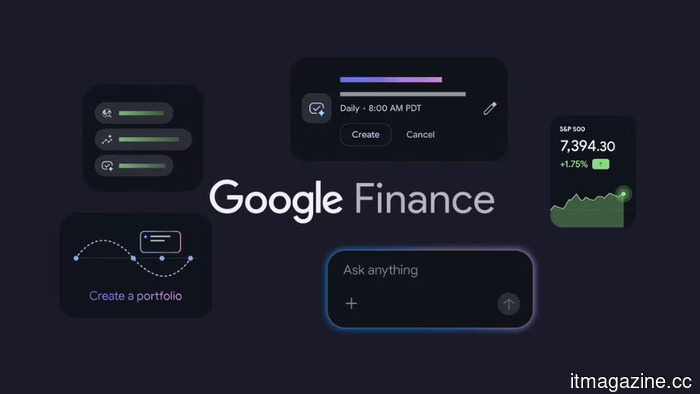 Google Finance has officially left beta, introducing a dedicated Android app, portfolio tracking features, and AI-driven scheduled briefings.
Google Finance exits beta with the launch of a new Android app, portfolio dashboards, an AI research tool, and scheduled market briefings powered by Gemini.
Google Finance has officially left beta, introducing a dedicated Android app, portfolio tracking features, and AI-driven scheduled briefings.
Google Finance exits beta with the launch of a new Android app, portfolio dashboards, an AI research tool, and scheduled market briefings powered by Gemini.
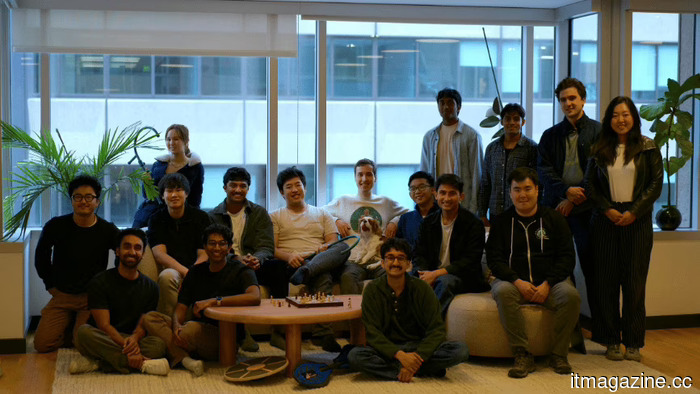 Sail secures $80 million to reduce the operational costs of AI agents.
Sail Research has secured $80 million in funding, spearheaded by Sequoia and Kleiner Perkins, to develop long-horizon AI agents at a cost per token that is up to 10 times lower.
Sail secures $80 million to reduce the operational costs of AI agents.
Sail Research has secured $80 million in funding, spearheaded by Sequoia and Kleiner Perkins, to develop long-horizon AI agents at a cost per token that is up to 10 times lower.
 Microsoft increases Xbox prices for the third time in 13 months, with the Series X now costing $800 due to memory shortages.
Starting August 1, Xbox consoles will see a price increase of $100 to $150, bringing the cost of the Series X to $800. Microsoft attributes this rise to the more than doubling of memory expenses.
Microsoft increases Xbox prices for the third time in 13 months, with the Series X now costing $800 due to memory shortages.
Starting August 1, Xbox consoles will see a price increase of $100 to $150, bringing the cost of the Series X to $800. Microsoft attributes this rise to the more than doubling of memory expenses.
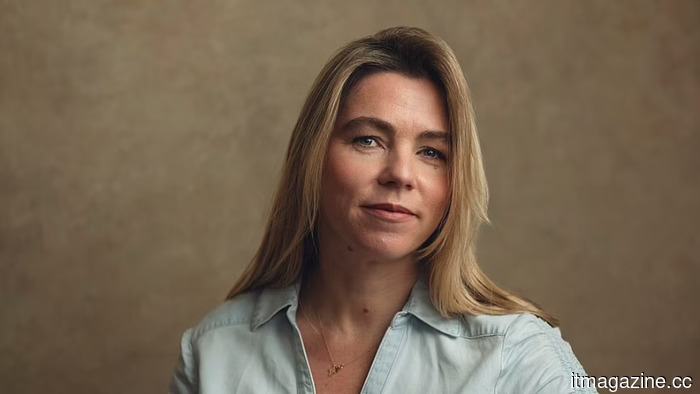 Sarah Wynn-Williams takes legal action against Meta for attempts to silence her.
Whistleblower Sarah Wynn-Williams is taking legal action against Meta for its attempts to suppress her, following a gag order that imposed a $50,000 fine for each public criticism of the company.
Sarah Wynn-Williams takes legal action against Meta for attempts to silence her.
Whistleblower Sarah Wynn-Williams is taking legal action against Meta for its attempts to suppress her, following a gag order that imposed a $50,000 fine for each public criticism of the company.
 Netris secures $15 million in Series A funding from a16z to streamline the networking processes that hinder GPU cloud performance.
Netris has secured $15 million in funding from Andreessen Horowitz to expand its network automation platform, which is currently operational in over 35 GPU clusters globally.
Netris secures $15 million in Series A funding from a16z to streamline the networking processes that hinder GPU cloud performance.
Netris has secured $15 million in funding from Andreessen Horowitz to expand its network automation platform, which is currently operational in over 35 GPU clusters globally.
Coval secures $28 million to evaluate AI voice agents under pressure.
Coval has secured $28 million in funding, spearheaded by Norwest, to model and assess enterprise AI voice agents prior to their performance in actual customer calls.