

Taktile secures $110 million to entrust AI with banking decisions.
Taktile has secured $110 million in a Series C funding round led by Goldman Sachs Alternatives. The startup aims to have banks and insurers relinquish some of their most critical decisions to AI agents, particularly those that can cost millions if they are made incorrectly. Financial institutions currently invest billions in personnel to scrutinize risky transactions, process claims, and assess new customers. A single erroneous decision can lead to significant financial consequences. Taktile's goal is to allow AI to take charge of these decisions, and now a major global financial firm is funding this endeavor.
Based in both Berlin and New York, Taktile’s recent Series C round raised $110 million, with Goldman Sachs Alternatives' Growth Equity at the helm. Other investors like Balderton Capital, Index Ventures, Tiger Global, Y Combinator, and Dig Ventures also participated, bringing Taktile’s total funding to $184 million. The company has chosen not to disclose its valuation.
Taktile is intentionally focused in its approach; it does not seek to create an AI equivalent to ChatGPT. Instead, it aims to serve as an intermediary that transforms models from leading AI laboratories into reliable agents for handling sensitive banking operations.
Taktile's offerings include what it refers to as an Agentic Decision Platform. This system combines AI agents, strict rules, pertinent data, and human oversight to automate decision-making while allowing for human verification.
The applications target financial services, specifically in areas such as underwriting business loans, assessing insurance claims, onboarding clients, and detecting financial crimes. These tasks previously required hours of work from human experts and have significant repercussions if mistakes occur.
Taktile boasts a respectable client roster that includes banking startups like Mercury and Monzo, the wholesale marketplace Faire, and the spending platform Pleo. The company claims to facilitate millions of decisions daily. Co-founders Maik Taro Wehmeyer and Maximilian Eber established the company in 2020.
The outcomes Taktile reports are impressive, highlighting that its clients have achieved up to 95% automation in B2B underwriting and a 75% reduction in false alerts for anti-money-laundering checks. Additionally, one of the globe's largest insurers is utilising multiple use cases with expected savings exceeding $90 million solely in claims processing.
The timing is indicative of a broader change in AI capabilities. Wehmeyer asserts that the models have only recently become dependable enough for high-stake tasks. He noted, “AI has been around for a couple of years, but 2026 is the year where AI comes to financial services.” He claims these AI agents can outperform humans in many intricate tasks.
Taktile's research division, Taktile Labs, identified this shift as early as December 2025, discovering that advanced models reached a point where they were capable of making the judgment calls historically reserved for trained personnel in banks.
The financial stakes are significant, as Moody's estimates that financial institutions expend around $72.9 million annually merely on know-your-customer and anti-money-laundering operations, representing a vast amount of manual labor that Taktile is positioned to automate.
The startup is not the only one pursuing this market. Numerous AI laboratories and tech giants are competing to automate white-collar jobs. For instance, Salesforce announced its acquisition of the support-AI firm Fin for $3.6 billion this month, while Meta revealed a business agent for managing customer communications. The brunt of the impact has already been felt by software engineers, with office workers possibly next in line.
Taktile contends that the financial sector is distinct in this context. While a chatbot providing erroneous answers is inconvenient, a loan or claims agent doing the same poses regulatory issues. The implications of mistakes elevate the standards for acceptable performance.
Wehmeyer emphasizes that general-purpose AI tools can suffice for basic automation, but they are inadequate for vital financial decision-making where inaccuracies may incur substantial costs. He asserts that business leaders, not just engineers, should be equipped to understand and guide the system, ensuring oversight from roles like credit heads or fraud officers.
This perspective differentiates Taktile from competitors that merely add a superficial layer atop advanced models. It also aligns with a broader trend in the financial landscape, as startups like the former Citadel quants behind Moment are creating operating systems designed for the complexities of regulated finance rather than generic solutions.
The concern for control is essential since the work involves sensitive issues. Misidentifying financial crimes can falsely implicate innocent clients or allow real fraud to slip through. Thus, Taktile's reported 75% reduction in false positives carries significant value, especially given the severe costs associated with such errors.
The more challenging question involves the impact on employment. Taktile acknowledges that thousands of workers currently handle these decisions manually. The aim is to enhance their roles with more valuable tasks rather than eliminate jobs.
This optimistic interpretation is a common narrative among many AI companies. However, the reality has frequently been less
Other articles
 Unconventional AI has launched its initial model, which is designed on an oscillator architecture that has the potential to reduce AI power consumption by a factor of 1000.
Naveen Rao's Unconventional AI has introduced Un-0, an image generation model that operates on a simulated oscillator chip architecture, which it asserts could significantly reduce power consumption.
Unconventional AI has launched its initial model, which is designed on an oscillator architecture that has the potential to reduce AI power consumption by a factor of 1000.
Naveen Rao's Unconventional AI has introduced Un-0, an image generation model that operates on a simulated oscillator chip architecture, which it asserts could significantly reduce power consumption.
 Microsoft increases Xbox prices for the third time in 13 months, as the memory shortage pushes the cost of the Series X to $800.
Starting August 1, Xbox consoles will see a price increase of $100 to $150, raising the Series X’s price to $800. Microsoft attributes this hike to the more than doubled costs of memory.
Microsoft increases Xbox prices for the third time in 13 months, as the memory shortage pushes the cost of the Series X to $800.
Starting August 1, Xbox consoles will see a price increase of $100 to $150, raising the Series X’s price to $800. Microsoft attributes this hike to the more than doubled costs of memory.
 Unconventional AI has launched its inaugural model, which is based on an oscillator architecture that has the potential to reduce AI power consumption by a factor of 1000.
Naveen Rao's Unconventional AI has launched Un-0, an image generation model that operates on a simulated oscillator chip architecture, which it asserts could significantly reduce power consumption.
Unconventional AI has launched its inaugural model, which is based on an oscillator architecture that has the potential to reduce AI power consumption by a factor of 1000.
Naveen Rao's Unconventional AI has launched Un-0, an image generation model that operates on a simulated oscillator chip architecture, which it asserts could significantly reduce power consumption.
 Netris secures $15 million in Series A funding from a16z to streamline the networking processes that hinder GPU cloud performance.
Netris has secured $15 million in funding from Andreessen Horowitz to expand its network automation platform, which is currently operational in over 35 GPU clusters globally.
Netris secures $15 million in Series A funding from a16z to streamline the networking processes that hinder GPU cloud performance.
Netris has secured $15 million in funding from Andreessen Horowitz to expand its network automation platform, which is currently operational in over 35 GPU clusters globally.
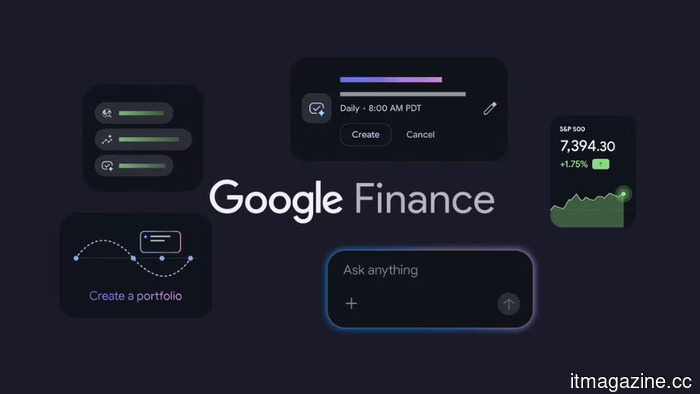 Google Finance has officially left beta, introducing a dedicated Android app, portfolio tracking features, and AI-driven scheduled briefings.
Google Finance exits beta with the launch of a new Android app, portfolio dashboards, an AI research tool, and scheduled market briefings powered by Gemini.
Google Finance has officially left beta, introducing a dedicated Android app, portfolio tracking features, and AI-driven scheduled briefings.
Google Finance exits beta with the launch of a new Android app, portfolio dashboards, an AI research tool, and scheduled market briefings powered by Gemini.
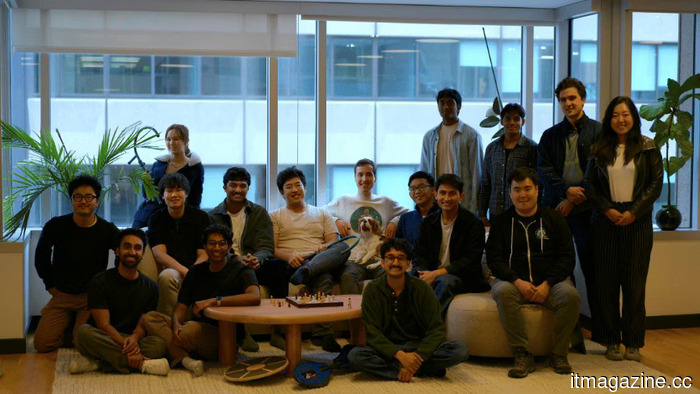 Sail secures $80 million to reduce the operational costs of AI agents.
Sail Research has secured $80 million, with funding led by Sequoia and Kleiner Perkins, to operate long-horizon AI agents at costs per token that are up to 10 times lower.
Sail secures $80 million to reduce the operational costs of AI agents.
Sail Research has secured $80 million, with funding led by Sequoia and Kleiner Perkins, to operate long-horizon AI agents at costs per token that are up to 10 times lower.
Taktile secures $110 million to entrust AI with banking decisions.
Taktile has secured $110 million in a Series C funding round led by Goldman Sachs, enabling banks and insurers to automate their most critical decisions using AI agents.