
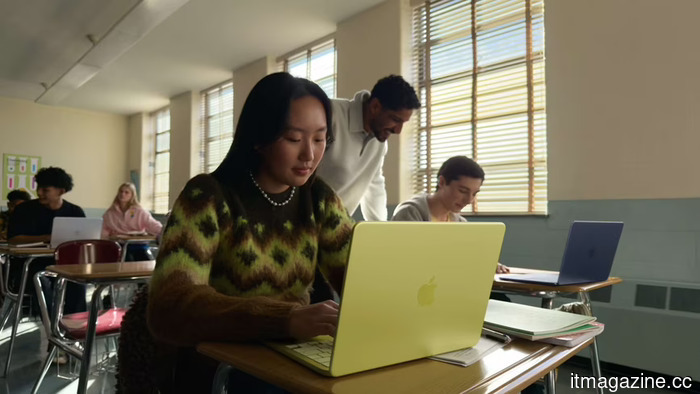
Apple increases the prices of Mac and iPad as the AI memory shortage impacts retail.
The AI surge has remained an abstract concept for many consumers, characterized by stories about data centers and model introductions happening elsewhere. This week, it became much more tangible as it affected the price of a Mac. Apple is increasing prices on Macs and iPads to counterbalance the escalating costs of memory and storage chips, a consequence of a widespread industry shortage that the company claims it can no longer absorb for its customers.
Tim Cook, who will be handing over the CEO position to John Ternus on September 1, put it simply: “Unfortunately, price increases are unavoidable,” he shared with The Wall Street Journal. “We’re doing our best to mitigate the huge increases that are being passed to us, and we’ve been trying to shield our customers from the increases, but the situation has become unsustainable.”
The issue stems from memory shortages, driven by AI. The demand for memory and storage chips used in servers has surged as companies strive to expand their AI infrastructures, diverting supply that typically goes to consumer devices. According to one commonly referenced estimate, data centers are projected to use up to 70% of total memory production by 2026. For every ten chips produced, seven are directed to server farms, leaving phone manufacturers, PC builders, and other consumer electronics to vie for the remaining three.
Cook employed a flood analogy to highlight the severity of the situation, comparing the shortage to a hundred-year flood, stating that he has never encountered anything similar in his over 40 years in the industry. Coming from a CEO known for his expertise in supply-chain management, this comparison carries significant weight, as it indicates an operational issue that falls outside typical circumstances.
Some price increases have already taken effect. Apple has raised the entry price of the Mac mini from $599 to $799, not by simply relabeling the same product but by removing its lowest-tier model, achieving the same effect on the shelf. This serves as a clear example of how the pressure is impacting consumers: not always through higher prices on the same products but sometimes through the subtle disappearance of cheaper alternatives.
Cook did not specify which additional products will see price hikes or their amounts. Macs and iPads have been indicated as likely next. The iPhone is also at risk: the upcoming iPhone 18 Pro and 18 Pro Max, set to release in September, might feature higher prices than the current 17 Pro series, although Apple has not confirmed any specific numbers.
What complicates matters for Apple is that, in a way, it is bearing the costs of its industry's prosperity. The same demand for AI that has bolstered the technology sector is now driving up the costs of the components found in laptops. The expenses associated with this expansion have finally come to the forefront, and for the first time in quite some time, Apple has opted to pass these costs on to its customers.
Other articles
 TensorX and Solstice secure $1 billion to fund Europe’s sovereign AI development.
TensorX and Solstice will support EU AI hardware and data centers, and introduce aiUSX, a yield asset that transforms companies' unused AI cash into infrastructure lending.
TensorX and Solstice secure $1 billion to fund Europe’s sovereign AI development.
TensorX and Solstice will support EU AI hardware and data centers, and introduce aiUSX, a yield asset that transforms companies' unused AI cash into infrastructure lending.
 Cannes insights: What a two-time major champion understands about marketing that CMOs might overlook.
During Cannes Lions, Bryson DeChambeau advocated for athletes as creators. The true narrative lies in the strategy behind the slogans.
Cannes insights: What a two-time major champion understands about marketing that CMOs might overlook.
During Cannes Lions, Bryson DeChambeau advocated for athletes as creators. The true narrative lies in the strategy behind the slogans.
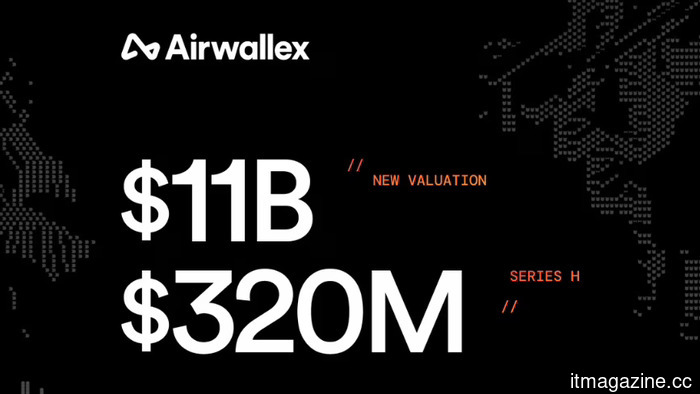 Airwallex secures $320 million with an $11 billion valuation.
Airwallex has successfully secured $320 million at an $11 billion valuation, an increase from its previous $8 billion valuation, and is shifting its focus towards autonomous finance and AI agents that handle transactions on your behalf.
Airwallex secures $320 million with an $11 billion valuation.
Airwallex has successfully secured $320 million at an $11 billion valuation, an increase from its previous $8 billion valuation, and is shifting its focus towards autonomous finance and AI agents that handle transactions on your behalf.
 At the core of the AI revolution lies a genuine human issue.
Afrozy Ara, the founder of LuminaData, contends that the $675 billion surge in AI infrastructure will not yield benefits until companies discontinue the automation of flawed workflows and begin to restructure the underlying processes, starting with financial operations.
At the core of the AI revolution lies a genuine human issue.
Afrozy Ara, the founder of LuminaData, contends that the $675 billion surge in AI infrastructure will not yield benefits until companies discontinue the automation of flawed workflows and begin to restructure the underlying processes, starting with financial operations.
 Brussels engaged in discussions with Washington concerning Anthropic's access following the Fable 5 prohibition.
Brussels engaged in discussions with Washington regarding Anthropic after a US export-control directive restricted Europe's access to Fable 5 and Mythos 5, which also affected ENISA.
Brussels engaged in discussions with Washington concerning Anthropic's access following the Fable 5 prohibition.
Brussels engaged in discussions with Washington regarding Anthropic after a US export-control directive restricted Europe's access to Fable 5 and Mythos 5, which also affected ENISA.
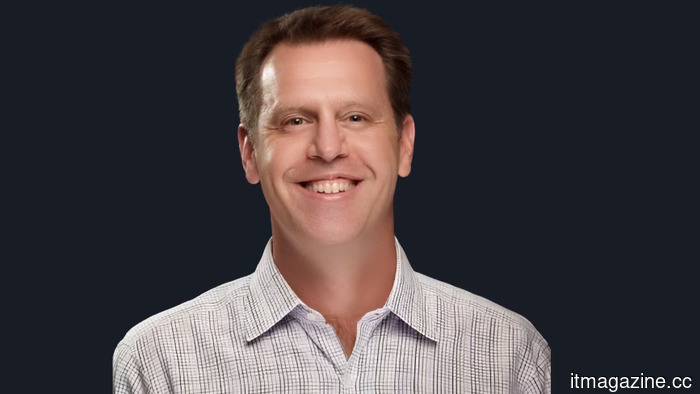 Anthropic recruits Orange's AI leader as it speeds up its expansion in Europe.
Steve Jarrett, who has served as Orange's chief AI officer since 2019, will be joining Anthropic in Paris on August 25 to modify its products for the European and African markets.
Anthropic recruits Orange's AI leader as it speeds up its expansion in Europe.
Steve Jarrett, who has served as Orange's chief AI officer since 2019, will be joining Anthropic in Paris on August 25 to modify its products for the European and African markets.
Apple increases the prices of Mac and iPad as the AI memory shortage impacts retail.
Tim Cook states that Apple’s rising prices are ‘inevitable’ due to the increasing demand for memory chips driven by AI, which is leading to higher costs. The starting price of the Mac mini has already risen.