

Can the RingConn Gen 3 Enhance Your Health? A Cardiologist's Perspective
When I first tried a smart ring years ago, I was very doubtful. Was the sensor precise? What about its durability? Could it compete with the biosensing capabilities of smartwatches? Numerous questions raced through my mind. In contrast, the underlying technology has significantly advanced.
As technology progressed, consumer expectations and trust factors also changed. Can a smart ring seamlessly integrate into your daily life without any trade-offs? I'm currently evaluating the RingConn Gen 3 smart ring, and it has proven to be the most comprehensive and feature-rich product in its category. I've tested more than six smart rings in the last year alone, so I don't make this assertion lightly.
Beyond the standard heart rate and sleep tracking, RingConn’s smart ring provides additional insights like vascular load patterns and fluctuations in sleep oxygen levels, among other features. Crucially, it aggregates all this data into an easily digestible format, enabling you to understand your physical well-being and make necessary lifestyle changes. There’s even haptic feedback, a novel addition for this category, alerting you about health changes, sedentary behavior, and battery status. Sounds impressive, right?
To grasp the real benefits of wearables and differentiate between hype and reality, I interviewed Dr. Seth Martin (MD, MHS, FACC, FAHA, FASPC), a professor in the Division of Cardiology at Johns Hopkins Medicine and a recipient of the Howard S. Silverman Award for innovation and creativity in medical research. He specializes in the impact of wearables on heart health and is also the president of the local American Heart Association Board of Directors, which has recently published a report on how wearable devices have positively influenced individuals with heart diseases.
**Smart Rings as a Proactive Wellness Option**
Our culture tends to view health as something to periodically check. We schedule annual physicals, undergo blood tests, measure our blood pressure once at the pharmacy, and deem it sufficient. Generally, we lean more towards reactive healthcare, relying on infrequent, point-in-time assessments. For a long time, this was the only approach available to the average person.
However, after wearing a smart ring for a few weeks, you start to sense the limitations of that approach. Issues like persistent stress, increasingly limited sleep, and inadequate recovery before the next obligation arise. These concerns don’t surface during an annual checkup, but they can significantly impact your well-being over time.
That gap is what attracted me to the RingConn Gen 3 and prompted a broader question I wanted an expert to address. As wearables improve enough to monitor us continuously, are we transitioning away from health being a scheduled routine and towards daily awareness as an ongoing, quiet intervention? I consulted Dr. Martin, who has spent nearly a decade studying wearable health technology. His insights were more measured and intriguing than typical marketing claims suggest.
**The Hidden Cost of Appearing Well**
With wearables, many users tend to focus merely on what's listed on a specification sheet. This approach is obvious but ultimately unproductive. You might feel completely fine while your body incurs a slow but steady toll. Factors such as late-night scrolling that delays bedtime, work stress that follows you home, or unexpected travel disrupting your sleep often go unnoticed. You don’t receive alerts indicating that your recovery has been gradually declining for weeks; instead, you just feel increasingly frazzled, convincing yourself it’s normal.
This is where wellness issues subtly emerge. The strain is masked because it’s so typical. The RingConn Gen 3 is designed with a different premise. Rather than merely being another light-based sensor on your finger, it’s a lightweight, passive wearable aimed at revealing those slow trends before they escalate. Instead of sporadic readings, this device continuously tracks gradual changes you might miss otherwise. Ultimately, it provides ongoing monitoring without requiring you to track data on a distracting screen or log workouts. It conducts biosensing work in the background as you go about your life.
**The Evolution of Wearables**
To understand if this approach holds merit, it’s useful to look at how far the technology has come. Dr. Martin has witnessed the wearables sector develop from within, through the perspective of a cardiologist. “My interest in this area goes back to when I was a cardiology fellow, then an early faculty member. It started mainly with wrist-worn devices,” he explained. “Initially, it focused on wellness and lifestyle tracking, like monitoring step counts.”
The crucial moment, he noted, arrived when these devices shifted from lifestyle gadgets to having clinical importance. “In 2018, when the Apple Watch received FDA clearance for its ECG function, this advancement brought these technologies closer to clinical applications, moving beyond mere wellness and into areas like detecting previously unrecognized atrial fibrillation.”
He mentioned that smart rings, as a different form factor, have arrived at a similar point in their development, and the engineering advancements are noteworthy. Miniaturizing genuinely useful sensors into a wearable for your finger is no easy task


Other articles
 Trump's Department of Transportation suggests eliminating the brake pedal requirement for self-driving cars, paving the way for companies like Tesla and Zoox.
The DOT suggested eliminating the requirement for brake pedals in vehicles designed solely for autonomous driving, smoothing the way for Tesla's Cybercab and Zoox.
Trump's Department of Transportation suggests eliminating the brake pedal requirement for self-driving cars, paving the way for companies like Tesla and Zoox.
The DOT suggested eliminating the requirement for brake pedals in vehicles designed solely for autonomous driving, smoothing the way for Tesla's Cybercab and Zoox.
 I discovered two budget laptop deals for Prime Day that are ideal for students, work, and everyday use.
Prime Day has reduced prices on two affordable Windows laptops from ASUS and HP that are suitable for work, school, and daily use.
I discovered two budget laptop deals for Prime Day that are ideal for students, work, and everyday use.
Prime Day has reduced prices on two affordable Windows laptops from ASUS and HP that are suitable for work, school, and daily use.
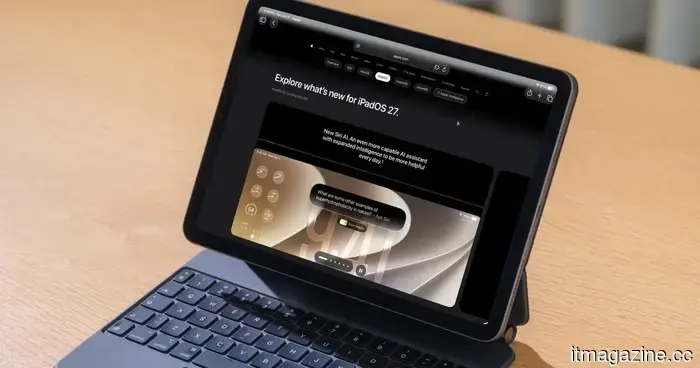 Apple has recently increased the prices of its products by several hundred dollars.
Apple has managed to hold out longer than all other brands. Today, the memory crisis has finally taken its toll, leading to price increases for Macs and iPads universally.
Apple has recently increased the prices of its products by several hundred dollars.
Apple has managed to hold out longer than all other brands. Today, the memory crisis has finally taken its toll, leading to price increases for Macs and iPads universally.
 Apple may bypass the Pro and Max versions of the M6 chip, focusing instead on the M7 for significant enhancements.
Apple might introduce the M6 chip only in a base configuration, bypassing the Pro and Max versions completely, and reserving those enhancements, along with a new Ultra variant, for the M7 series expected in early 2027.
Apple may bypass the Pro and Max versions of the M6 chip, focusing instead on the M7 for significant enhancements.
Apple might introduce the M6 chip only in a base configuration, bypassing the Pro and Max versions completely, and reserving those enhancements, along with a new Ultra variant, for the M7 series expected in early 2027.
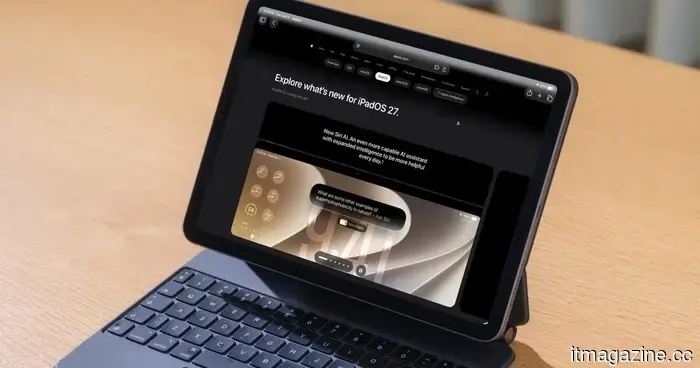 Apple has recently increased the prices of its products by several hundred dollars.
Apple endured longer than any other brand. Today, the memory shortage has ultimately prevailed, resulting in an increase in prices for Mac and iPad models across the board.
Apple has recently increased the prices of its products by several hundred dollars.
Apple endured longer than any other brand. Today, the memory shortage has ultimately prevailed, resulting in an increase in prices for Mac and iPad models across the board.
 This website calls out well-known platforms such as Instagram, Netflix, and Spotify for their failure to implement passkeys, labeling them as too complacent.
A newly launched website, WhyNoPasskeys.com, is calling out well-known platforms such as Instagram, Netflix, and Spotify for their failure to incorporate passkey support.
This website calls out well-known platforms such as Instagram, Netflix, and Spotify for their failure to implement passkeys, labeling them as too complacent.
A newly launched website, WhyNoPasskeys.com, is calling out well-known platforms such as Instagram, Netflix, and Spotify for their failure to incorporate passkey support.
Can the RingConn Gen 3 Enhance Your Health? A Cardiologist's Perspective
A cardiologist discusses how the RingConn Gen 3 smart ring embodies the future of wearable health through precise tracking, insights into sleep, and monitoring of overall wellness.