

Can the RingConn Gen 3 Enhance Your Health? Insights from a Cardiologist
Years ago, when I first tried a smart ring, I was quite doubtful. How accurate is the sensor? Will it break easily? Can it compete with the biosensing capabilities of smartwatches? These questions and more filled my mind. However, the technology behind them has significantly progressed since then.
As this technology has improved, so too have consumer expectations and the need for trust. Can a smart ring truly integrate into your lifestyle without requiring sacrifices? Currently, I'm testing the RingConn Gen 3 smart ring, which has so far proven to be the most comprehensive and feature-rich product of its type. Having tested more than six smart rings over the past year, I don't make such assertions lightly.
In addition to standard features like heart rate and sleep tracking, RingConn's smart ring provides insights such as vascular load patterns and fluctuations in sleep oxygen levels, among others. Most importantly, it compiles all this data into a user-friendly format, enabling you to comprehend your physical wellness and make necessary lifestyle changes. It even includes haptic feedback, a unique addition for this category, to alert you about health shifts, prolonged inactivity, and battery status. Sounds fantastic, right?
To grasp the real utility of wearables and distinguish hype from reality, I spoke with Dr. Seth Martin (MD, MHS, FACC, FAHA, FASPC), a Professor in the Division of Cardiology at Johns Hopkins Medicine and a recipient of the Howard S. Silverman Award for originality and creativity in medical research. He specializes in the effects of wearables on heart health and serves as the president of the local American Heart Association Board of Directors, which has recently released a report on how wearable devices have significantly aided those with heart diseases.
Smart rings as a proactive wellness option
Our culture tends to approach health as something we check on periodically. We schedule annual physicals, get blood panels, take our blood pressure once at a pharmacy machine, and consider it done. Generally, we rely on reactive, sporadic, and situational care. For a long time, this has been the only option available to the average person.
However, after wearing a smart ring for a few weeks, you begin to recognize the limitations of this model. The factors that genuinely impact your well-being—like never-ending stress, increasingly shorter sleep, and incomplete recovery before the next obligation—are not captured in annual checkups but accumulate to affect your long-term wellness.
This gap is what attracted me to the RingConn Gen 3, leading me to a much larger question I wanted an expert to explore. As wearables improve to monitor us continuously, are we finally transitioning from health as a scheduled routine to an ongoing awareness we subtly maintain? To delve into this, I consulted Dr. Martin, who has examined wearable health technology in practice for nearly a decade. His insights were more prudent and intriguing than typical marketing claims suggest.
The hidden costs of appearing fine
In the realm of wearables, many potential users often focus solely on what’s displayed on a specifications sheet. While this is an obvious approach, it is ultimately unproductive. One can feel entirely functional while gradually succumbing to hidden stresses—like late-night screen time that delays bedtime, work pressures that invade personal time, or travel that disrupts sleep schedules. The constant cognitive load of being available from the moment you wake doesn’t announce itself; there’s no notification to indicate that your recovery has been diminishing for weeks. You might just feel increasingly worn out and convince yourself it’s normal.
This is where wellness issues can subtly infiltrate daily life. The strain is often invisible precisely because it is so commonplace. The RingConn Gen 3, however, operates on a different principle. Instead of being merely another light-based sensor on your finger, it is a lightweight, passive device that aims to identify these subtle patterns before they exacerbate. Instead of providing readings infrequently, it tracks gradual changes you would typically overlook. Ultimately, it offers continuous monitoring without demanding attention or requiring logging of workouts. It carries out its biosensing duties quietly while you live your life.
The evolution of wearables
To ascertain whether this premise holds true, it’s essential to recognize how far this technology has advanced. Dr. Martin has witnessed the entire evolution of wearables through the eyes of a cardiologist. "I think my interest in this area began when I was a cardiology fellow and then an early faculty member. It started primarily with wrist-worn devices," he shares. "Initially, it focused on wellness and lifestyle tracking, like monitoring step counts."
He noted that the pivotal moment occurred when these devices began to transition from lifestyle gadgets to tools with clinical relevance. "Back around 2018, when FDA approved the ECG function on the Apple Watch, these technologies started to edge closer to clinical applications, moving beyond mere wellness and lifestyle uses to detecting previously unrecognized atrial fibrillation."
He pointed out that the smart ring is a different form factor arriving on a similar


Other articles
 I discovered two Prime Day ANC headphone offers that cut costs without compromising on features.
If your budget for ANC headphones is between $100 and $120, these two Prime Day selections provide all the essentials without the premium price.
I discovered two Prime Day ANC headphone offers that cut costs without compromising on features.
If your budget for ANC headphones is between $100 and $120, these two Prime Day selections provide all the essentials without the premium price.
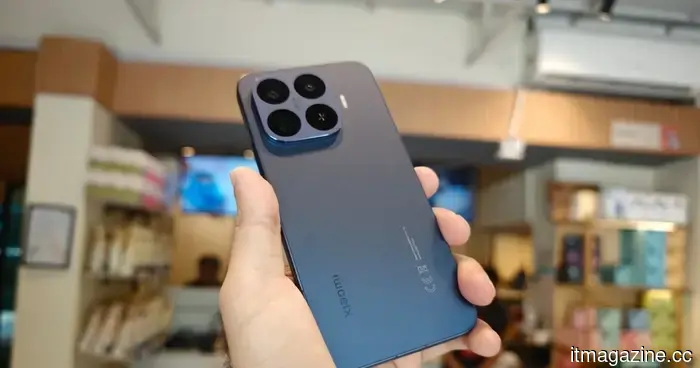 Xiaomi 17T Pro review: It may not be Ultra, but I found it hard to set aside.
The newest T-series Pro phone from Xiaomi features cameras fine-tuned by Leica, impressive battery longevity, robust gaming capabilities, and a sleek design, although its dimensions and software peculiarities might not appeal to everyone.
Xiaomi 17T Pro review: It may not be Ultra, but I found it hard to set aside.
The newest T-series Pro phone from Xiaomi features cameras fine-tuned by Leica, impressive battery longevity, robust gaming capabilities, and a sleek design, although its dimensions and software peculiarities might not appeal to everyone.
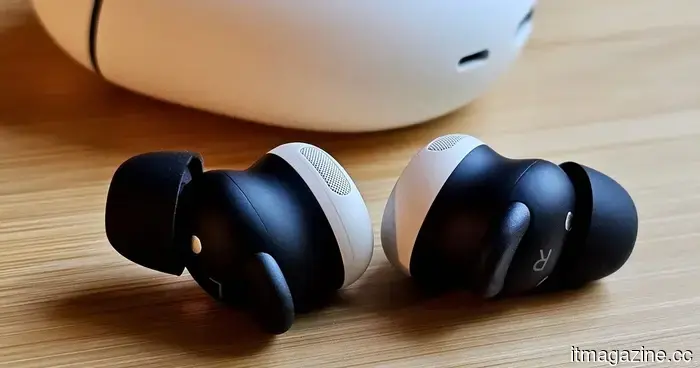 Here are the top Prime Day earbud deals I discovered for both Android and iPhone users.
Prime Day has reduced the prices on the Pixel Buds Pro 2 and Beats Studio Buds+, which makes it much simpler to endorse these earbuds.
Here are the top Prime Day earbud deals I discovered for both Android and iPhone users.
Prime Day has reduced the prices on the Pixel Buds Pro 2 and Beats Studio Buds+, which makes it much simpler to endorse these earbuds.
 Apple may bypass the Pro and Max versions of the M6 chip, focusing instead on the M7 for significant enhancements.
Apple might introduce the M6 chip only in a base configuration, bypassing the Pro and Max versions completely, and reserving those enhancements, along with a new Ultra variant, for the M7 series expected in early 2027.
Apple may bypass the Pro and Max versions of the M6 chip, focusing instead on the M7 for significant enhancements.
Apple might introduce the M6 chip only in a base configuration, bypassing the Pro and Max versions completely, and reserving those enhancements, along with a new Ultra variant, for the M7 series expected in early 2027.
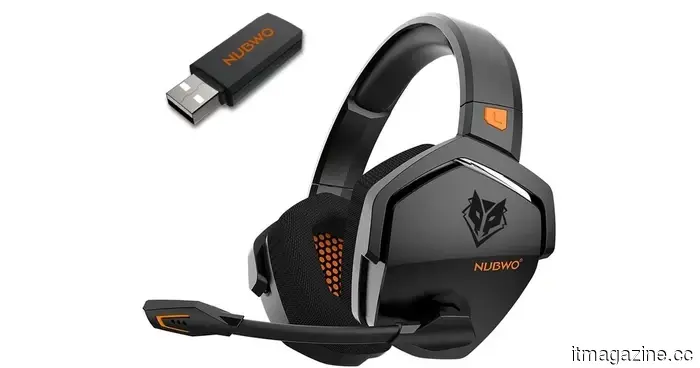 NUBWO HG04L and G06 Gaming Headsets: Effective Wired and Wireless Audio Options
Gamers frequently face challenges with expensive headsets that lack comfort, have subpar microphone quality, and feature unreliable connections, all of which can detract from the overall gaming experience. As a brand dedicated to practical gaming accessories, NUBWO presents the HG04L and G06, offering quality gaming audio without the hefty price tag. Numerous brands nowadays emphasize vibrant RGB lighting, [...]
NUBWO HG04L and G06 Gaming Headsets: Effective Wired and Wireless Audio Options
Gamers frequently face challenges with expensive headsets that lack comfort, have subpar microphone quality, and feature unreliable connections, all of which can detract from the overall gaming experience. As a brand dedicated to practical gaming accessories, NUBWO presents the HG04L and G06, offering quality gaming audio without the hefty price tag. Numerous brands nowadays emphasize vibrant RGB lighting, [...]
 This website exposes well-known platforms such as Instagram, Netflix, and Spotify for their failure to implement passkeys, labeling them as lazy.
A new website named WhyNoPasskeys.com is publicly calling out well-known platforms such as Instagram, Netflix, and Spotify for not offering passkey support.
This website exposes well-known platforms such as Instagram, Netflix, and Spotify for their failure to implement passkeys, labeling them as lazy.
A new website named WhyNoPasskeys.com is publicly calling out well-known platforms such as Instagram, Netflix, and Spotify for not offering passkey support.
Can the RingConn Gen 3 Enhance Your Health? Insights from a Cardiologist
A cardiologist discusses how the RingConn Gen 3 smart ring embodies the future of health wearables, offering precise tracking, sleep analysis, and wellness monitoring.