
Walmart's Vibe.co partnership: a $1.4 billion investment in advertising.
Walmart is reportedly spending $1.4 billion to acquire a connected-TV advertising startup previously valued at $410 million just nine months ago. This price reflects the lengths to which retailers are willing to go to compete with Amazon in the advertising space.
Walmart has confirmed the acquisition of Vibe.co, a platform for connected-TV advertising. Both The Wall Street Journal and The Information have estimated the deal at $1.4 billion, marking Walmart's most significant acquisition in two years. While the target company is relatively small, Walmart's ambitions are substantial.
On Tuesday, Walmart announced its intention to buy Vibe.co, which serves as a self-service platform for streaming TV ads. It is designed for small and medium-sized businesses that wish to purchase and track their ads independently. Although Walmart did not disclose the terms, reports from the Wall Street Journal and The Information indicate the price is $1.4 billion, with The Information noting that this includes an executive retention payment of $180 million.
The notable figure here is not just the purchase price but the valuation multiple. Vibe.co was assessed at $410 million last September, meaning Walmart is paying over three times that figure just nine months later, as reported by The Information. They estimate this deal values Vibe.co at around 12.6 times its revenue, whereas its listed competitor MNTN trades at approximately one times expected revenue.
This disparity is central to the discussion, highlighting the intense competition among retailers for the infrastructure of retail media. A company can achieve a certain valuation one fall and then sell for three times that amount by summer. The reasoning behind this shift is straightforward: the buyer needs the assets for its own operations. Walmart's payment for Vibe.co reflects a desire to control part of how streaming ads are delivered to consumers.
Vibe.co was founded by French entrepreneurs Arthur Querou and Franck Tetzlaff, who aimed to simplify the process of running streaming TV ads, akin to paid social media. The platform facilitates self-serve ad activation, targeting, creation, and measurement, catering to smaller advertisers historically priced out of national TV advertising. Currently, Vibe.co serves over 10,000 advertisers. After the acquisition, Querou expressed on LinkedIn that they have "unlocked Performance TV" and aim to make it as significant as Search and Social.
Walmart Connect represents the retailer's commerce-media division and indicates Walmart's growth aspirations. Advertising is a high-margin sector, especially beneficial as it is added to a low-margin grocery business. Each new advertiser Walmart engages adds profit without affecting grocery income.
The acquisition of Vibe.co fits into a broader strategy. Walmart previously bought TV manufacturer Vizio to have more screens available for advertising. The company has also formed partnerships with Magnite, Yahoo DSP, and Google DV360. Ryan Mayward, who oversees Walmart Connect in the U.S., articulated their mission to enhance the accessibility, measurability, and activation ease of commerce media for advertisers of all sizes.
Walmart's value proposition to advertisers hinges on closed-loop measurement. This means it can link an advertisement displayed on a screen to a purchase made either in its physical stores or online, a capability few competitors can offer. Furthermore, Walmart plans to transform Vizio into a content platform with shopping-themed video series featuring celebrities and influencers, creating additional opportunities for advertisements on its screens. Vibe.co provides the crucial element needed for small advertisers to participate in this ecosystem.
The primary target remains Amazon, which has successfully transformed its retail data into one of the fastest-growing advertising businesses in the tech industry, valued at tens of billions annually. With fiscal 2026 revenue projected at $713 billion, Walmart possesses the scale to compete effectively.
However, Walmart has lacked an advertising system comparable to Amazon's, and Vibe.co is intended to bridge this gap, particularly among marketplace sellers and local brands that Amazon currently attracts.
In Europe, this deal follows a familiar pattern. A startup with French founders aimed to disrupt established players, only to be absorbed by a larger U.S. entity rather than growing independently. Vibe.co's headquarters are in New York, and the Wall Street Journal characterized it as a French ad-tech company. Regardless, the value generated by the startup will likely grow under Walmart’s ownership instead of a European one.
Querou characterized the acquisition as an acceleration rather than a conclusion, asserting, "This is not the finish line for us." While this may be true for the founders, the broader question pertains to where Europe's top ad-tech talent chooses to build its future—often across the Atlantic.
The deal must still clear the Hart-Scott-Rodino antitrust waiting period, but Walmart anticipates closing it by the end of its 2027 fiscal year and claims it will not impact existing financial guidance. The larger inquiry remains: Can retail-media valuation multiples, such as 12.6 times revenue, be sustained, or has Walmart just indicated the peak of a very hot market?
Other articles
 Zhipu's share sale: China's AI sensation secures billions in funding.
Zhipu considers a multibillion-dollar stock offering following a 2,000% increase and Anthropic's closure of Fable 5. Can it validate a $128 billion valuation?
Zhipu's share sale: China's AI sensation secures billions in funding.
Zhipu considers a multibillion-dollar stock offering following a 2,000% increase and Anthropic's closure of Fable 5. Can it validate a $128 billion valuation?
 Apple's Eddy Cue states that the company aims to create 'better' and 'more' entertainment.
At the Cannes Lions event, Apple’s Eddy Cue discussed the strategy for Apple TV, emphasizing a focus on original content exclusively, prioritizing quality over quantity, and indicating that more will be introduced in the future.
Apple's Eddy Cue states that the company aims to create 'better' and 'more' entertainment.
At the Cannes Lions event, Apple’s Eddy Cue discussed the strategy for Apple TV, emphasizing a focus on original content exclusively, prioritizing quality over quantity, and indicating that more will be introduced in the future.
 According to HSBC, AI falls short compared to human wealth managers when it comes to executing actual financial transactions.
A survey conducted by HSBC involving nearly 10,000 affluent investors reveals that while AI handles the research, a human adviser ultimately makes the final decision.
According to HSBC, AI falls short compared to human wealth managers when it comes to executing actual financial transactions.
A survey conducted by HSBC involving nearly 10,000 affluent investors reveals that while AI handles the research, a human adviser ultimately makes the final decision.
 Neel Somani analyzes the main reasons for the increases in power prices on the East Coast.
Neel Somani, a former quantitative researcher at Citadel, discusses the reasons behind the surge in electricity prices in New England during winter. He attributes the issue to limited pipeline capacity, competing demands for gas, and the financial dynamics of oil-fired peaker plants.
Neel Somani analyzes the main reasons for the increases in power prices on the East Coast.
Neel Somani, a former quantitative researcher at Citadel, discusses the reasons behind the surge in electricity prices in New England during winter. He attributes the issue to limited pipeline capacity, competing demands for gas, and the financial dynamics of oil-fired peaker plants.
 Eddy Cue from Apple states that the company aims to create 'better' and 'more' entertainment.
At the Cannes Lions event, Apple’s Eddy Cue outlined the strategy for Apple TV, emphasizing original content exclusively, prioritizing quality over quantity, and promising more offerings in the future.
Eddy Cue from Apple states that the company aims to create 'better' and 'more' entertainment.
At the Cannes Lions event, Apple’s Eddy Cue outlined the strategy for Apple TV, emphasizing original content exclusively, prioritizing quality over quantity, and promising more offerings in the future.
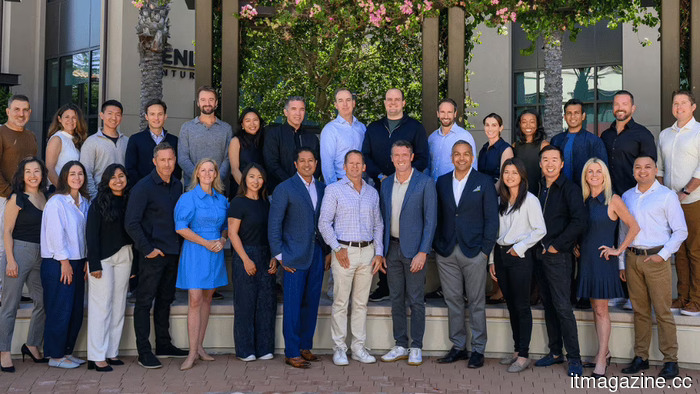 Menlo Ventures' $3 billion fund: the return from Anthropic
Menlo Ventures has amassed $3 billion for its largest fund in five decades, backed by a stake in Anthropic valued at approximately $14 billion. This article explores the investment and its potential for replication.
Menlo Ventures' $3 billion fund: the return from Anthropic
Menlo Ventures has amassed $3 billion for its largest fund in five decades, backed by a stake in Anthropic valued at approximately $14 billion. This article explores the investment and its potential for replication.
Walmart's Vibe.co partnership: a $1.4 billion investment in advertising.
Walmart's $1.4 billion deal for Vibe.co values the CTV ad startup at 12.6 times its revenue. This reflects Walmart's strategy to compete with Amazon in the retail media space.