
According to HSBC, AI falls short compared to human wealth managers when it comes to executing actual financial transactions.
Affluent investors are leveraging artificial intelligence for research and idea generation, subsequently consulting a human expert to decide whether to act on these ideas. This is the main takeaway from new research by HSBC, released on Wednesday, which surveyed nearly 10,000 wealthy and high-net-worth individuals across 10 different markets, concluding that human advisers still hold sway at the decision-making stage.
The survey results are significant: 62% of participants reported that they rely primarily on human professionals for investment ideas, while only 12% identified AI as the most influential element in their decision-making process. The consistency of this trend has prompted HSBC to label it “The Human-AI Advantage,” implying that the two do not really compete against one another.
The findings stem from a survey of 9,993 investors aged 21 to 69, with minimum investable assets of $100,000 for affluent participants and $2 million for high-net-worth individuals. Conducted online by Ipsos for HSBC between January 6 and February 6, 2026, the survey encompasses regions such as mainland China, Hong Kong, India, Singapore, the UAE, the UK, and the US. Given that the sample skews towards Asia and the Gulf, this reflects the profile of wealthy individuals globally rather than a specific critique of robo-advice in any one nation.
Respondents seem to view AI less as a competitor and more as a tool for dividing tasks, which industry professionals have been indicating for some time. Investors utilize AI early on to compare options, summarize research, and ease their anxiety before discussing with an adviser, treating it as an analytical partner rather than a decision-maker.
Barry O’Byrne, HSBC’s CEO of international wealth and premier banking, articulated this by saying clients are not choosing between AI and professional advice but are instead integrating both approaches, using AI for exploration and then seeking “a trusted human checkpoint for context and validation.”
The findings from the UAE, which are highlighted separately, illustrate this point further. In the UAE, 98% of investors reported using AI in some capacity, the highest among the markets surveyed, with 83% using it for financial purposes compared to 73% globally. However, financial professionals were still seen as the most influential in decision-making at 34%, nearly three times the 13% attributed to AI tools.
The more familiar these investors become with technology, the clearer they define its limitations.
HSBC clearly has commercial interests at stake. The results are released alongside the launch of Wealth Intelligence, a large-language model platform that utilizes over 10,000 data sources to prepare relationship managers for client meetings, partially developed in collaboration with Google Cloud. A survey suggesting that clients desire both AI and human advisers aligns well with the promotion of AI-enhanced human advisory services.
While the findings are credible on their own terms, the report serves corporate interests, answering a question in which the bank has vested interests. This isn't the first time such a position has been put forth. A review of stock-market forecasting studies revealed that AI-managed funds with available performance data typically underperformed compared to the market, strengthening the case for human managers, despite their imperfections.
The newest narrative centers on technology adoption rather than performance. HSBC survey clients are not waiting for AI to prove its superiority in the market before engaging with it. They have simply established clear boundaries regarding what they trust AI with, stopping short of allowing it to influence actual financial transactions.
Whether this boundary remains intact is a question that no survey can resolve. Currently, wealthy clients are benefiting from a hybrid approach that combines the efficiency of AI with the reassurance provided by human advisers, and they are willing to pay for that human interaction.
Other articles
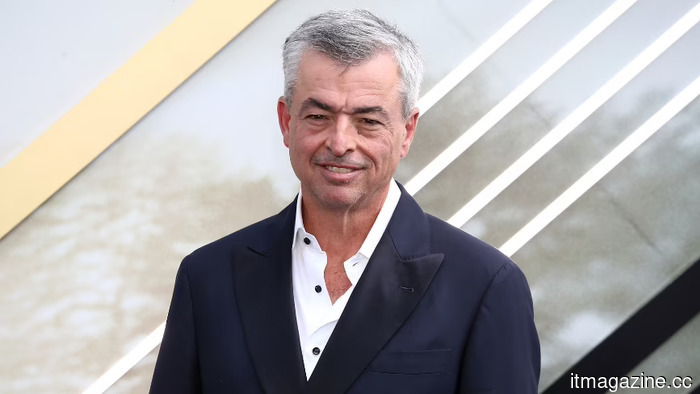 Eddy Cue from Apple stated that the company aims to create 'better' and 'more' entertainment.
Recognized at the Cannes Lions, Apple’s Eddy Cue explained the approach for Apple TV: focusing solely on original content, prioritizing quality over quantity, with more developments on the horizon.
Eddy Cue from Apple stated that the company aims to create 'better' and 'more' entertainment.
Recognized at the Cannes Lions, Apple’s Eddy Cue explained the approach for Apple TV: focusing solely on original content, prioritizing quality over quantity, with more developments on the horizon.
 A Swiss study reveals a decrease in job advertisements for new graduates as AI transforms entry-level positions.
An analysis by Jobs.ch of 7.3 million job advertisements in Switzerland reveals a significant decline in entry-level job postings since the pre-AI era, with the most pronounced drop occurring in sectors most affected by AI.
A Swiss study reveals a decrease in job advertisements for new graduates as AI transforms entry-level positions.
An analysis by Jobs.ch of 7.3 million job advertisements in Switzerland reveals a significant decline in entry-level job postings since the pre-AI era, with the most pronounced drop occurring in sectors most affected by AI.
 A Swiss study reveals a decline in job advertisements for entry-level positions as AI transforms the landscape of beginner jobs.
An analysis by Jobs.ch of 7.3 million job advertisements in Switzerland reveals that entry-level positions have significantly declined since the pre-AI era, with the most pronounced drops occurring in sectors that are heavily influenced by AI.
A Swiss study reveals a decline in job advertisements for entry-level positions as AI transforms the landscape of beginner jobs.
An analysis by Jobs.ch of 7.3 million job advertisements in Switzerland reveals that entry-level positions have significantly declined since the pre-AI era, with the most pronounced drops occurring in sectors that are heavily influenced by AI.
 GameStop's Ryan Cohen relinquishes a compensation package valued at as much as $35 billion in pursuit of eBay.
Ryan Cohen requested that GameStop’s board withdraw his suggested performance award, which analysts estimated could be worth as much as $35 billion, in order to maintain attention on its eBay offer.
GameStop's Ryan Cohen relinquishes a compensation package valued at as much as $35 billion in pursuit of eBay.
Ryan Cohen requested that GameStop’s board withdraw his suggested performance award, which analysts estimated could be worth as much as $35 billion, in order to maintain attention on its eBay offer.
 A Swiss study reveals a decline in job advertisements for entry-level positions as artificial intelligence transforms the landscape of initial employment.
An analysis by Jobs.ch of 7.3 million job advertisements in Switzerland reveals a significant decline in entry-level postings since the pre-AI era, with the most pronounced drops occurring in sectors heavily impacted by AI.
A Swiss study reveals a decline in job advertisements for entry-level positions as artificial intelligence transforms the landscape of initial employment.
An analysis by Jobs.ch of 7.3 million job advertisements in Switzerland reveals a significant decline in entry-level postings since the pre-AI era, with the most pronounced drops occurring in sectors heavily impacted by AI.
 Ryan Cohen of GameStop relinquishes a compensation package valued at as much as $35 billion to pursue eBay.
Ryan Cohen requested that GameStop's board withdraw his suggested performance award, which analysts estimated could be worth as much as $35 billion, in order to maintain focus on its bid for eBay.
Ryan Cohen of GameStop relinquishes a compensation package valued at as much as $35 billion to pursue eBay.
Ryan Cohen requested that GameStop's board withdraw his suggested performance award, which analysts estimated could be worth as much as $35 billion, in order to maintain focus on its bid for eBay.
According to HSBC, AI falls short compared to human wealth managers when it comes to executing actual financial transactions.
A survey conducted by HSBC involving nearly 10,000 affluent investors reveals that while AI handles the research, a human adviser ultimately makes the final decision.