

Runpod achieves a $1 billion valuation following a $100 million funding round.
Runpod has successfully raised $100 million, achieving a valuation of $1 billion, reflecting a tenfold increase within less than two years. This cloud startup specializes in renting AI computing power and claims to have declined buyout offers exceeding $500 million. The surge in demand for AI compute resources is creating new winners in the industry. Runpod, which is five years old and provides computing power to AI developers, has managed to raise $100 million, giving it a valuation of $1 billion.
This marks a significant increase; in its last funding round in 2024, Runpod was valued at around $100 million. In less than two years, it has experienced a tenfold growth. Summit Partners, a growth investor known for rarely backing young AI companies, led the funding round. Established in 1984, Summit has invested in over 550 companies, primarily in the profitable growth stage. Michael Medici, a managing director at Summit, will join Runpod’s board, with J.P. Morgan acting as the sole placement agent for the deal.
The compute crunch is a key factor. According to some sources, the demand for AI computing resources in 2026 is even more severe than the chip shortage experienced in 2023. Developers are struggling to acquire enough GPUs, which has benefitted a new class of companies that buy chips and lease them out. This situation is reminiscent of the 2023 chip crunch when venture capital firms became temporary cloud providers to secure GPUs for their startups. The ongoing shortage in 2026 has reignited that frantic search for resources, as demand from AI developers consistently exceeds chip supply.
Companies in this space are referred to by various names, such as compute resellers, inference providers, and neoclouds. Most focus on renting servers powered by Nvidia chips, which are standard for AI tasks. Runpod attempts to differentiate itself by also offering servers that run AMD's competing chips, which can be more affordable and easier to procure.
Runpod's strategy emphasizes breadth. While much of the market has become concentrated on a single function—running finished models known as inference—Runpod provides the entire cycle. Developers can experiment, train, fine-tune, and scale their projects all on one platform. "The market has narrowed to inference in the past two years, but builders need more than that," stated Zhen Lu, the CEO of Runpod. He envisions a single source for taking an idea from initial tests to live deployment, promoting speed and simplicity with per-second pricing and no minimum commitments.
Runpod intentionally designed a short onboarding process. It comes equipped with a library of pre-made models and templates, enabling most developers to run their first task within an hour of registration. There are no lengthy procurement cycles, nor is there a need to integrate multiple tools.
The business model is asset-light, as Runpod rents capacity rather than investing heavily in its own data centers. This approach provides flexibility, but it relies on external hardware. Efficiency in inference is becoming the industry’s most valuable asset, and Runpod aims to package this advantage effectively.
Growth is the crucial aspect that investors are focused on. Runpod has doubled its annualized revenue to approximately $240 million in the past five months, as reported by The Information. Over one million developers currently utilize the platform.
Usage has been significant. Runpod’s serverless platform has processed over 20 billion inference requests thus far. The company claims that more than 90% of deployments are successful on the first attempt and that 85% of developers who deploy return for additional services. These retention statistics are highly valued by investors.
The company’s clientele lends it credibility. The startup Deep Cogito completed training for its Cogito v1 open models entirely on Runpod in just 75 days with a small team. Julien Chaumond, the CTO of Hugging Face, acknowledged Runpod as one of the few firms that genuinely understands the needs of open-source developers.
This open-source community is thriving, as businesses increasingly rely on open models to reduce costs, directing them to platforms like Runpod for affordable and flexible compute options. The company plans to invest the new funds into enhancing its platform, bolstering its engineering and developer relations teams, and expanding its global reach.
In terms of strategic decisions, Runpod has displayed confidence by turning down buyout offers exceeding $500 million in order to maintain its independence, according to The Information. For a five-year-old company, this is a significant wager on its future.
This also highlights the current climate, where substantial investment is flowing into ventures that can mitigate the GPU bottleneck. Valuations for neoclouds have surged, with competitors achieving multibillion-dollar valuations. Runpod aims to capitalize on this trend without selling out prematurely.
Comparisons to others in the industry show that some neoclouds have reached valuations in the double digits of billions within two years of transitioning to AI. While Runpod is smaller, its growth rate is
Other articles
 Tissium secures €60 million for suture-free nerve repair.
France's Tissium has secured €60 million to introduce COAPTIUM CONNECT, the sole FDA-cleared sutureless nerve repair system, into operating rooms in the United States.
Tissium secures €60 million for suture-free nerve repair.
France's Tissium has secured €60 million to introduce COAPTIUM CONNECT, the sole FDA-cleared sutureless nerve repair system, into operating rooms in the United States.
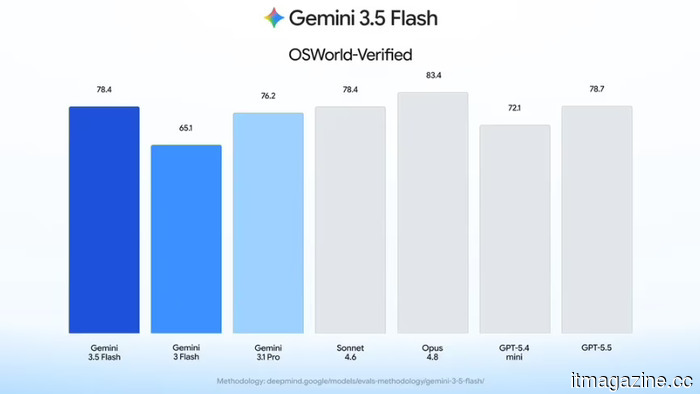 Gemini 3.5 Flash is now capable of viewing and managing your screen, and Google aims to gain the trust of enterprises in this feature.
Google has integrated computer use as a core feature in Gemini 3.5 Flash, replacing the standalone model and incorporating enterprise safety measures.
Gemini 3.5 Flash is now capable of viewing and managing your screen, and Google aims to gain the trust of enterprises in this feature.
Google has integrated computer use as a core feature in Gemini 3.5 Flash, replacing the standalone model and incorporating enterprise safety measures.
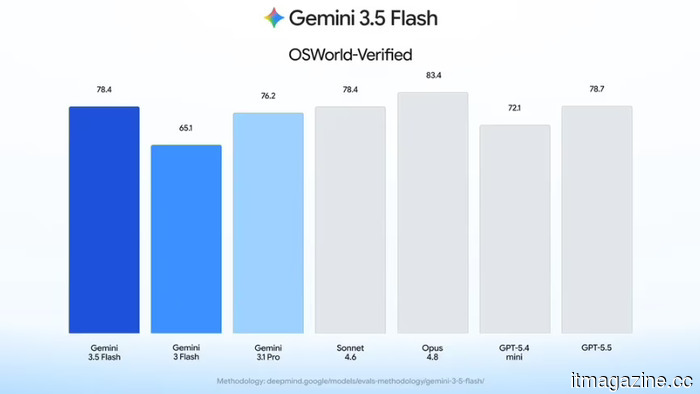 Gemini 3.5 Flash is now capable of viewing and managing your screen, and Google aims for businesses to place their confidence in it.
Google has integrated computer usage directly into Gemini 3.5 Flash, eliminating the standalone version and incorporating enterprise safety measures.
Anthropic claims that Alibaba is conducting the largest distillation campaign targeting Claude.
Anthropic informed US senators that Alibaba's Qwen lab utilized 25,000 counterfeit accounts to conduct nearly 29 million interactions with Claude from April to June.
Gemini 3.5 Flash is now capable of viewing and managing your screen, and Google aims for businesses to place their confidence in it.
Google has integrated computer usage directly into Gemini 3.5 Flash, eliminating the standalone version and incorporating enterprise safety measures.
Anthropic claims that Alibaba is conducting the largest distillation campaign targeting Claude.
Anthropic informed US senators that Alibaba's Qwen lab utilized 25,000 counterfeit accounts to conduct nearly 29 million interactions with Claude from April to June.
 Nvidia's CEO Jensen Huang asserts that illicit data centers are a futile endeavor and that national security should take precedence.
Jensen Huang informed shareholders that Nvidia would place US national security above sales and described smuggled chip data centers as unfeasible.
Nvidia's CEO Jensen Huang asserts that illicit data centers are a futile endeavor and that national security should take precedence.
Jensen Huang informed shareholders that Nvidia would place US national security above sales and described smuggled chip data centers as unfeasible.
 I compiled a list of the top laptop deals for Prime Day 2026, and these five are my top picks.
After reviewing all the options on Amazon, I've compiled a shortlist of Prime Day 2026 laptop deals, ranging from a $499.99 student laptop to a $1,239.99 gaming rig.
I compiled a list of the top laptop deals for Prime Day 2026, and these five are my top picks.
After reviewing all the options on Amazon, I've compiled a shortlist of Prime Day 2026 laptop deals, ranging from a $499.99 student laptop to a $1,239.99 gaming rig.
Runpod achieves a $1 billion valuation following a $100 million funding round.
Runpod has secured $100 million at a valuation of $1 billion, representing a tenfold increase in two years, and has stated that it declined acquisition offers exceeding $500 million.