

Qualcomm secures Meta as the inaugural named client for its Dragonfly data center chips.
Qualcomm has secured Meta as the initial customer for its upcoming Dragonfly C1000 data centre chip, which is set to launch in 2028. The company revealed this agreement during its investor day in New York on Wednesday, alongside the introduction of a new AI300 accelerator chip and the confirmed acquisition of the AI software startup Modular for approximately $3.9 billion in stock.
The Dragonfly C1000 is designed as a general-purpose server processor intended for use in data centres alongside Qualcomm’s AI accelerator chips. Meta has pledged to implement the C1000 and its successors within its operations. However, since the chip will not be available until 2028, this partnership reflects a long-term commitment rather than an immediate implementation.
Qualcomm first introduced the Dragonfly brand at Computex in early June, which encompasses three product categories: data centre CPUs, AI inference accelerators, and custom silicon tailored for hyperscalers. The details disclosed on Wednesday provided clarity beyond the initial Computex announcement.
On the accelerator front, Qualcomm introduced the AI300 chip, complementing its existing lineup which includes the AI200 and AI250. The AI200, built on Qualcomm’s Hexagon neural processing unit technology and featuring direct liquid cooling with up to 768GB of LPDDR memory, is projected for initial customer shipments later this year, while the AI250 is expected in 2027.
These accelerators are intended for inference, focusing on executing trained AI models at scale rather than training them anew. Qualcomm argues that its extensive experience in mobile chip design gives it a competitive edge in power efficiency, a significant factor as data centres increasingly strain global electricity grids. However, whether this mobile expertise will translate into effective performance in data centres remains to be seen.
The acquisition of Modular, which was reported to be nearing completion earlier this week, has now been confirmed at around four billion dollars in an all-stock deal, with Qualcomm planning to issue about 19 million shares to Modular’s owners. The transaction is anticipated to finalize in the latter half of this year.
Modular is known for creating the Mojo programming language and the MAX inference engine, which enables AI models to operate across hardware from Nvidia, AMD, Intel, and Qualcomm without requiring developers to adjust code for each processor. This competes directly with Nvidia’s CUDA platform, which has kept AI developers reliant on Nvidia hardware for two decades. Overcoming this reliance is a fundamental challenge for any competitor in the AI infrastructure space.
The rationale behind the acquisition is clear. While Qualcomm can design competitive chips, a lack of a supporting software ecosystem may hinder developers from adopting them. Modular’s cross-platform tools potentially offer Qualcomm the developer access it currently lacks.
CEO Cristiano Amon positioned the deal as part of a broader industry movement toward open, multi-vendor architectures, contrasting Qualcomm with Nvidia by promoting flexibility in a market where Nvidia's CUDA requires exclusivity.
Qualcomm's ambitions are substantial; however, its history in the data centre space is limited. The majority of its income is derived from smartphone processors and modems, and its earlier venture into the server market with the Centriq processor in 2017 ended with its discontinuation. The current initiative is backed by more institutional support, a confirmed hyperscaler customer in Meta, and clearer market prospects in AI inference, though there remains a significant divide between announcements made on investor day and actual revenue generation.
The partnership with Meta is significant as it reflects a move toward diversification. Currently, Meta's AI infrastructure primarily relies on Nvidia GPUs and its own custom MTIA chips. By incorporating Qualcomm into its supply chain, Meta seems to be seeking additional supplier options for scaling inference, rather than replacing Nvidia, which had announced a multiyear strategic partnership with Meta earlier this year.
Qualcomm's stock has appreciated by approximately 30 percent this year, bolstered by expectations that AI could serve as a second growth avenue alongside smartphones. The investor day aimed to transform these expectations into actionable plans. With the Modular acquisition enhancing the software aspect, Meta as a prominent initial customer, and the AI200 nearing shipment readiness, the elements are coming together theoretically.
However, the success of these initiatives depends on how well they are executed over the next two years. The C1000 won’t be available until 2028, the Modular acquisition is yet to be finalized, and the AI accelerator series lacks published benchmarks against Nvidia’s current or forthcoming hardware. While Qualcomm is strategically positioning itself for market entry, it is stepping into a competitive arena where Nvidia currently holds a significant lead, alongside other major cloud providers designing their own custom silicon.
Other articles
 I compiled a list of the top laptop deals for Prime Day 2026, and these five are my top picks.
After reviewing all the options on Amazon, I've compiled a shortlist of Prime Day 2026 laptop deals, ranging from a $499.99 student laptop to a $1,239.99 gaming rig.
I compiled a list of the top laptop deals for Prime Day 2026, and these five are my top picks.
After reviewing all the options on Amazon, I've compiled a shortlist of Prime Day 2026 laptop deals, ranging from a $499.99 student laptop to a $1,239.99 gaming rig.
 Tissium secures €60 million for sutureless nerve repair.
France's Tissium has secured €60 million to introduce COAPTIUM CONNECT, the sole FDA-approved sutureless nerve repair system, to operating rooms in the United States.
Tissium secures €60 million for sutureless nerve repair.
France's Tissium has secured €60 million to introduce COAPTIUM CONNECT, the sole FDA-approved sutureless nerve repair system, to operating rooms in the United States.
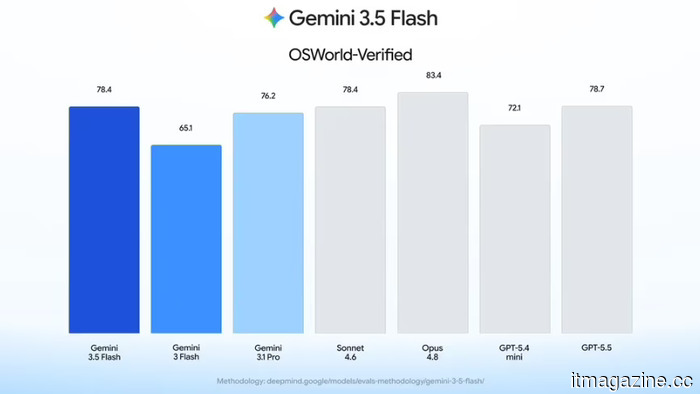 Gemini 3.5 Flash is now capable of viewing and managing your screen, and Google aims for businesses to have confidence in it.
Google has integrated computer usage into Gemini 3.5 Flash, moving away from the standalone model and incorporating enterprise safety measures.
Gemini 3.5 Flash is now capable of viewing and managing your screen, and Google aims for businesses to have confidence in it.
Google has integrated computer usage into Gemini 3.5 Flash, moving away from the standalone model and incorporating enterprise safety measures.
 Runpod achieves a valuation of $1 billion following a $100 million fundraising effort.
Runpod has secured $100 million at a valuation of $1 billion, marking a tenfold increase over the past two years, and reports that it declined acquisition proposals exceeding $500 million.
Runpod achieves a valuation of $1 billion following a $100 million fundraising effort.
Runpod has secured $100 million at a valuation of $1 billion, marking a tenfold increase over the past two years, and reports that it declined acquisition proposals exceeding $500 million.
 Google Wallet has the potential to expedite your experience at airport security through TSA PreCheck's Touchless ID feature.
TSA and Google Wallet have introduced a simplified opt-in feature for PreCheck Touchless ID, allowing travelers to share their digital ID and boarding pass, enabling them to pass through security without needing a physical ID.
Anthropic has charged Alibaba with conducting the largest distillation campaign against Claude.
Anthropic informed US senators that Alibaba's Qwen lab utilized 25,000 fraudulent accounts to conduct almost 29 million interactions with Claude from April to June.
Google Wallet has the potential to expedite your experience at airport security through TSA PreCheck's Touchless ID feature.
TSA and Google Wallet have introduced a simplified opt-in feature for PreCheck Touchless ID, allowing travelers to share their digital ID and boarding pass, enabling them to pass through security without needing a physical ID.
Anthropic has charged Alibaba with conducting the largest distillation campaign against Claude.
Anthropic informed US senators that Alibaba's Qwen lab utilized 25,000 fraudulent accounts to conduct almost 29 million interactions with Claude from April to June.
Qualcomm secures Meta as the inaugural named client for its Dragonfly data center chips.
Qualcomm introduced its Dragonfly C1000 data center chip, announcing Meta as its initial named customer, and also confirmed its $3.9 billion purchase of the AI company Modular.