

Qualcomm's modular agreement is approaching a $4 billion value to compete with Nvidia.
Qualcomm is nearing an agreement to acquire the AI-software startup Modular for around $4 billion. This acquisition would provide Qualcomm with new resources to compete against Nvidia. According to Bloomberg, Qualcomm is in advanced discussions to buy Modular, which would value the AI infrastructure software firm at approximately $4 billion. An announcement could occur within weeks, although a final agreement is not guaranteed and the terms may still change. Qualcomm opted not to comment, and Bloomberg was not able to reach Modular immediately.
Qualcomm’s interest in Modular stems from its desire to expand its role in the AI sector, an area where Nvidia currently leads. Purchasing Modular would assist in this goal, as the startup develops software that integrates the disorganized and fragmented landscape of AI computing. This software plays a crucial role in determining how models are executed across the various chips and data centers that support them. As the industry transitions from model training to the inference phase—where models are actually run—controlling the software layer becomes vital in deciding which hardware is utilized for the tasks.
For Qualcomm, acquiring Modular represents an opportunity to enhance its offerings and build strategic partnerships, rather than solely competing with Nvidia on raw silicon capabilities.
Founded in 2022 by Chris Lattner and Tim Davis in Silicon Valley, Modular emerged from the duo's frustrations with the fragmented nature of AI infrastructure that they encountered while working at Google. The company has raised a total of $380 million, with its most recent funding round in September generating $250 million at a $1.6 billion valuation, as stated at that time. A $4 billion acquisition price would more than double that valuation in just nine months. Its investors include DFJ Growth, General Catalyst, Google Ventures, and Greylock Partners.
Modular isn't the only AI-infrastructure startup seeing significant increases in value. The competition to create inference chips and the accompanying software is driving up valuations within the industry. Recent transactions have influenced this trend, such as Nvidia's reported $20 billion licensing deal for assets from chip startup Groq and SambaNova securing new funding. These actions have prompted established firms to reevaluate the worth of these startups as leading companies like OpenAI and Anthropic continue advancing the field, leading financially robust chip manufacturers to invest heavily in talent and technology at the forefront.
The discussions regarding Modular align with Qualcomm's strategic approach. Since US regulators blocked its intended takeover of NXP Semiconductors, Qualcomm has utilized smaller acquisitions to bolster its position. Last year, it agreed to acquire the London-listed Alphawave IP Group for about $2.4 billion in cash. The Modular deal would be significantly larger and more integral to Qualcomm's AI objectives.
Many tech companies are similarly opting to acquire growth through purchases rather than building capabilities from the ground up.
The timing of the potential Modular deal appears intended. Qualcomm's investor day is set for Wednesday, and the company aims to demonstrate progress beyond its traditional smartphone market. The company's stock has risen approximately 30% this year, but there's inherent risk in the proposed valuation. Critics caution that AI valuations may have outpaced actual revenue, and a $4 billion valuation for a startup last appraised at $1.6 billion will indeed test investor confidence. For the time being, the belief is that controlling the software will be key to owning the future of AI.
Other articles
 Akko Dash V9 Ultra review: I tried out this ultra-light gaming mouse, and it made my tasks easier as well.
Akko's lightweight mouse features a top-tier sensor and 8K wireless polling all within a stylish design, and it does so without demanding an exorbitant price.
Akko Dash V9 Ultra review: I tried out this ultra-light gaming mouse, and it made my tasks easier as well.
Akko's lightweight mouse features a top-tier sensor and 8K wireless polling all within a stylish design, and it does so without demanding an exorbitant price.
 Akko Dash V9 Ultra review: I tried out this extremely lightweight gaming mouse, and it also made my work easier.
Akko's lightweight mouse features a top-tier sensor and offers 8K wireless polling all within a stylish design, and it doesn't come with an exorbitant price tag.
Akko Dash V9 Ultra review: I tried out this extremely lightweight gaming mouse, and it also made my work easier.
Akko's lightweight mouse features a top-tier sensor and offers 8K wireless polling all within a stylish design, and it doesn't come with an exorbitant price tag.
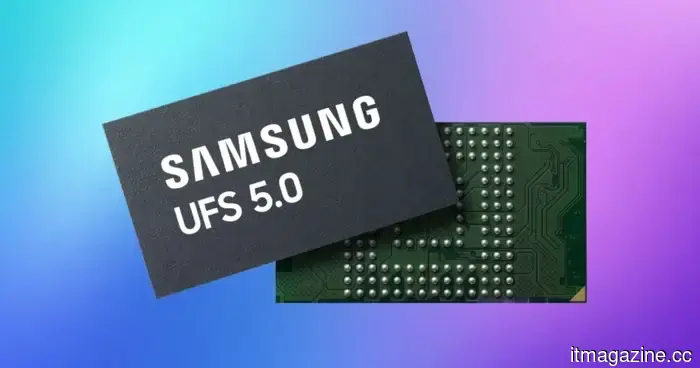 Samsung's latest UFS 5.0 chip offers improved on-device AI performance and extended battery life for your smartphone.
Samsung has introduced its quickest UFS 5.0 storage chip to date, achieving transfer speeds of 10.8GB per second to enhance on-device AI performance.
Samsung's latest UFS 5.0 chip offers improved on-device AI performance and extended battery life for your smartphone.
Samsung has introduced its quickest UFS 5.0 storage chip to date, achieving transfer speeds of 10.8GB per second to enhance on-device AI performance.
 Asus ROG Rapture GT-BE19000AI Router Review: An Excellent, Future-Ready Upgrade
The Asus ROG Rapture GT-BE19000AI is an impressive Wi-Fi router equipped with significant features and avoids the need for a subscription. However, at a price of $899, you really need to desire it in order to purchase one.
Asus ROG Rapture GT-BE19000AI Router Review: An Excellent, Future-Ready Upgrade
The Asus ROG Rapture GT-BE19000AI is an impressive Wi-Fi router equipped with significant features and avoids the need for a subscription. However, at a price of $899, you really need to desire it in order to purchase one.
 The competition to design smart glasses that appear less clumsy has started, and I'm thrilled with the results.
An Italian startup named Lorika has just introduced Ontop, vibrant clip-on covers designed to enhance the appearance of your Ray-Ban Meta glasses.
The competition to design smart glasses that appear less clumsy has started, and I'm thrilled with the results.
An Italian startup named Lorika has just introduced Ontop, vibrant clip-on covers designed to enhance the appearance of your Ray-Ban Meta glasses.
 The MGX AI fund reaches $50 billion as Abu Dhabi seeks to attract external investors.
Abu Dhabi's MGX AI fund has garnered almost $50 billion from external investors and is currently allocating these funds to OpenAI, xAI, semiconductor companies, and data centers.
The MGX AI fund reaches $50 billion as Abu Dhabi seeks to attract external investors.
Abu Dhabi's MGX AI fund has garnered almost $50 billion from external investors and is currently allocating these funds to OpenAI, xAI, semiconductor companies, and data centers.
Qualcomm's modular agreement is approaching a $4 billion value to compete with Nvidia.
The Qualcomm Modular agreement would assess the AI-infrastructure software startup at approximately $4 billion, as the chip manufacturer expands its competition against Nvidia.