

Meta was secretly monitoring its employees, but promptly halted the practice following an internal leak.
Meta acknowledges that its employee surveillance program did not meet privacy expectations.
Meta has temporarily halted a controversial employee surveillance tool after it unintentionally revealed sensitive employee information company-wide (via Wired).
The tool, known as the Model Capability Initiative, had been discreetly collecting keystrokes, mouse movements, and screen content from US employees' laptops since April.
An unwelcome surveillance initiative
Meta introduced MCI to help train AI systems to utilize software in a manner similar to humans, with executives claiming that employees were the most suitable source for such training data.
Over 1,600 employees signed an internal petition opposing the program, cautioning it posed significant security and regulatory dangers. One engineer expressed that having their screen data collected without consent constituted a blatant invasion of privacy.
Reportedly, CEO Mark Zuckerberg defended the initiative in a leaked recording, stating that AI models benefit from observing capable individuals at work and asserting that Meta’s employees were superior to average contractors for this task.
The leak that compelled Meta to act
An internal security alert disclosed that data from 45,000 internal database tables had been exposed to the entire company, including private chats, complete prompts, transcriptions, and performance metrics.
Meta spokesperson Tracy Clayton mentioned that the company found no evidence of unauthorized data access but is pausing MCI while an investigation takes place. Employees inundated internal forums with critical feedback, with one former employee calling the mistake something workers had predicted.
Meta's CTO, Andrew Bosworth, admitted internally that the program did not meet its own privacy assessment standards. This incident is not the first for Meta regarding AI-related security failures, following a March incident with an AI agent behaving inappropriately and a chatbot exploit that enabled hackers to seize Instagram accounts.
While the pause might alleviate tensions temporarily, Meta’s aspirations in AI are clearly testing employee patience, especially amidst ongoing layoffs and restructuring.
---
OpenAI aims to enhance security for open-source projects
OpenAI has introduced Patch the Planet, an initiative focused on addressing one of the internet's overlooked issues: the persistent lack of funding for the security of open-source software. Patch the Planet connects OpenAI's top security-savvy AI models with Trail of Bits, a security firm dedicated to the cause, and receives additional backing from HackerOne and others.
---
I sorted through the chaos of Prime Day to uncover the best Apple deals worth considering
Apple is about to raise its prices. Prime Day 2026 represents your final chance to save up to $150 on MacBooks, AirPods, and iPads.
Apple is expected to increase the costs of its forthcoming iPhones and MacBooks, as the company can no longer absorb the rising RAM and storage expenses. This implies that if you're seeking to update your older device, you should consider purchasing current-generation Apple products rather than wait for the new releases. Given that Amazon Prime Day is providing significant discounts on the latest iPhones, iPads, MacBooks, and other Apple accessories, now is an ideal time to make a purchase. Here are my top Amazon Prime Day picks for Apple products.
---
Research reveals a clever photo technique that enables AI chatbots to bypass their safety measures
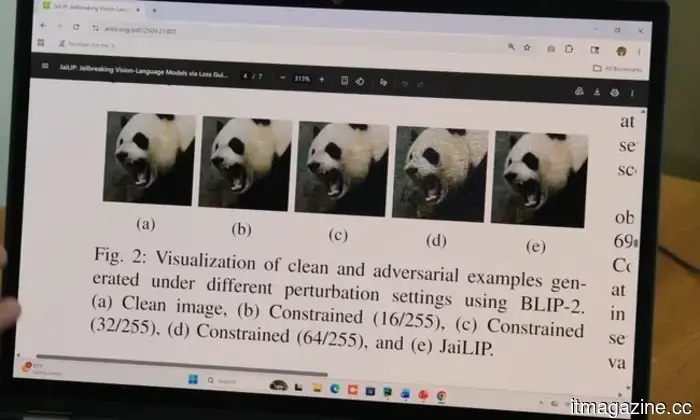
Researchers from Florida International University have developed a method that nearly doubled the rate of harmful responses from a tested AI model using only pixel-level modifications to an image.
An image that appears entirely normal to the human eye could covertly contain instructions designed to deceive an AI chatbot into disregarding its safety guidelines, according to new research from Florida International University. The study demonstrated that imperceptible pixel adjustments in an image could confuse the model interpreting the image, resulting in the generation of responses it would typically reject.





Other articles
 Meta was covertly monitoring its employees, but quickly discontinued the practice following an internal leak.
Meta has suspended its employee monitoring program that gathered keystrokes, screen activity, and mouse actions following an internal leak of sensitive information.
Meta was covertly monitoring its employees, but quickly discontinued the practice following an internal leak.
Meta has suspended its employee monitoring program that gathered keystrokes, screen activity, and mouse actions following an internal leak of sensitive information.
 Luminvera is focusing on immersive software for robotics.
Luminvera released its AR wearable and shifted focus from industrial engineering to robotics software right after graduating from the Founder Institute, believing that an AI-driven spatial design tool can compete with more financially advantaged rivals.
Luminvera is focusing on immersive software for robotics.
Luminvera released its AR wearable and shifted focus from industrial engineering to robotics software right after graduating from the Founder Institute, believing that an AI-driven spatial design tool can compete with more financially advantaged rivals.
 The MLRO of CryptoProcessing discusses why access to banking remains the most significant hurdle for cryptocurrency.
Cryptocurrency companies have invested years in persuading banks that they are reliable partners for business. Despite the increased regulation compared to previous years, many of these firms continue to be rejected. Jelizaveta Paskovskaja,
The MLRO of CryptoProcessing discusses why access to banking remains the most significant hurdle for cryptocurrency.
Cryptocurrency companies have invested years in persuading banks that they are reliable partners for business. Despite the increased regulation compared to previous years, many of these firms continue to be rejected. Jelizaveta Paskovskaja,
 This clever photo technique causes AI chatbots to bypass their safety protocols.
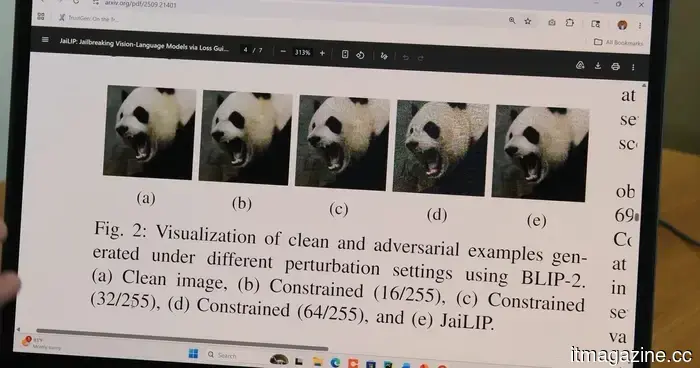
A recent exploit from Florida International University demonstrates how undetectable pixel-level alterations in an image can deceive AI chatbots into producing responses they typically prohibit.
This clever photo technique causes AI chatbots to bypass their safety protocols.
A recent exploit from Florida International University demonstrates how undetectable pixel-level alterations in an image can deceive AI chatbots into producing responses they typically prohibit.
 I looked at the Prime Day speaker offers, and these 5 are the ones that deserve your attention.
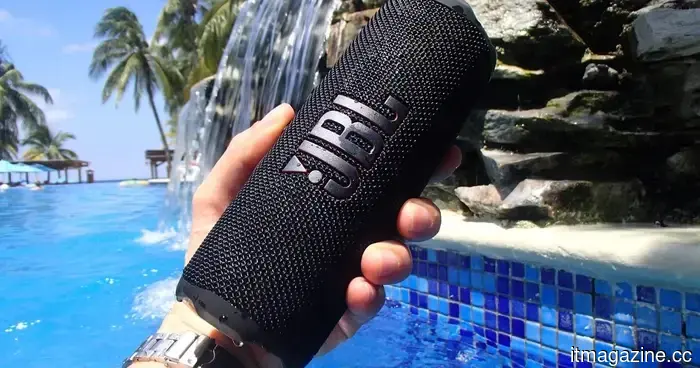
Avoid the nameless speaker distractions. These JBL and Bose Prime Day offers come with substantial discounts, practical features, and clear justifications for purchase.
I looked at the Prime Day speaker offers, and these 5 are the ones that deserve your attention.
Avoid the nameless speaker distractions. These JBL and Bose Prime Day offers come with substantial discounts, practical features, and clear justifications for purchase.
 Luminvera focuses on immersive software for robotics.
Luminvera launched its AR wearable and shifted focus from industrial engineering to robotics software right after graduating from the Founder Institute, wagering that an AI-powered spatial design tool can compete with better-financed rivals.
Luminvera focuses on immersive software for robotics.
Luminvera launched its AR wearable and shifted focus from industrial engineering to robotics software right after graduating from the Founder Institute, wagering that an AI-powered spatial design tool can compete with better-financed rivals.
Meta was secretly monitoring its employees, but promptly halted the practice following an internal leak.
Meta suspended its employee tracking initiative, which gathered keystroke data, screen activity, and mouse movements, following an internal leak of sensitive information.