
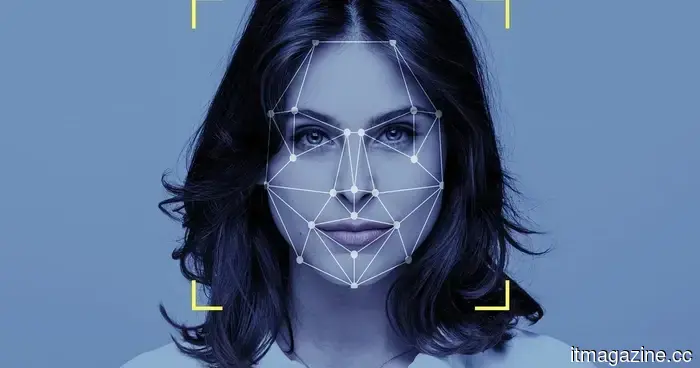
Hackers have released facial recognition data associated with millions of visitors to Madison Square Garden.
Madison Square Garden has been utilizing facial recognition technology for years to monitor who enters its venues. Now, that surveillance system is at the center of what could potentially become one of the year's most significant privacy violations.
The cybercrime group ShinyHunters has reportedly released a large cache of data that is said to have been stolen from Madison Square Garden Entertainment after the company failed to meet a ransom deadline. Reports indicate that the leak includes facial recognition records, customer details, internal security evaluations, and other sensitive information related to millions of visitors. While large data breaches have regrettably become commonplace, this incident feels distinct. Most data leaks involve passwords, email addresses, or financial data, while this breach reportedly includes much more personal information concerning how individuals were monitored and recognized in physical locations.
When the security camera is at risk
For years, MSG’s facial recognition initiative has sparked controversy. The company has employed this technology across its venues to identify patrons and, in certain cases, enforce policies that have drawn criticism from privacy advocates and regulators. Detractors have long cautioned that the accumulation of extensive biometric data makes it an appealing target for hackers. This breach seems to confirm those worries.
Reportedly, the leaked files comprise biometric tracking details, internal risk evaluations, background-check information, and records associated with attendees. The dataset purportedly contains customer correspondence, including messages from visitors expressing concern about potential misidentification by facial recognition systems. If true, that indicates concerns about surveillance practices were stored alongside the surveillance data itself.
The breach that revealed more than customer details
What makes this incident particularly significant is the broader implications it raises regarding surveillance technology. Organizations frequently justify facial recognition systems as safety, security, or operational efficiency tools. However, every camera, database, and profile creates another collection of highly sensitive information that requires protection. The more comprehensive these records are, the more appealing they become to cybercriminals.
This breach comes less than a year after another significant cybersecurity incident involving MSG, amplifying concerns about how organizations manage the increasing amounts of personal data they gather. Currently, many details remain uncertain. The overall extent of the leaked records has not been independently validated, and Madison Square Garden Entertainment has not publicly acknowledged the full scale of the breach. Nonetheless, the ramifications of this situation may extend beyond just one company. It underscores a reality that is frequently overlooked in discussions about surveillance technology: gathering data is merely half the battle. Safeguarding it might be the more challenging aspect. And when that safeguard fails, the fallout can reach far beyond a compromised password.





Other articles
 Seedcamp secures $320 million and develops a transatlantic connection.
Europe's pioneering first-check investor has secured $320 million through two funds and has grown its US team to support founders who are building on a global scale from the outset.
Seedcamp secures $320 million and develops a transatlantic connection.
Europe's pioneering first-check investor has secured $320 million through two funds and has grown its US team to support founders who are building on a global scale from the outset.
 Hackers have released facial recognition data related to millions of visitors to Madison Square Garden.
A cybercriminal organization has released what it asserts are millions of records taken from Madison Square Garden Entertainment. This data breach is gaining attention not only due to its magnitude but also because it contains facial recognition information, internal threat evaluations, and comprehensive visitor profiles.
Hackers have released facial recognition data related to millions of visitors to Madison Square Garden.
A cybercriminal organization has released what it asserts are millions of records taken from Madison Square Garden Entertainment. This data breach is gaining attention not only due to its magnitude but also because it contains facial recognition information, internal threat evaluations, and comprehensive visitor profiles.
 Korea's top policy official cautions that a surge in chip profits may lead to increased housing prices.
Kim Yong-beom warns that the wealth generated from Korea's semiconductor boom could become concentrated in real estate and is advocating for reforms in housing taxation.
Korea's top policy official cautions that a surge in chip profits may lead to increased housing prices.
Kim Yong-beom warns that the wealth generated from Korea's semiconductor boom could become concentrated in real estate and is advocating for reforms in housing taxation.
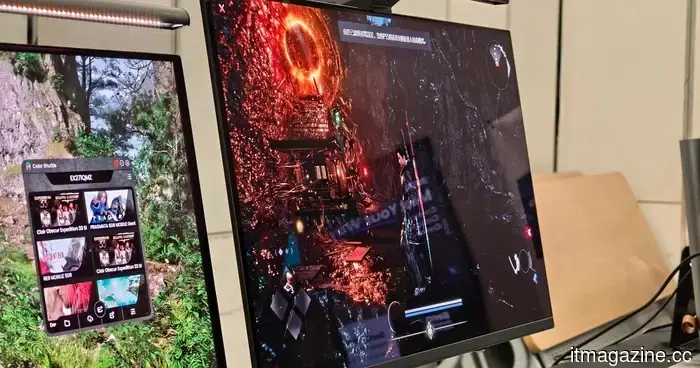 Forget about RTX filters. BenQ’s gaming monitor enhances visuals on its own.
BenQ's MOBIUZ gaming monitors leverage AI-driven Smart Color and Color Shuttle to automatically adjust game visuals on the display, featuring shareable presets without impacting GPU performance.
Forget about RTX filters. BenQ’s gaming monitor enhances visuals on its own.
BenQ's MOBIUZ gaming monitors leverage AI-driven Smart Color and Color Shuttle to automatically adjust game visuals on the display, featuring shareable presets without impacting GPU performance.
 Canada purchases Australian Arctic radar in a groundbreaking A$2.5 billion defense export deal.
Canada will purchase Australia's JORN-derived radar system for monitoring the Arctic in a deal worth A$2.5 billion, marking Australia's biggest defence export to date.
Canada purchases Australian Arctic radar in a groundbreaking A$2.5 billion defense export deal.
Canada will purchase Australia's JORN-derived radar system for monitoring the Arctic in a deal worth A$2.5 billion, marking Australia's biggest defence export to date.
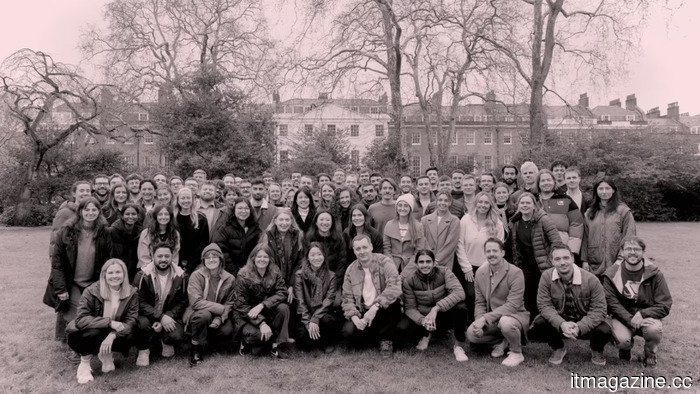 Isometric, based in London, secures $40 million to validate the industrial economy using AI.
Isometric, based in London, has secured $40 million in Series A funding, led by AVP, to expand its AI certification platform throughout the broader industrial sector.
Isometric, based in London, secures $40 million to validate the industrial economy using AI.
Isometric, based in London, has secured $40 million in Series A funding, led by AVP, to expand its AI certification platform throughout the broader industrial sector.
Hackers have released facial recognition data associated with millions of visitors to Madison Square Garden.
A group of cybercriminals has released what it alleges to be millions of records obtained from Madison Square Garden Entertainment. The breach is garnering interest not only due to its magnitude but also because it contains facial recognition information, internal evaluations of threats, and comprehensive visitor profiles.