
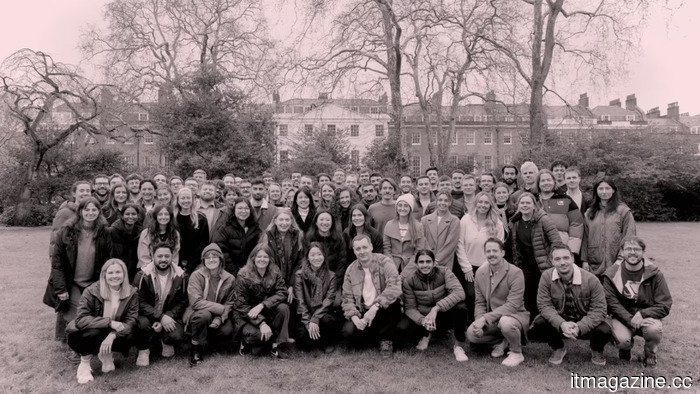
Isometric, based in London, secures $40 million to validate the industrial economy using AI.
Certification is a task that most individuals rarely consider until it causes a delay. Before a regulator issues a permit, a buyer makes a purchase, or an investor allocates funds, someone must verify the validity of a claim. For many years, this verification has been performed manually, involving the sampling of only a portion of the evidence and drawing conclusions from that. Isometric, a London-based company, has now secured $40 million to propose that this inference method can be bypassed.
The Series A funding round was led by AVP, the firm previously known as AXA Venture Partners, with the insurance company AXA as a key investor. Other participants included existing supporters Lowercarbon Capital and Plural, as well as personal contributions from John Doerr, chairman of Kleiner Perkins, and investor Walter Kortschak. Isometric plans to use the funds to enhance its certification technology and broaden its platform within the larger industrial certification market, which BCG estimates to be approximately $350 billion.
The company's platform, Certify, utilizes AI agents that process and verify millions of data points associated with a single claim, including sensor data, satellite imagery, supply chain documentation, and lab results. It identifies inconsistencies and highlights cases that require human review. While a traditional third-party auditor would typically conduct random sample checks, Isometric’s approach promises comprehensive coverage at all times, reserving expert judgment for situations that truly necessitate it.
Isometric's method was developed within the carbon removal sector, a market that has been working over the past few years to prove to buyers that its credits are legitimate. The company claims to be the largest certifier of carbon removal by contracted volume, validating over 16 million tonnes with more than 200 projects on its platform and clients such as Microsoft, Anglo American, JPMorgan Chase, and Boeing.
In December 2024, it became the first carbon removal registry to obtain accreditation from the ICVCM, ICROA, and CORSIA, the three organizations responsible for overseeing integrity in the voluntary and aviation carbon markets. This experience is particularly significant in a market that TNW has monitored closely, which includes companies like Neustark that sequester carbon in concrete and AI tools designed to detect greenwashing. Isometric believes that the verification challenge is a consistent issue across various contexts.
Eamon Jubbawy, the founder, has previously navigated this landscape. He co-founded Onfido, an AI identity verification firm that, according to the company’s own reports, verified over a billion identities before being acquired by Entrust for a reported $650 million in 2024. Jubbawy established Isometric in 2022 to leverage similar technology for environmental and industrial claims.
“For decades, the certification industry has had to choose between speed and thoroughness—either you do it quickly or correctly,” Jubbawy stated. “With Isometric, industrial enterprises can have both. AI agents are revolutionizing the certification process, making it instantaneous and unobtrusive, and unlocking the potential of the industrial economy.”
Isometric’s ambitions extend far beyond carbon. The company views the current certification landscape as fragmented, comprising various registries and standards organizations, each with its own procedures and formats. It aims to consolidate them onto a unified platform governed by a single standard, with all certificates accessible through one public registry. Its immediate goals include reducing superpollutants and advancing low-carbon energy, fuels, and materials.
“Certification has traditionally required a choice between speed and thoroughness. Isometric has removed that trade-off,” remarked François Robinet, managing partner at AVP, referring to the company as “genuinely category-defining.”
Blair McDougall, the UK’s minister for economic transformation, labeled Isometric “exactly the kind of frontier AI success story we want to encourage and develop in the UK.” In straightforward terms, the funding will allow for an expansion of services. The current concern is whether the broader industrial sector desires certificates issued in hours instead of months—a gamble that is now on the table.
Other articles
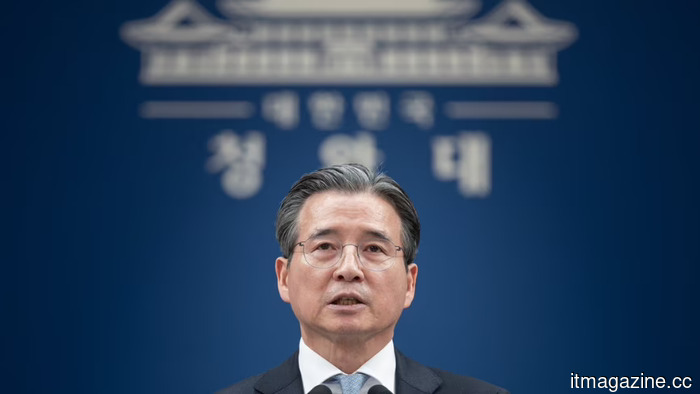 Korea's top policy official cautions that a surge in chip profits may lead to increased housing prices.
Kim Yong-beom warns that the wealth generated from Korea's semiconductor boom could become concentrated in real estate and is advocating for reforms in housing taxation.
Korea's top policy official cautions that a surge in chip profits may lead to increased housing prices.
Kim Yong-beom warns that the wealth generated from Korea's semiconductor boom could become concentrated in real estate and is advocating for reforms in housing taxation.
 A self-powered shaking capsule demonstrates the future of secure drinking water right at our fingertips.
Scientists have created a self-sustaining floating capsule that harnesses kinetic energy to identify contaminated water and purify it without the need for batteries or chemicals.
A self-powered shaking capsule demonstrates the future of secure drinking water right at our fingertips.
Scientists have created a self-sustaining floating capsule that harnesses kinetic energy to identify contaminated water and purify it without the need for batteries or chemicals.
 Seedcamp secures $320 million and develops a transatlantic connection.
Europe's pioneering first-check investor has secured $320 million through two funds and has grown its US team to support founders who are building on a global scale from the outset.
Seedcamp secures $320 million and develops a transatlantic connection.
Europe's pioneering first-check investor has secured $320 million through two funds and has grown its US team to support founders who are building on a global scale from the outset.
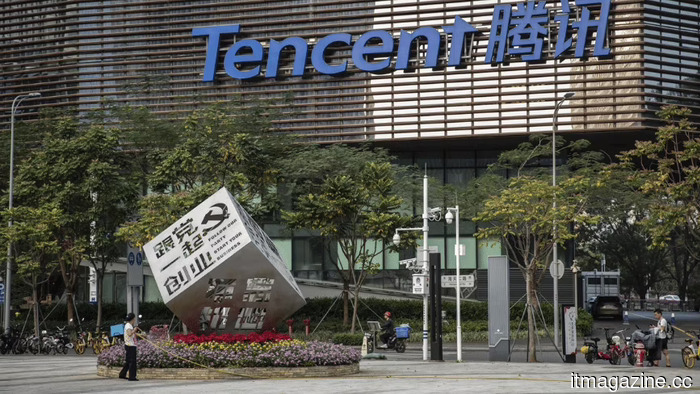 WeChat has initiated testing of Xiaowei as Tencent prepares for an AI launch in the third quarter.
Tencent has started testing Xiaowei, an AI assistant that functions through voice and text within WeChat, with plans for a complete public launch in the third quarter.
WeChat has initiated testing of Xiaowei as Tencent prepares for an AI launch in the third quarter.
Tencent has started testing Xiaowei, an AI assistant that functions through voice and text within WeChat, with plans for a complete public launch in the third quarter.
 China’s goal for green energy in AI data centers faces challenges with the power grid.
Beijing aims for renewable energy to provide 80% of the power for its AI data centres by 2030. However, forecasting and grid risk are posing challenges.
China’s goal for green energy in AI data centers faces challenges with the power grid.
Beijing aims for renewable energy to provide 80% of the power for its AI data centres by 2030. However, forecasting and grid risk are posing challenges.
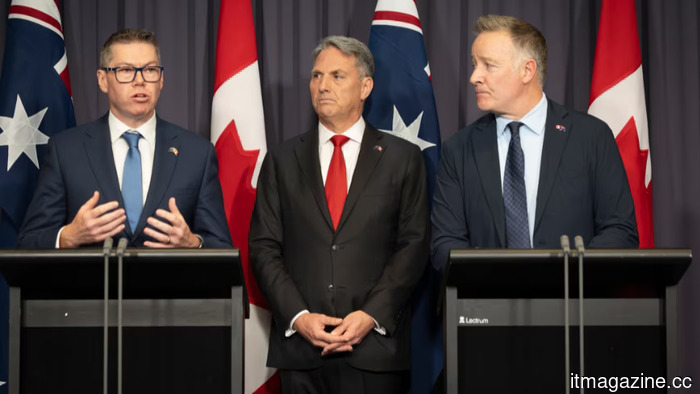 Canada purchases Australian Arctic radar in a historic A$2.5 billion defense export deal.
Canada will purchase Australia's JORN-derived radar for monitoring the Arctic in a deal valued at A$2.5 billion, marking Australia’s largest defence export to date.
Canada purchases Australian Arctic radar in a historic A$2.5 billion defense export deal.
Canada will purchase Australia's JORN-derived radar for monitoring the Arctic in a deal valued at A$2.5 billion, marking Australia’s largest defence export to date.
Isometric, based in London, secures $40 million to validate the industrial economy using AI.
Isometric, based in London, has secured $40 million in Series A funding, led by AVP, to expand its AI certification platform throughout the broader industrial sector.