

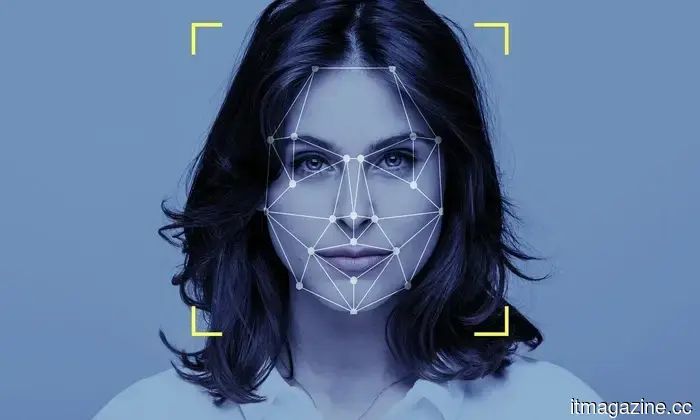
Hackers have released facial recognition data related to millions of visitors to Madison Square Garden.
Madison Square Garden has been utilizing facial recognition technology for years to keep track of those entering its venues. However, this surveillance system is now at the forefront of what may turn out to be one of the most concerning privacy violations of the year.
The cybercrime group ShinyHunters has released a substantial amount of information that it claims was stolen from Madison Square Garden Entertainment after the company failed to meet a ransom deadline. Reports indicate that this leak contains facial recognition data, customer details, internal security assessments, and other sensitive information related to millions of attendees. While significant data breaches have unfortunately become frequent, this incident feels distinct. Most leaks typically involve passwords, email addresses, or financial details, but this particular breach is said to include much more personal information regarding the way individuals were tracked and recognized in physical environments.
The security camera as a focal point
MSG's facial recognition program has been contentious for years. The organization has employed this technology in its venues to recognize guests and, in certain instances, enforce policies that have drawn criticism from privacy advocates and regulators. Detractors have long cautioned that accumulating large quantities of biometric data poses a significant target for hackers. This breach seems to confirm those warnings.
According to reports, the compromised files contain biometric tracking data, internal assessments of risk, background-check information, and records associated with attendees. The dataset reportedly includes customer communications, including messages from visitors worried about being incorrectly identified by facial recognition systems. If accurate, this means that complaints regarding surveillance were stored alongside the surveillance data itself.
The breach revealing more than customer data
What makes this incident particularly significant is the broader implications it raises concerning surveillance technologies. Organizations frequently defend their use of facial recognition systems as beneficial for safety, security, or operational efficiency. Yet, each camera, database, and profile establishes another repository of highly sensitive information that must be safeguarded. As these records grow more comprehensive, they become increasingly appealing to cybercriminals.
This breach comes less than a year after another notable cybersecurity incident involving MSG, raising concerns about how organizations manage the burgeoning amounts of personal information they gather. For the time being, many aspects remain uncertain. The complete extent of the leaked information has not been independently validated, and Madison Square Garden Entertainment has yet to confirm the breach's magnitude publicly. Nevertheless, the situation may extend beyond a single company. The incident underscores a truth often overlooked in discussions surrounding surveillance technology: gathering data is only part of the challenge. Safeguarding it might be the more difficult aspect. When that safeguard fails, the repercussions can reach far beyond a compromised password.
Shimul is a contributor at Digital Trends, bringing over five years of experience in the tech industry.
Intel Core 3 tests suggest it could provide Windows laptops with a competitive edge against MacBook Neo
Recent PassMark results indicate that Wildcat Lake is closing the gap with Apple's A18 Pro.
Apple's MacBook Neo has disrupted the budget laptop market with its $599 price point and surprisingly powerful A18 Pro chip. However, if current benchmark results are any indication, Intel might finally be delivering a credible rival. The forthcoming Core 3 304 processor has appeared on PassMark, suggesting that entry-level Windows laptops may soon become significantly more competitive.
Intel's Core 3 304 narrows the gap with Apple's A18 Pro.
Microsoft's new Insider Preview for Windows 11’s Media Player somehow performs worse than its version from 17 years ago.
The newly released Insider Preview update for Windows 11's Media Player has garnered criticism for being slower and consuming more memory compared to the classic Windows Media Player from 17 years ago.
The update introduces some helpful improvements, such as better captioning, clearer codec error messages, and enhanced file recognition. Yet, the primary grievances remain its increased RAM usage and the requirement for paid codec support for certain common video formats. This update is still not broadly available; Media Player version 11.2605.14.0 has only been released on Experimental Insider builds as part of Microsoft's June 12 Insider Preview updates.
If you own a Mac, consider trying this free, well-designed disk space tool.
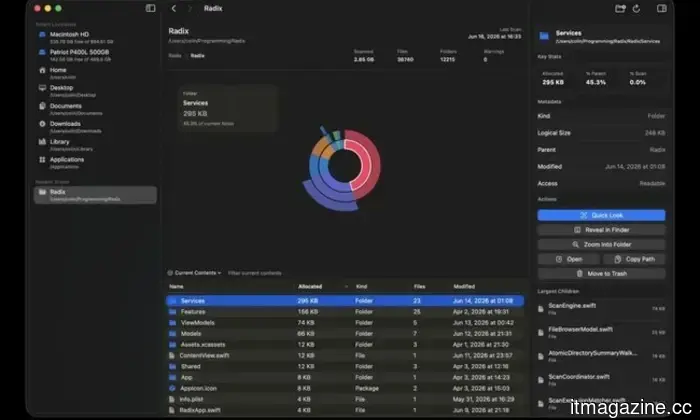
Radix serves as a free open-source alternative to paid Mac disk analyzers.
Running low on storage on a Mac is a frequent issue, but Apple's built-in tools often struggle to accurately display what is occupying space. Typically, you receive broad categories, but pinpointing the specific folders, downloads, app files, or outdated projects that are the source of the issue can still require substantial effort.
Radix, a free and open-source Mac application, aims to streamline this process. It works as a disk space analyzer that scans a folder, drive, or volume and presents the findings in an interactive sunburst chart. Instead of manually sifting through folders, you can obtain a visual summary of how your storage is allocated across your drive.





Other articles
 WeChat has initiated testing of Xiaowei as Tencent prepares for an AI launch in the third quarter.
Tencent has started testing Xiaowei, an AI assistant that functions through voice and text within WeChat, with plans for a complete public launch in the third quarter.
WeChat has initiated testing of Xiaowei as Tencent prepares for an AI launch in the third quarter.
Tencent has started testing Xiaowei, an AI assistant that functions through voice and text within WeChat, with plans for a complete public launch in the third quarter.
 Korea's top policy official cautions that a surge in chip profits may lead to increased housing prices.
Kim Yong-beom warns that the wealth generated from Korea's semiconductor boom could become concentrated in real estate and is advocating for reforms in housing taxation.
Korea's top policy official cautions that a surge in chip profits may lead to increased housing prices.
Kim Yong-beom warns that the wealth generated from Korea's semiconductor boom could become concentrated in real estate and is advocating for reforms in housing taxation.
 Seedcamp secures $320 million and develops a transatlantic connection.
Europe's pioneering first-check investor has secured $320 million through two funds and has grown its US team to support founders who are building on a global scale from the outset.
Seedcamp secures $320 million and develops a transatlantic connection.
Europe's pioneering first-check investor has secured $320 million through two funds and has grown its US team to support founders who are building on a global scale from the outset.
 Seedcamp secures $320 million and establishes a transatlantic connection.
Europe's pioneering first-check investor has secured $320 million through two funds and has grown its US team to support founders who are building globally from the outset.
Seedcamp secures $320 million and establishes a transatlantic connection.
Europe's pioneering first-check investor has secured $320 million through two funds and has grown its US team to support founders who are building globally from the outset.
 Intel Core 3 tests indicate that it may help Windows laptops compete with the MacBook Neo once more.
The new Core 3 304 processor from Intel has surfaced in recent benchmarks, achieving PassMark scores that are notably similar to those of the MacBook Neo powered by Apple's A18 Pro.
Intel Core 3 tests indicate that it may help Windows laptops compete with the MacBook Neo once more.
The new Core 3 304 processor from Intel has surfaced in recent benchmarks, achieving PassMark scores that are notably similar to those of the MacBook Neo powered by Apple's A18 Pro.
 Canada purchases Australian Arctic radar in a historic A$2.5 billion defense export deal.
Canada will purchase Australia's JORN-derived radar for monitoring the Arctic in a deal valued at A$2.5 billion, marking Australia’s largest defence export to date.
Canada purchases Australian Arctic radar in a historic A$2.5 billion defense export deal.
Canada will purchase Australia's JORN-derived radar for monitoring the Arctic in a deal valued at A$2.5 billion, marking Australia’s largest defence export to date.
Hackers have released facial recognition data related to millions of visitors to Madison Square Garden.
A cybercriminal organization has released what it asserts are millions of records taken from Madison Square Garden Entertainment. This data breach is gaining attention not only due to its magnitude but also because it contains facial recognition information, internal threat evaluations, and comprehensive visitor profiles.