
Getty Images surges after reaching an agreement with the type of company it previously sued.
For much of the generative-AI era, Getty Images has been the most aggressive litigator in the industry, opting to sue those developing image generators instead of entering into licensing agreements.
On Monday, however, the company shifted its approach, and the market responded with an unusual surge for stock photos. Getty's shares soared nearly 200 percent in premarket trading following the announcement of a partnership that will allow its images to be integrated into ChatGPT.
This agreement, revealed on June 21, is a multi-year display partnership with OpenAI. Under this partnership, Getty's licensed content libraries will be accessible through the search and discovery features of ChatGPT, which means that when a user queries the chatbot for an image, it can provide a licensed Getty photograph rather than a synthetic one.
According to Getty CEO Craig Peters, the premise is that high-quality licensed content enhances the usefulness and trustworthiness of AI-driven search functions.
What was notably absent from the announcement were any financial details, revenue sharing information, and explicitly whether Getty's images could be utilized to train future OpenAI models. This last point is significant because training is precisely the activity Getty has been trying to prevent through litigation for years. The deal focuses on display, utilizing existing licensed images instead of incorporating them into a training model.
The shift in Getty's stance is significant. The company initiated lawsuits against Stability AI, the creator of the Stable Diffusion image generator, in multiple jurisdictions, claiming that approximately 12 million of its images were used without permission for training.
In November 2025, the UK High Court ruled in favor of Stability, largely dismissing Getty's central copyright claim and finding limited liability on trademark issues, although Getty was allowed to appeal parts of this decision.
The OpenAI deal, negotiated while the legal battles persist, illustrates a public strategy: continue litigation where warranted while pursuing paid opportunities. It also aligns with a trend that OpenAI has been developing over the past two years by forming content agreements with various publishers, including News Corp, the Financial Times, and Axel Springer, while a different group of rights holders like Encyclopedia Britannica and Merriam-Webster has chosen litigation. Getty is now the most notable entity to switch sides in this dispute, marking a significant shift in the landscape of visual content ownership.
For OpenAI, the appeal of licensed photography is clear: it enables the presentation of real images with transparent sources, which is beneficial as it fills ChatGPT with advertising and commerce while justifying an $852 billion valuation that its investors are beginning to scrutinize.
For Getty, this decision is as much about survival as it is about strategy. The company's primary business of licensing photographs is at risk due to generative image tools that can produce free, acceptable substitutes. By turning the largest AI chatbot into a platform for distributing its licensed images rather than as a competitor that threatens its existence, Getty is positioning itself favorably in the face of disruption.
The 200 percent increase in stock price suggests that investors had previously valued Getty closer to the latter scenario rather than the former one. However, it should be noted that such a sharp premarket increase often stabilizes once regular trading begins, with at least one source estimating the intraday gain at around 156 percent. Nonetheless, the overall trend remains consistent, echoing the underlying narrative: the company that fought the hardest against AI in court has recognized that a more sustainable approach is to license its content to it.
Other articles
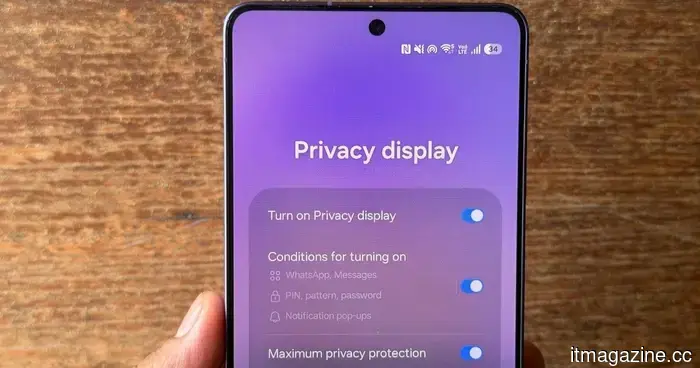 The Galaxy S27 Pro could potentially adopt the best display feature from the Ultra model.
Samsung might extend its Privacy Display feature to additional smartphones, beginning with the speculated Galaxy S27 Pro.
The Galaxy S27 Pro could potentially adopt the best display feature from the Ultra model.
Samsung might extend its Privacy Display feature to additional smartphones, beginning with the speculated Galaxy S27 Pro.
 Apple has finally allowed me to rate my photos, and I can't get enough of it.
The iOS 27 developer beta includes a hidden star rating feature in the iPhone Photos app. Here's how to activate it, rate your images, and quickly filter your library to discover your top photos.
Apple has finally allowed me to rate my photos, and I can't get enough of it.
The iOS 27 developer beta includes a hidden star rating feature in the iPhone Photos app. Here's how to activate it, rate your images, and quickly filter your library to discover your top photos.
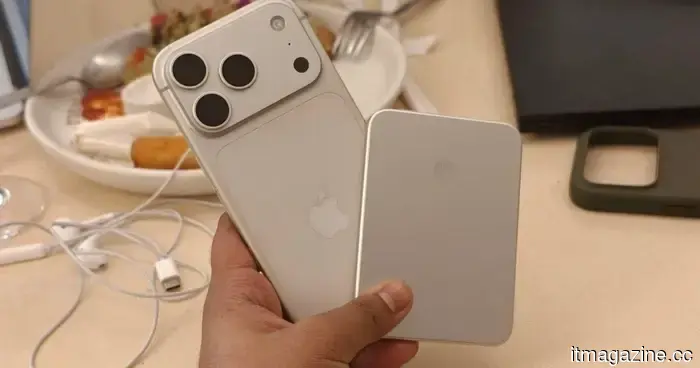 I swapped out expensive Apple accessories for Xiaomi products, and the results exceeded my expectations.
The Xiaomi UltraThin Magnetic Power Bank 5000 15W and the Redmi Buds 8 Pro present a surprisingly refined option compared to Apple’s more expensive battery pack and AirPods Pro.
I swapped out expensive Apple accessories for Xiaomi products, and the results exceeded my expectations.
The Xiaomi UltraThin Magnetic Power Bank 5000 15W and the Redmi Buds 8 Pro present a surprisingly refined option compared to Apple’s more expensive battery pack and AirPods Pro.
 The upcoming phone from HMD has been leaked, and I’m weary of repeatedly encountering the same design that mimics the iPhone.
Leaked renders of the HMD Luma 2 reveal a device that closely resembles the iPhone 17 Pro, featuring a similar camera plateau and a rich blue color scheme.
The upcoming phone from HMD has been leaked, and I’m weary of repeatedly encountering the same design that mimics the iPhone.
Leaked renders of the HMD Luma 2 reveal a device that closely resembles the iPhone 17 Pro, featuring a similar camera plateau and a rich blue color scheme.
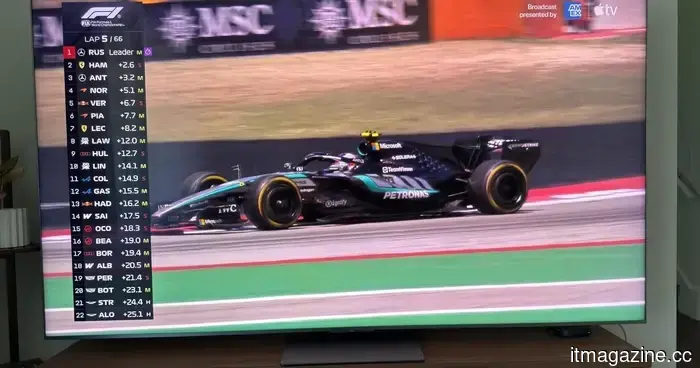 TCL QM8L Review: SQD Technology Accessible to Everyone
Immediate understanding: SQD without the price surprise When I evaluated the TCL X11L earlier this year, I deemed it the finest picture quality available in the Mini-LED category. However, at a cost of $7,999, it’s not a television that the average consumer will purchase. Introducing the QM8L, an excellent TV at a more budget-friendly price. TCL ceased to follow […]
TCL QM8L Review: SQD Technology Accessible to Everyone
Immediate understanding: SQD without the price surprise When I evaluated the TCL X11L earlier this year, I deemed it the finest picture quality available in the Mini-LED category. However, at a cost of $7,999, it’s not a television that the average consumer will purchase. Introducing the QM8L, an excellent TV at a more budget-friendly price. TCL ceased to follow […]
 Getty Images skyrockets following an agreement with the very company it litigated against.
Getty Images' stock surged nearly 200% after the company reached an agreement to provide licensed images to ChatGPT, several years after it filed a lawsuit against AI image generators for using its collection without permission.
Getty Images skyrockets following an agreement with the very company it litigated against.
Getty Images' stock surged nearly 200% after the company reached an agreement to provide licensed images to ChatGPT, several years after it filed a lawsuit against AI image generators for using its collection without permission.
Getty Images surges after reaching an agreement with the type of company it previously sued.
Getty Images' stock surged by about 200% after the company reached an agreement to provide licensed images to ChatGPT, several years after it filed a lawsuit against AI image generators for using its library without permission.