
Getty Images skyrockets following an agreement with the very company it litigated against.
For much of the generative-AI era, Getty Images has been the industry's most steadfast legal adversary, opting to sue those developing image generators instead of granting licenses. However, on Monday, it shifted its stance, and the market responded with an unexpected surge in stock prices typically not associated with stock photos. Getty shares soared nearly 200 percent in premarket trading after announcing a partnership to integrate its images into ChatGPT.
This agreement, revealed on June 21, is a multi-year collaboration with OpenAI. As part of this deal, Getty’s licensed content libraries will be featured in the search and discovery functions of ChatGPT. Consequently, when a user prompts the chatbot for an image, it can return a licensed Getty photograph instead of a synthetic version.
According to Getty CEO Craig Peters, the essence of this initiative is that high-quality licensed content enhances AI-powered search, making it “more useful and more trustworthy.” What was notably absent from the announcement was information regarding financial terms, revenue sharing, and whether Getty’s images could be used to train future OpenAI models. This last detail is significant, as Getty has spent years in court attempting to prevent exactly that—training on its copyrighted material. The deal, as detailed, focuses on display and showcasing existing licensed images rather than using them for model training.
This pivot is noteworthy. Getty previously sued Stability AI, the creator of the Stable Diffusion image generator, both in the U.S. and UK, claiming that around 12 million of its images were scraped without authorization to train the model. In November 2025, the UK High Court ruled mostly in favor of Stability, rejecting Getty's main copyright claim while finding limited liability related to trademark issues. Getty later received permission to appeal a portion of that decision.
The agreement with OpenAI, reached while litigation continues, appears to show a company publicly hedging its bets: continue the legal disputes where it feels wronged, while pursuing partnerships where it can generate revenue. This aligns with a strategy OpenAI has been developing over two years; it has formed content agreements with numerous publishers, including News Corp, Financial Times, and Axel Springer, even as a separate group of rights holders, like Encyclopedia Britannica and Merriam-Webster, has opted for legal action. Getty now stands out as the most notable entity to switch from a confrontational stance to a collaborative one, becoming the first significant visual-content owner to do so at this scale.
For OpenAI, the benefits are clear: licensed photography allows the company to present users with images having clear ownership, which is especially advantageous as it enhances ChatGPT with advertising and commerce, all while trying to validate its $852 billion valuation, a figure that has begun to raise doubts among investors.
For Getty, the rationale is as much about survival as it is about strategic positioning. The company's primary business—licensing photos to media and marketers—is directly threatened by generative image tools that can produce adequate substitutes at no cost. Partnering with the largest AI chatbot to act as a distribution channel for licensed Getty images, rather than a competitor rendering them obsolete, is a way to navigate the disruption rather than be crushed by it.
The 200 percent surge suggests investors had previously been valuing Getty closer to the latter scenario. However, this increase comes with a caveat: such a large premarket jump often normalizes once regular trading begins, with at least one source estimating the intraday increase to be around 156 percent. Regardless, the overall trend remains unchanged, echoing the central narrative: the company that fought hardest against AI in court has chosen a more sustainable path by licensing its content to it.
Other articles
 The upcoming phone from HMD has been leaked, and I’m weary of repeatedly encountering the same design that mimics the iPhone.
Leaked renders of the HMD Luma 2 reveal a device that closely resembles the iPhone 17 Pro, featuring a similar camera plateau and a rich blue color scheme.
The upcoming phone from HMD has been leaked, and I’m weary of repeatedly encountering the same design that mimics the iPhone.
Leaked renders of the HMD Luma 2 reveal a device that closely resembles the iPhone 17 Pro, featuring a similar camera plateau and a rich blue color scheme.
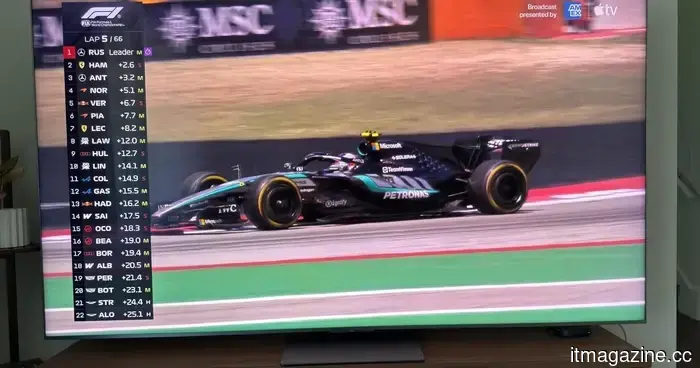 TCL QM8L Review: SQD Technology Accessible to Everyone
Immediate understanding: SQD without the price surprise When I evaluated the TCL X11L earlier this year, I deemed it the finest picture quality available in the Mini-LED category. However, at a cost of $7,999, it’s not a television that the average consumer will purchase. Introducing the QM8L, an excellent TV at a more budget-friendly price. TCL ceased to follow […]
TCL QM8L Review: SQD Technology Accessible to Everyone
Immediate understanding: SQD without the price surprise When I evaluated the TCL X11L earlier this year, I deemed it the finest picture quality available in the Mini-LED category. However, at a cost of $7,999, it’s not a television that the average consumer will purchase. Introducing the QM8L, an excellent TV at a more budget-friendly price. TCL ceased to follow […]
 Apple has finally allowed me to rate my photos, and I can't get enough of it.
The iOS 27 developer beta includes a hidden star rating feature in the iPhone Photos app. Here's how to activate it, rate your images, and quickly filter your library to discover your top photos.
Apple has finally allowed me to rate my photos, and I can't get enough of it.
The iOS 27 developer beta includes a hidden star rating feature in the iPhone Photos app. Here's how to activate it, rate your images, and quickly filter your library to discover your top photos.
 I’ve been using Apple products for years, and currently, it's the perfect time to purchase from the used market.
Apple intends to increase iPhone prices due to a worldwide memory shortage driving up expenses. After consistently purchasing new Apple products for years, I now believe that opting for used items seems like a more sensible choice.
I’ve been using Apple products for years, and currently, it's the perfect time to purchase from the used market.
Apple intends to increase iPhone prices due to a worldwide memory shortage driving up expenses. After consistently purchasing new Apple products for years, I now believe that opting for used items seems like a more sensible choice.
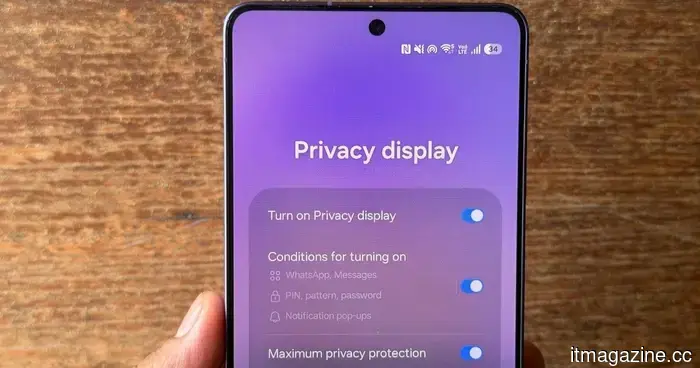 The Galaxy S27 Pro could potentially adopt the best display feature from the Ultra model.
Samsung might extend its Privacy Display feature to additional smartphones, beginning with the speculated Galaxy S27 Pro.
The Galaxy S27 Pro could potentially adopt the best display feature from the Ultra model.
Samsung might extend its Privacy Display feature to additional smartphones, beginning with the speculated Galaxy S27 Pro.
 The PS5 versions of Black Ops and Black Ops 2 may be priced at $80, excluding DLC.
Fans of Call of Duty were thrilled at the prospect of Black Ops and Black Ops 2 making their way back to PlayStation, but the potential pricing for these ports has already begun to cause disappointment.
The PS5 versions of Black Ops and Black Ops 2 may be priced at $80, excluding DLC.
Fans of Call of Duty were thrilled at the prospect of Black Ops and Black Ops 2 making their way back to PlayStation, but the potential pricing for these ports has already begun to cause disappointment.
Getty Images skyrockets following an agreement with the very company it litigated against.
Getty Images' stock surged nearly 200% after the company reached an agreement to provide licensed images to ChatGPT, several years after it filed a lawsuit against AI image generators for using its collection without permission.