

Microsoft's June update addressed 208 security vulnerabilities while simultaneously introducing a series of new bugs across all versions of Windows.
**TL;DR** Microsoft's June Patch Tuesday update KB5094126 addressed 208 vulnerabilities but caused significant issues, such as problems with the Recycle Bin, BitLocker lockouts, and OneDrive failures on domain PCs.
The June 2026 Patch Tuesday update from Microsoft is encountering issues across all supported Windows versions. KB5094126, released on June 9, fixed an unprecedented 208 security flaws but has introduced several bugs, varying from minor irritations to critical lockouts from drives.
The most noticeable problem involves the Recycle Bin. When users attempt to delete files permanently, the confirmation dialog now shows an internal identifier such as “$R4ABC12” instead of the actual file name. Although the correct name still shows in the Recycle Bin's list and files restore with their original names, the confusing dialog makes it difficult to verify which file is being deleted, a significant issue for users managing numerous files.
Microsoft acknowledged this issue on June 18, stating that a resolution would not be available until July 14. The problem is linked to a security hardening change that addressed a 23-year-old unchecked-buffer vulnerability in the Windows Shell’s desktop.ini processor. This change inadvertently caused the deletion dialog to stop reading the metadata file that associates internal identifiers with user-friendly names.
The Recycle Bin issue affects various versions of Windows 11 (26H1, 25H2, 24H2, and 23H2), Windows 10 (22H2, all LTSC and LTSB editions), and Windows Server versions from 2012 to 2025, impacting a wide range of builds and configurations.
More severe problems have also emerged alongside the Recycle Bin issue. Reports indicate that corporate devices using BitLocker or Device Encryption reboot directly into the BitLocker Recovery Screen after the KB5094126 installation. This issue appears to be prevalent among enterprise hardware, including HP EliteBook 840 G10, HP ProBook 460 G11, and certain Dell Precision laptops, due to conflicts between the update's new Secure Boot certificate handling and older system firmware. Many affected devices, not connected to a Microsoft Account, have not had their recovery keys automatically backed up, leaving system administrators struggling to retrieve keys manually from Active Directory or Azure AD.
Additionally, there are reports of OneDrive malfunctioning on domain-joined PCs. Although the OneDrive shortcut remains visible in File Explorer’s sidebar, it yields empty results when accessed. Microsoft has yet to officially recognize this issue, but user reports attribute it to a combination of disabled User Account Control and local administrator privileges.
Other reported issues include system freezes shortly after startup, loss of local network connectivity while internet access persists, and the failure of Microsoft Word automation in various business applications. Dental software like Dentrix and Softdent, accounting software such as CCH ProSystem fx, and neurology reporting tools have all been reported as affected.
The extent of these issues has reignited discussions about whether AI-generated code is compromising the quality of Windows. Users on platforms like Reddit and X have referenced Microsoft CEO Satya Nadella’s statement that approximately 30% of the company’s code is now AI-generated. The term “vibe coding,” which describes AI-assisted development with minimal human oversight, has emerged as a common explanation for recent Windows regressions.
There is no established link between AI-assisted development and the bugs related to KB5094126. Microsoft has not commented on the involvement of AI tools in the code associated with this update. However, the Recycle Bin issue has a distinct technical cause unrelated to how the code was developed, stemming from a side effect of addressing a long-standing shell vulnerability.
The accusation resonates due to broader context. Microsoft has offered voluntary buyouts to many seasoned engineers through a Rule of 70 program, reportedly affecting workers in their fifties and sixties. The company has heavily invested in Copilot integration across its products while tightening performance management and downsizing in areas like Azure, gaming, and global sales.
Regardless of whether AI coding contributed to this specific issue, the perception persists that Microsoft is delivering less reliable software while displacing experienced engineers with AI technologies.
The June Patch Tuesday update marked the largest in Microsoft’s history based on the number of vulnerabilities addressed. The 208 fixes included 38 rated as critical, three zero-days disclosed publicly, and at least one vulnerability (CVE-2026-41091 in Microsoft Defender) that was already under active exploitation. A security researcher highlighted a seventh unpatched Windows zero-day just hours after the update was released, underscoring the urgency for Microsoft’s security team.
The urgency around security makes the decision to uninstall KB5094126 complicated. Removing the update may fix the Recycle Bin issue and potentially resolve BitLocker and OneDrive problems, but it also reopens devices to the 208 patched vulnerabilities, including those already being exploited.
Microsoft has not published a detailed list of known issues for KB5094126. The company has only formally
Other articles
 Apple users are being targeted by a well-known tech support scam.
Following years of scammers pretending to be Microsoft support, reports indicate that Apple users are now experiencing a comparable surge of fraudulent tech support alerts.
Apple users are being targeted by a well-known tech support scam.
Following years of scammers pretending to be Microsoft support, reports indicate that Apple users are now experiencing a comparable surge of fraudulent tech support alerts.
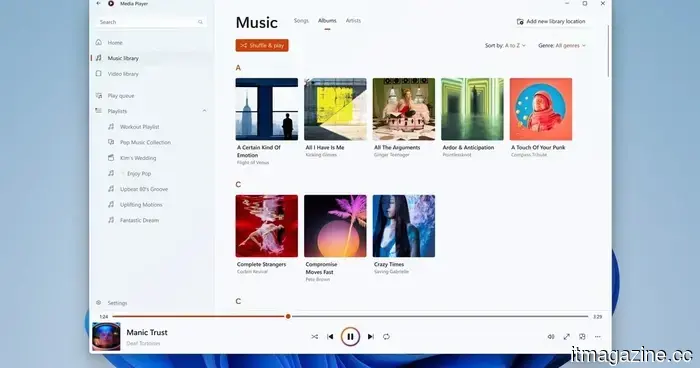 The modern Media Player in Windows 11 is somehow inferior to the version that was released 17 years ago.
The modern Media Player for Windows 11 from Microsoft has undergone an Insider Preview update; however, tests indicate that it still consumes more memory and launches videos more slowly compared to the classic version from the Windows 7 era.
The modern Media Player in Windows 11 is somehow inferior to the version that was released 17 years ago.
The modern Media Player for Windows 11 from Microsoft has undergone an Insider Preview update; however, tests indicate that it still consumes more memory and launches videos more slowly compared to the classic version from the Windows 7 era.
 AirPods didn't destroy public life; they made it simpler to navigate through it.
AirPods are often criticized for contributing to antisocial behavior, yet these small earbuds have also become a common method for making noisy public environments more tolerable.
AirPods didn't destroy public life; they made it simpler to navigate through it.
AirPods are often criticized for contributing to antisocial behavior, yet these small earbuds have also become a common method for making noisy public environments more tolerable.
 Apple users are being targeted by a well-known tech support scam.
Following years of scammers impersonating Microsoft support, reports indicate that Apple users are now encountering a similar surge of fraudulent tech support alerts.
Apple users are being targeted by a well-known tech support scam.
Following years of scammers impersonating Microsoft support, reports indicate that Apple users are now encountering a similar surge of fraudulent tech support alerts.
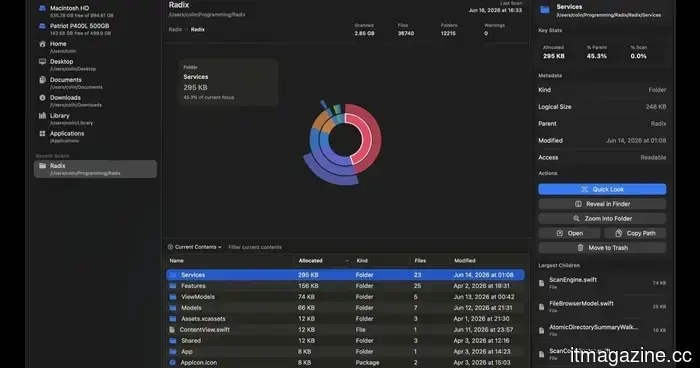 If you own a Mac, you ought to check out this free and aesthetically pleasing disk space utility.
Radix is a free and open-source application for Mac that analyzes folders or drives and displays storage utilization using an interactive sunburst chart.
If you own a Mac, you ought to check out this free and aesthetically pleasing disk space utility.
Radix is a free and open-source application for Mac that analyzes folders or drives and displays storage utilization using an interactive sunburst chart.
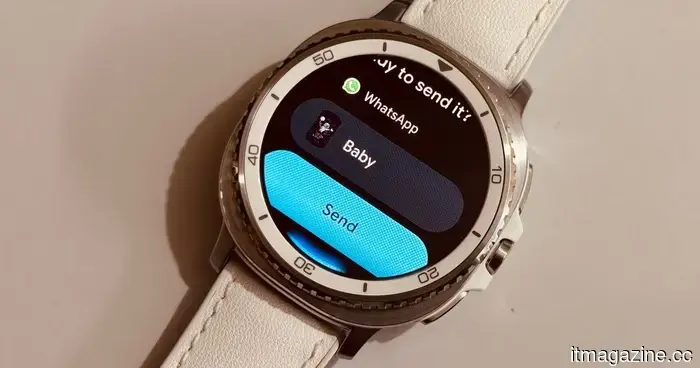 Samsung might postpone the release of the Galaxy Watch Classic this year, while the standard version and Ultra model could see the introduction of new color options.
Leaks regarding the new Galaxy Watch 9 confirm the absence of the rotating bezel for the Classic version, introduce a revamped Ultra 2, and reveal a new color range featuring an unexpected Beige option.
Samsung might postpone the release of the Galaxy Watch Classic this year, while the standard version and Ultra model could see the introduction of new color options.
Leaks regarding the new Galaxy Watch 9 confirm the absence of the rotating bezel for the Classic version, introduce a revamped Ultra 2, and reveal a new color range featuring an unexpected Beige option.
Microsoft's June update addressed 208 security vulnerabilities while simultaneously introducing a series of new bugs across all versions of Windows.
KB5094126 addressed 208 security vulnerabilities but brought about issues that impacted the Recycle Bin, BitLocker recovery, OneDrive, and overall system stability in all Windows versions.