
Seventeen fusion startups have now secured more than $100 million each, and the total continues to rise.
TL;DR: Private funding for fusion has surpassed $13 billion, with 17 startups securing over $100 million each. Helion and Focused Energy completed significant funding rounds in June 2026, but none have reached breakeven yet.
As per a TechCrunch report released Thursday, the number of fusion startups that have acquired funding exceeding $100 million has reached 17, resulting in a total private investment in the field that now exceeds $13 billion. Notable recent funding rounds include Helion Energy's $465 million and Focused Energy's $240 million Series A, both finalized in June 2026.
Commonwealth Fusion Systems stands out with about $3 billion in total funding and is working on a tokamak reactor named SPARC, which the company claims is approximately 75% complete at its facility in Devens, Massachusetts. Following this, TAE Technologies has raised $1.79 billion in pre-merger funding, Helion Energy has $1.5 billion, while Pacific Fusion and Shine Technologies each have around $1 billion.
The influx of capital into fusion has increased significantly. The Fusion Industry Association noted that 53 companies raised $2.2 billion in 2025 alone, pushing total private investments to over $8 billion that same year. The funding rounds in June 2026 indicate that this momentum is continuing.
Helion's latest funding, reported by BusinessWire, values the company at $15.5 billion. Backed by Sam Altman, Helion has a power purchase agreement with Microsoft and plans to supply electricity by 2028, potentially making it the first private fusion company to achieve commercial power generation, despite a history of delays in fusion timelines.
However, several of the major funding rounds come with important caveats. TAE Technologies merged with Trump Media’s technology division, valuing the combined entity at about $6 billion, yet Trump Media reported revenues below $2.7 million for the first nine months of 2025. Pacific Fusion's funding of approximately $1 billion is structured in milestone-based tranches rather than as a single payment.
General Fusion, which has raised $612 million, nearly depleted its funds in 2025 before obtaining further capital. While the funding figures are impressive, they don't necessarily equate to cash reserves.
Europe's presence in the sector is rapidly expanding. Germany’s Focused Energy has raised $240 million, combining $400 million in private investments with $200 million in government grants. Proxima Fusion in Munich secured €185 million, and Marvel Fusion raised $162 million.
In the UK, Tokamak Energy and First Light Fusion have garnered $336 million and $108 million, respectively, signaling Europe's strategic commitment to energy independence and climate objectives.
The fundamental challenge remains unresolved. No private fusion firm has proven net energy gain at commercial scale. The US National Ignition Facility reached scientific breakeven in December 2022, but this measure compared laser energy delivered to fuel versus energy released by the fusion reaction, not the facility's total energy consumption, which was roughly 100 times greater.
Commonwealth Fusion Systems anticipates that SPARC will achieve a burning plasma by late 2026 or early 2027, marking a significant scientific milestone, yet still distant from a commercial power plant. The company’s planned commercial reactor, ARC, is not projected to produce electricity until the early 2030s at the earliest.
Other companies with over $100 million in funding include Inertia Enterprises with $450 million, Zap Energy at $327 million, Type One Energy at $269 million, Kyoto Fusioneering at $191 million, and Thea Energy with $130 million. Xcimer, focused on laser-driven inertial confinement fusion, has reached exactly $100 million.
What differentiates this new wave of fusion ventures from earlier ones is the variety of technical strategies. CFS and Tokamak Energy utilize tokamaks, Helion employs a field-reversed configuration, Focused Energy and First Light pursue inertial confinement through lasers or projectiles, while TAE uses a beam-driven field-reversed method. This diversity implies that the sector is not committing to a single approach, yet it also means no consensus has emerged on which technique will succeed.
Investors are evidently confident that at least one method will work. The $13 billion in private capital suggests a level of belief that would have seemed unimaginable a decade ago, when fusion was primarily centered on government-funded research. Whether this belief is justified will depend on whether any of these companies can progress from scientific demonstration to a machine that generates power at a price utilities are willing to accept.
For now, fusion remains a technology where the engineering advancements are tangible, but the commercial successes are not yet realized. The funding is available; however, the physics at a commercial scale has yet to be achieved.
Andere Artikel
 The number of AI tools that assist students in cheating is increasing, and the detectors are struggling to keep pace.
A surge of new applications is assisting students in submitting AI-generated homework to teachers without being noticed. Even the firms that produce AI detection tools are caught in this same dilemma.
The number of AI tools that assist students in cheating is increasing, and the detectors are struggling to keep pace.
A surge of new applications is assisting students in submitting AI-generated homework to teachers without being noticed. Even the firms that produce AI detection tools are caught in this same dilemma.
 This free app provides your photos with the distinctive style of the Game Boy Camera, without requiring a cartridge.
Epilogue's latest Flashback app emulates the grainy, low-resolution photography style of the Game Boy Camera utilizing your smartphone's camera.
This free app provides your photos with the distinctive style of the Game Boy Camera, without requiring a cartridge.
Epilogue's latest Flashback app emulates the grainy, low-resolution photography style of the Game Boy Camera utilizing your smartphone's camera.
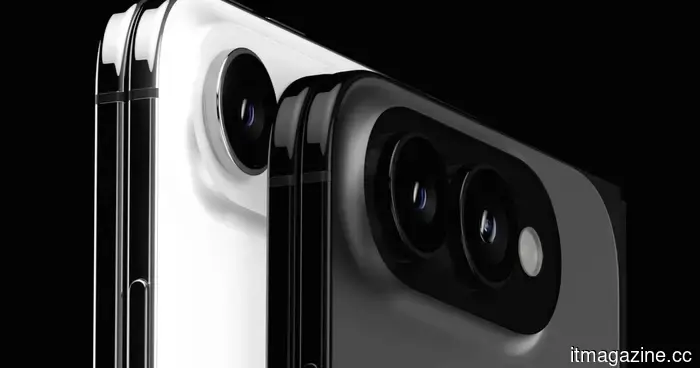 The most recent leak regarding the iPhone Ultra reveals almost everything, featuring a highly anticipated iOS function.
Prosser's latest video on the iPhone Ultra showcases a design that appears to be final and unveils the iOS functionality that foldable users have been anticipating since Android introduced it in 2016.
The most recent leak regarding the iPhone Ultra reveals almost everything, featuring a highly anticipated iOS function.
Prosser's latest video on the iPhone Ultra showcases a design that appears to be final and unveils the iOS functionality that foldable users have been anticipating since Android introduced it in 2016.
 Trust is the objective: the emerging supply-chain attacks in the AI era.
This week’s two campaigns, involving TeamPCP's 1,000 compromised open-source packages and the misuse of Claude's chat feature, demonstrate that trust has become the latest target for attacks.
Trust is the objective: the emerging supply-chain attacks in the AI era.
This week’s two campaigns, involving TeamPCP's 1,000 compromised open-source packages and the misuse of Claude's chat feature, demonstrate that trust has become the latest target for attacks.
 Amazon has canceled its nearly completed film about Sam Altman, just four months after putting $50 billion into OpenAI.
Amazon MGM Studios has decided not to release Artificial, a film centered on Altman's firing from OpenAI in 2023, even though it received favorable test screenings and features a notable cast.
Amazon has canceled its nearly completed film about Sam Altman, just four months after putting $50 billion into OpenAI.
Amazon MGM Studios has decided not to release Artificial, a film centered on Altman's firing from OpenAI in 2023, even though it received favorable test screenings and features a notable cast.
 France increases its Tibi tech-funding framework by €13 billion.
France has raised an additional €13 billion through its Tibi initiative, which is the insurance-backed model that Europe continues to examine, now focused on financing scale-ups across the continent.
France increases its Tibi tech-funding framework by €13 billion.
France has raised an additional €13 billion through its Tibi initiative, which is the insurance-backed model that Europe continues to examine, now focused on financing scale-ups across the continent.
Seventeen fusion startups have now secured more than $100 million each, and the total continues to rise.
Private investment in fusion has exceeded $13 billion, with 17 startups securing more than $100 million each. However, no company has yet demonstrated that energy generation on a commercial scale is viable.