
Unreal Engine 6 AI: Epic develops Claude and Gemini.
Epic will allow studios to integrate Claude, Gemini, or any other models they prefer into the next Unreal Engine to handle the 'tedious tasks' of game development. More than half of developers view this as a negative approach.
Epic Games has revealed its vision for Unreal Engine 6, which prominently features generative AI. During its State of Unreal keynote at Unreal Fest in Chicago on Wednesday, the creator of Fortnite announced that UE6 will include integrations for models like Anthropic’s Claude and Google’s Gemini, promoting them as 'creativity and productivity enhancers' for game developers.
The concept is to offload the more mundane aspects of game development to an AI model, enabling teams to focus more on creative choices. This same reasoning applied when Claude was integrated into design tools at Canva, and now it is being directed at game development software.
What Epic is actually delivering
According to Marcus Wassmer, the executive overseeing Epic’s development team, UE6 is built on three main pillars.
The first is a new gameplay programming model named Verse, which Epic claims will be familiar to anyone experienced with Python or C#. The second involves making game content and code transferable across various games and engines by utilizing open standards.
The third pillar is AI. Epic is providing access to the engine via a Model Context Protocol (MCP) layer, which is an open standard that enables large language models to interface with other software. This allows studios to choose various models without being restricted to a single option. “UE6 will come equipped with tools and workflows that allow you to incorporate your preferred models,” Wassmer noted.
An initial version is already available. Unreal Engine 5.8, which was released concurrently, includes an experimental MCP plugin that connects any LLM to the core engine functionalities, such as blueprints, assets, levels, materials, and meshes.
In a demonstration, Epic showcased Claude Code retrieving objects from an asset library to decorate a virtual apartment, subsequently adjusting the lighting in a city scene to match a real-world reference photo. Developers can still manually modify everything afterward.
The real transformation lies in who holds the reins of the engine
The clear narrative is that AI has made its way into Unreal Engine. However, the more significant aspect is that Epic is incorporating third-party models as a fundamental element of game creation within the toolset widely used across the industry, from Fortnite to numerous studios licensing the engine.
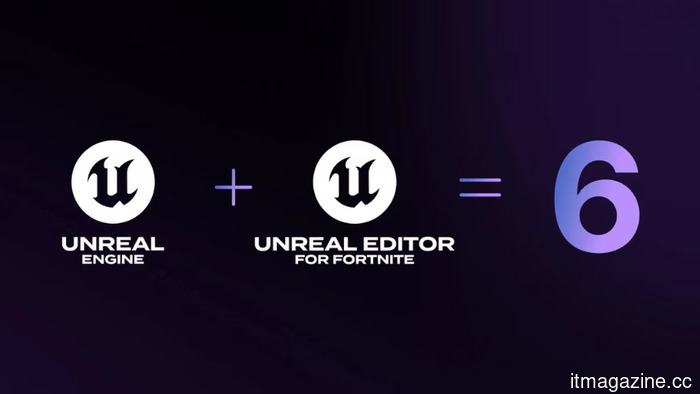
UE6 is still some time away, with Epic aiming for an early access release by the end of 2027 and a full launch expected 12 to 18 months later. The new engine will also merge Epic’s two development pathways, the standalone UE5 and Unreal Editor for Fortnite, into a single offering. One early indication: Epic plans to allow players to transfer their Fortnite outfits to other games built on UE6 and enable developers to create skins compatible with Fortnite.
Half of developers believe this move is unwise
Epic is integrating AI into its engine at a time when much of the industry is cautious about it.
In the 2026 State of the Game Industry survey conducted by the Game Developers Conference, which included over 2,300 participants, 52 percent expressed that they believe generative AI negatively impacts the industry. This figure has risen from 30 percent in 2025 and 18 percent in 2024, with only 7 percent viewing it positively.
This apprehension is already surfacing. Poncle, the studio behind Vampire Survivors, announced it is ‘reviewing’ its collaboration with Fortnite following the generative AI developments.
Meanwhile, Epic is implementing cost-cutting measures, having laid off more than 1,000 employees in March as interest in Fortnite has waned against competitors such as Roblox.
Chief executive Tim Sweeney has voiced his opinion clearly. Last November, he stated that a 'made with AI' label “makes no sense for game stores, where AI will play a role in almost all future production.”
With UE6, Epic is embedding that assumption directly into the tools. Whether the studios relying on Unreal will adopt this approach remains an open question.
Other articles
 NeuralTrust secures $20 million to protect enterprise AI agents.
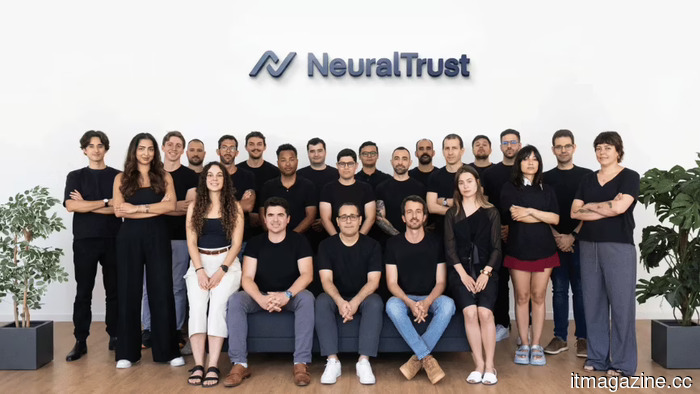
Barcelona's NeuralTrust secured $20 million in seed funding to manage enterprise 'agent sprawl' and to offer European banks and governments a security alternative that is not American.
NeuralTrust secures $20 million to protect enterprise AI agents.
Barcelona's NeuralTrust secured $20 million in seed funding to manage enterprise 'agent sprawl' and to offer European banks and governments a security alternative that is not American.
 Pre-orders for GTA VI will begin on June 25. Rockstar has unveiled the cover art, but the price has not been announced yet.
Rockstar has announced that pre-orders for GTA VI will begin on June 25. The cover art showcases Jason, Lucia, and Vice City. The game's release date is set for November 19, but pricing has not yet been revealed.
Pre-orders for GTA VI will begin on June 25. Rockstar has unveiled the cover art, but the price has not been announced yet.
Rockstar has announced that pre-orders for GTA VI will begin on June 25. The cover art showcases Jason, Lucia, and Vice City. The game's release date is set for November 19, but pricing has not yet been revealed.
 MIT has developed a memory system that enables robots to recall the location of your keys.
MIT's DAAAM framework enables robots to have long-term spatial memory by linking language descriptions to 3D maps. When you ask, "Where's my wallet?" it can search through its memory for the answer.
MIT has developed a memory system that enables robots to recall the location of your keys.
MIT's DAAAM framework enables robots to have long-term spatial memory by linking language descriptions to 3D maps. When you ask, "Where's my wallet?" it can search through its memory for the answer.
 'FortiBleed': Credentials for 75,000 Fortinet firewalls compromised.
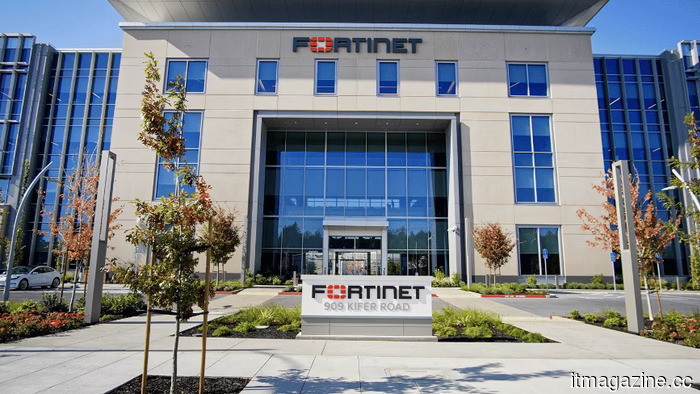
A vulnerability known as FortiBleed revealed unencrypted credentials for approximately 75,000 Fortinet firewalls in 194 nations, affecting companies like Samsung, Oracle, and Siemens. Here's the explanation.
'FortiBleed': Credentials for 75,000 Fortinet firewalls compromised.
A vulnerability known as FortiBleed revealed unencrypted credentials for approximately 75,000 Fortinet firewalls in 194 nations, affecting companies like Samsung, Oracle, and Siemens. Here's the explanation.
 Waymo has announced its sixth recall following incidents where its robotaxis entered highway construction areas on 13 occasions.
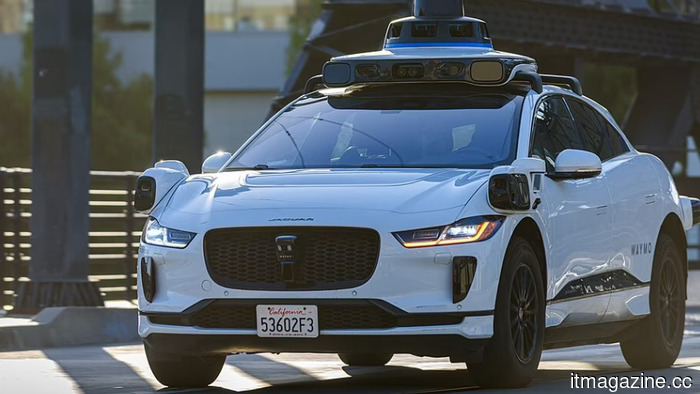
Waymo recalled close to 4,000 robotaxis following 13 cases of vehicles entering closed construction zones on highways. A passenger who feared for their life received three complimentary rides.
Waymo has announced its sixth recall following incidents where its robotaxis entered highway construction areas on 13 occasions.
Waymo recalled close to 4,000 robotaxis following 13 cases of vehicles entering closed construction zones on highways. A passenger who feared for their life received three complimentary rides.
 NASA selects Eric Schmidt's Relativity Space for Mars missions.
NASA has selected Eric Schmidt's Relativity Space for a Mars orbiter mission scheduled for 2028. However, there is a twist: the company has yet to achieve orbit, and the mission includes a data center for Mars orbit.
NASA selects Eric Schmidt's Relativity Space for Mars missions.
NASA has selected Eric Schmidt's Relativity Space for a Mars orbiter mission scheduled for 2028. However, there is a twist: the company has yet to achieve orbit, and the mission includes a data center for Mars orbit.
Unreal Engine 6 AI: Epic develops Claude and Gemini.
Unreal Engine 6 will enable studios to integrate Claude, Gemini, or any model into their game development, despite 52% of developers believing that generative AI is detrimental to the industry.