
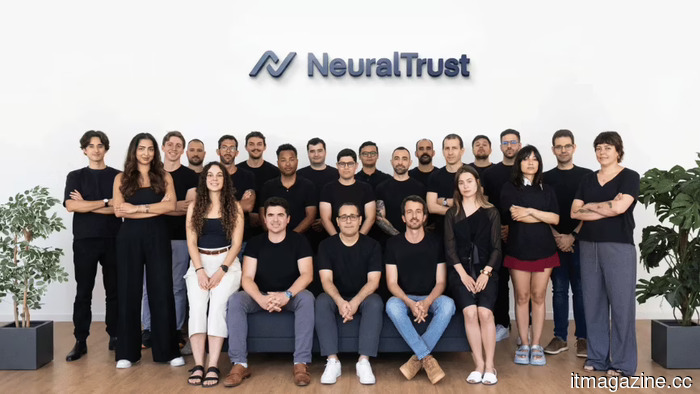
NeuralTrust secures $20 million to protect enterprise AI agents.
NeuralTrust, a startup based in Barcelona, has secured $20 million in funding to enhance the security of the AI agents that major companies are deploying at an increasingly rapid pace. The seed round, totaling €17.2 million, was spearheaded by Munich's Alstin Capital and included participation from VentureFriends, Seaya, Kibo Ventures, Banc Sabadell, the EA Ventures Plug and Play Fund, and Finaves, along with public funding from the European Innovation Council and Spain's research agency. NeuralTrust claims this is the largest cybersecurity seed round ever raised by a company in the EU, a statement that may require some skepticism, though it's not far-fetched.
The challenge: untracked agents
The issue that NeuralTrust addresses is the proliferation of AI agents. Within large organizations, these agents can grow in number without anyone monitoring them. One team might create a customer service agent using one model, while another automates back-office tasks with a different one, plus vendor-provided software may come equipped with its own agents. Each agent connects to internal systems, databases, and external tools, functioning independently. Most security teams struggle to identify how many agents are operational, their permissions, or if any have been compromised and are leaking information. “If you connect AI to your email system and it sends messages to external addresses, leaking internal information, that’s catastrophic,” stated CEO Joan Vendrell to Tech Funding News.
NeuralTrust’s solution involves a unified control layer, offered as three products: TrustGate, a gateway that all models, tools, and agents must pass through; TrustGuard, a real-time engine designed to detect and mitigate attacks as they occur; and TrustLens, which tracks each agent’s activities. The company claims to analyze millions of agent interactions daily, with approximately 1.2 percent, or one in 80, deemed malicious.
The deeper angle: ‘not American’
A more intriguing aspect of the narrative is its geographic positioning. NeuralTrust's primary competitors are American companies, and it is emphasizing its non-American identity. “There are significant concerns now regarding technological and defense sovereignty in the EU,” Vendrell noted. “Certain customers, especially government entities, are particularly cautious about the origins of the technology they procure.”
This argument is well-timed. With the EU AI Act tightening regulations and the U.S. recently moving to restrict foreign access to its advanced models, the label “made in Europe” has gained considerable appeal, leading European institutions to begin replacing American security vendors with local alternatives.
A forthcoming category, if anticipated
The funding round reflects a belief that securing AI agents will evolve into a distinct category, similar to how endpoint and cloud security have previously developed. Evidence is emerging for this shift; for instance, Palo Alto Networks acquired the startup Protect AI for approximately $500 million in 2025, indicating that major players now consider agent security fundamental rather than an add-on feature. Gartner, frequently referenced by NeuralTrust, predicts that by 2027, 40 percent of enterprises will retract autonomous agents due to governance issues identified only after a breakdown occurs.
The crucial uncertainty, as acknowledged by NeuralTrust's lead investor, is timing: whether companies will invest in these solutions before a significant agent-related incident compels them to do so. NeuralTrust is banking on the notion that they will, and that many will prefer to have a European label on their purchases.
Other articles
 EU urges Big Tech to ensure AI data centers are in accordance with climate objectives.
Energy Commissioner Jorgensen states that businesses need to back clean energy initiatives and make use of recycled waste heat. The introduction of a sustainability label has been postponed due to a disagreement related to nuclear energy.
EU urges Big Tech to ensure AI data centers are in accordance with climate objectives.
Energy Commissioner Jorgensen states that businesses need to back clean energy initiatives and make use of recycled waste heat. The introduction of a sustainability label has been postponed due to a disagreement related to nuclear energy.
 MIT developed a memory system enabling robots to recall the location of your keys.
MIT's DAAAM framework enables robots to possess long-term spatial memory by associating language descriptions with 3D maps. When you ask, "where's my wallet?", it searches through its memory.
MIT developed a memory system enabling robots to recall the location of your keys.
MIT's DAAAM framework enables robots to possess long-term spatial memory by associating language descriptions with 3D maps. When you ask, "where's my wallet?", it searches through its memory.
 Midjourney's full-body scanner: significant promises, no proven history.
Midjourney has introduced a full-body ultrasound scanner, which its founder claims surpasses MRI technology. Additionally, the company has launched a Midjourney Medical division and a spa. However, the medical assertions have not been verified.
Midjourney's full-body scanner: significant promises, no proven history.
Midjourney has introduced a full-body ultrasound scanner, which its founder claims surpasses MRI technology. Additionally, the company has launched a Midjourney Medical division and a spa. However, the medical assertions have not been verified.
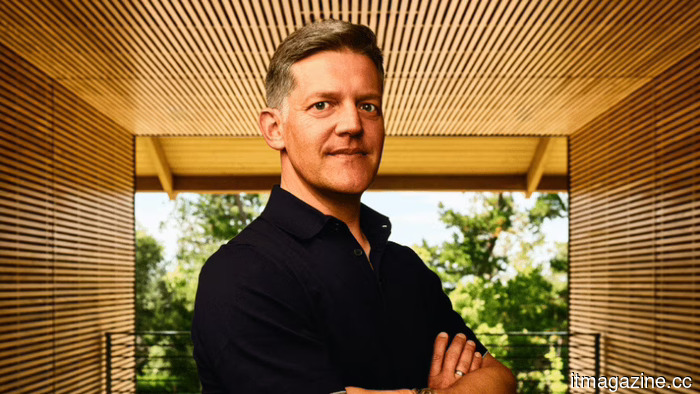 SpaceX has appointed Roelof Botha from Sequoia to its board.
SpaceX appointed Roelof Botha as an 'independent' director and a member of the audit committee just days following its record IPO. In a company ruled by Musk, this designation carries significant weight.
SpaceX has appointed Roelof Botha from Sequoia to its board.
SpaceX appointed Roelof Botha as an 'independent' director and a member of the audit committee just days following its record IPO. In a company ruled by Musk, this designation carries significant weight.
 Swiss startup Prem AI is seeking to raise $100 million to enable hedge funds and law firms to own their AI systems rather than merely renting them.
Prem AI creates AI products for companies that are unable to share data with OpenAI or Anthropic. It is seeking to raise $100 million at a valuation exceeding $500 million. "Enterprise intelligence needs to be owned."
Swiss startup Prem AI is seeking to raise $100 million to enable hedge funds and law firms to own their AI systems rather than merely renting them.
Prem AI creates AI products for companies that are unable to share data with OpenAI or Anthropic. It is seeking to raise $100 million at a valuation exceeding $500 million. "Enterprise intelligence needs to be owned."
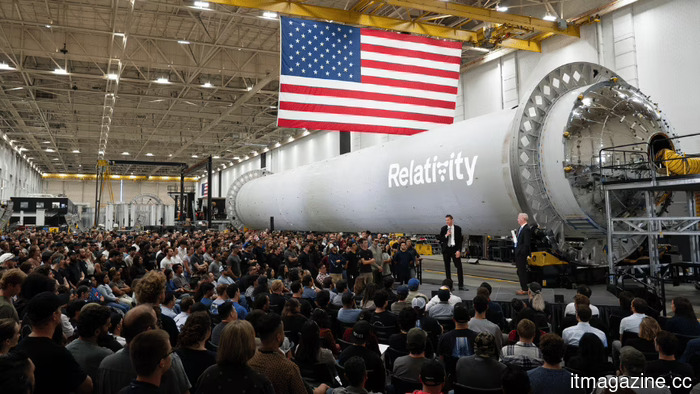 NASA selects Eric Schmidt's Relativity Space for a mission to Mars.
NASA has selected Eric Schmidt's Relativity Space for a Mars orbiter mission slated for 2028. The twist is that the company has yet to achieve a successful orbital launch, and the mission includes a data center intended for Mars orbit.
NASA selects Eric Schmidt's Relativity Space for a mission to Mars.
NASA has selected Eric Schmidt's Relativity Space for a Mars orbiter mission slated for 2028. The twist is that the company has yet to achieve a successful orbital launch, and the mission includes a data center intended for Mars orbit.
NeuralTrust secures $20 million to protect enterprise AI agents.
Barcelona's NeuralTrust secured $20 million in seed funding to manage enterprise 'agent sprawl' and to offer European banks and governments a security alternative that is not American.