
Midjourney's full-body scanner: significant promises, no proven history.
Midjourney, a company renowned for converting text prompts into images, has revealed a new venture: hardware. Not just any accessory, but a comprehensive medical scanner.
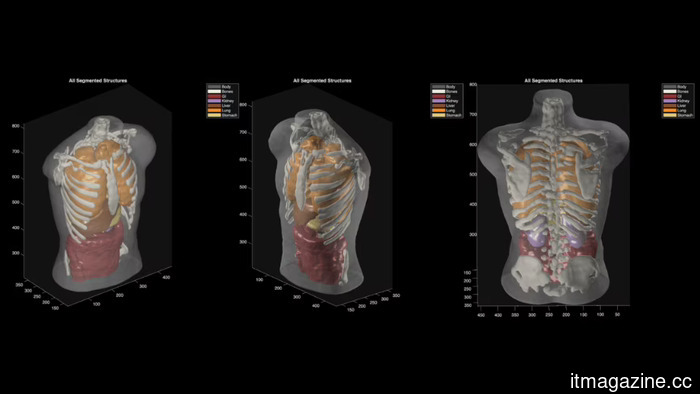
During an event in San Francisco on June 17, founder David Holz introduced “The Midjourney Scanner” along with a new branch named Midjourney Medical. The process involves stepping into a shallow pool where a platform gradually lowers you into the water at five centimeters per second, while a ring of sensors captures internal images as you descend.
Holz asserted that the outcome is “in many ways superior to even MRI machines,” as it avoids radiation and the heavy magnets required by MRIs, operating at “nearly a hundred times the speed.” The company claims that a scan takes approximately 60 seconds, compared to the 60 to 90 minutes needed for a full-body MRI.
This hardware was developed in collaboration with Butterfly Network, an ultrasound company that Midjourney licensed in November 2025, utilizing 40 of its “ultrasound-on-chip” modules per unit.
Here’s an interesting point: despite Midjourney's reputation being grounded in generative AI, the scanner primarily does not incorporate it. Holz stated, according to Bloomberg, “We’re not even using any AI in this yet, just really cool hardware and software.” AI is utilized for segmenting and labeling the scan results, but the imaging process itself relies on ultrasound and signal processing.
It is important to note the term “claimed.” Midjourney specializes in creating images and has never constructed a physical product or operated a medical device, and the scanner has yet to receive regulatory clearance.
According to Midjourney, the device currently generates only “detailed body composition maps.” Any diagnostic capabilities that would make it a genuine competitor to an MRI still require FDA approval, which the company indicates it has not yet obtained but intends to seek over time.
The company has ambitious goals, aiming for over 50,000 scanners globally by 2031, with the ability to perform “a billion scans a month,” and argues that sufficient early imaging could eventually “prevent 30 percent of all deaths and 50 percent of all healthcare costs.” Holz did not disclose the price of a scan.
None of these plans are currently in action; they are merely targets rather than tangible outcomes.
Additionally, there's the aspect of the proposed spa. Midjourney envisions creating a “Midjourney Spa” in San Francisco by the end of 2027, reportedly a space of about 25,000 square feet near Union Square, equipped with nine or ten scanners, hot tubs, saunas, and cold plunges.
The idea is to position the scan as a secondary benefit of an enjoyable outing, available as frequently as desired.
The medical community is skeptical about whole-body screening for healthy individuals due to legitimate concerns, mainly around false positives and incidental findings that can lead to unnecessary and sometimes invasive follow-ups. A scanner promising a billion scans monthly would amplify that discussion rather than resolve it.
Currently, Midjourney is involved in intellectual-property lawsuits with Disney and Warner Bros. Discovery over its image tool and does not have external investors, referring to itself as a “community-backed research lab.” At this stage, the most fitting way to describe the Midjourney Scanner is as an aspiration tied to a launch event. Its potential as a medical product remains a question for regulators rather than a keynote discussion.
Other articles
 NASA selects Eric Schmidt's Relativity Space for a mission to Mars.
NASA has selected Eric Schmidt's Relativity Space for a Mars orbiter mission slated for 2028. The twist is that the company has yet to achieve a successful orbital launch, and the mission includes a data center intended for Mars orbit.
NASA selects Eric Schmidt's Relativity Space for a mission to Mars.
NASA has selected Eric Schmidt's Relativity Space for a Mars orbiter mission slated for 2028. The twist is that the company has yet to achieve a successful orbital launch, and the mission includes a data center intended for Mars orbit.
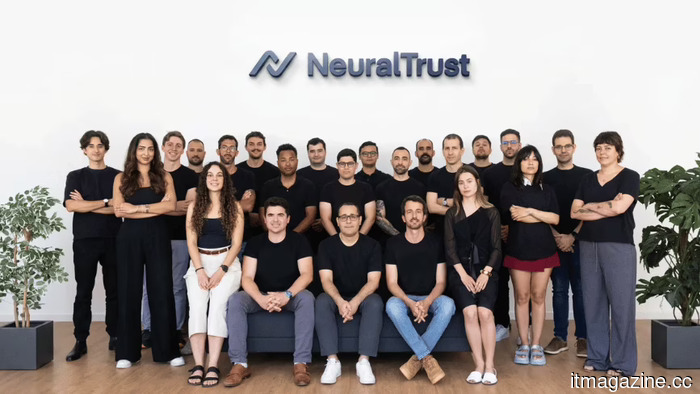 NeuralTrust secures $20 million to enhance the security of enterprise AI agents.
Barcelona's NeuralTrust secured a $20 million seed funding to monitor the proliferation of enterprise agents and to offer European banks and governments a security alternative that is not American.
NeuralTrust secures $20 million to enhance the security of enterprise AI agents.
Barcelona's NeuralTrust secured a $20 million seed funding to monitor the proliferation of enterprise agents and to offer European banks and governments a security alternative that is not American.
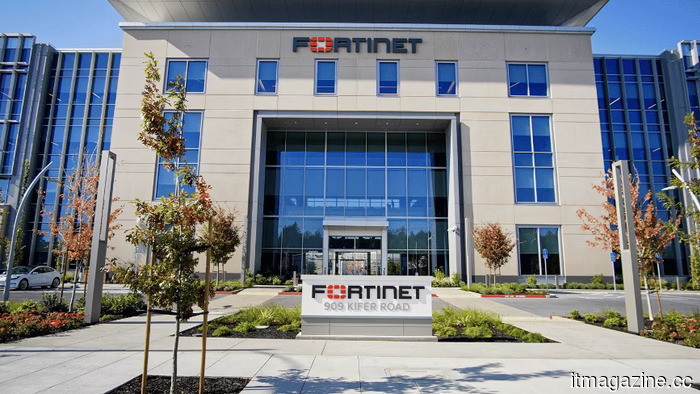 'FortiBleed': Credentials for 75,000 Fortinet firewalls compromised.
A vulnerability known as FortiBleed revealed unencrypted credentials for approximately 75,000 Fortinet firewalls in 194 nations, affecting companies like Samsung, Oracle, and Siemens. Here's the explanation.
'FortiBleed': Credentials for 75,000 Fortinet firewalls compromised.
A vulnerability known as FortiBleed revealed unencrypted credentials for approximately 75,000 Fortinet firewalls in 194 nations, affecting companies like Samsung, Oracle, and Siemens. Here's the explanation.
 Tesco is shifting 40,000 servers from VMware and is taking legal action against Broadcom for more than GBP 100 million.
Tesco reports that Broadcom raised VMware prices by 175% and eliminated support for perpetual licenses. The company is transitioning 40,000 servers and is taking legal action for "abusive conduct."
Tesco is shifting 40,000 servers from VMware and is taking legal action against Broadcom for more than GBP 100 million.
Tesco reports that Broadcom raised VMware prices by 175% and eliminated support for perpetual licenses. The company is transitioning 40,000 servers and is taking legal action for "abusive conduct."
 EU advises Big Tech to ensure AI data centers are in line with climate objectives.
Energy Commissioner Jorgensen states that businesses need to back clean energy and recycle waste heat. The introduction of a sustainability label has been postponed due to a disagreement concerning nuclear energy.
EU advises Big Tech to ensure AI data centers are in line with climate objectives.
Energy Commissioner Jorgensen states that businesses need to back clean energy and recycle waste heat. The introduction of a sustainability label has been postponed due to a disagreement concerning nuclear energy.
 NASA selects Eric Schmidt's Relativity Space for Mars missions.
NASA has selected Eric Schmidt's Relativity Space for a Mars orbiter mission scheduled for 2028. However, there is a twist: the company has yet to achieve orbit, and the mission includes a data center for Mars orbit.
NASA selects Eric Schmidt's Relativity Space for Mars missions.
NASA has selected Eric Schmidt's Relativity Space for a Mars orbiter mission scheduled for 2028. However, there is a twist: the company has yet to achieve orbit, and the mission includes a data center for Mars orbit.
Midjourney's full-body scanner: significant promises, no proven history.
Midjourney has introduced a full-body ultrasound scanner, which its founder claims surpasses MRI technology. Additionally, the company has launched a Midjourney Medical division and a spa. However, the medical assertions have not been verified.