
SandboxAQ secures a $500 million award from the US to search for materials for chips.
The US government has recently acquired a stake in an AI startup, betting that artificial intelligence can help counter China’s dominance in the materials needed for chip manufacturing. According to Reuters, the Department of Commerce has allocated $500 million to SandboxAQ under the CHIPS Act to create new chemicals and metals for semiconductor production within the US. In exchange, the Department will hold a minority, non-voting equity position in the company, along with potential royalties if the efforts succeed.
SandboxAQ, which received backing from Nvidia and was valued at $5.75 billion last year, will focus on four specific materials that the US semiconductor industry currently relies on from abroad: substitutes for "forever chemical" PFAS, catalysts, magnets that do not involve Chinese rare earth elements, and batteries that do not use imported lithium.
Government as a venture investor
This arrangement is noteworthy. It goes beyond a simple grant. By acquiring equity and a share of future royalties, the US government is acting like a venture capital firm, similar to its approach in a recent $2 billion quantum computing investment.
The CEO of SandboxAQ, Jack Hidary, did not disclose the size of the government’s investment, simply noting that it comes without voting rights or a seat on the board. The company is also supported by investors such as Google, Eric Schmidt, and Ray Dalio.
An AI focused on physics rather than language
SandboxAQ is not offering a chatbot; instead, its “Large Quantitative Models” are designed to study physics and chemistry, allowing for the evaluation of millions of candidate materials digitally before any physical prototyping occurs. The company asserts this process can reduce discovery time from years to mere weeks. Its catalyst models, developed using 13.5 million calculations with Nvidia, are claimed to be about 20,000 times faster than traditional methods, although these figures are self-reported by SandboxAQ.
The caveat
However, this is a research gamble, not a tangible product. As of now, no new magnets or PFAS-free chemicals have been developed, and the funding is directed towards research rather than ensuring a definitive outcome.
There is also an interesting contradiction: the same administration that is supporting the development of PFAS alternatives relaxed some PFAS drinking water deadlines last year. Nevertheless, the strategic significance is clear, particularly since China currently controls over 90 percent of the rare earth magnets critical for manufacturing America’s most advanced chips, making the pursuit of supply chain sovereignty essential.
Other articles
 Estonia will assign unique ID numbers to AI agents.
Estonia has announced that it will become the first nation to assign personal ID numbers to AI agents, allowing individuals to avoid sharing their complete digital identity with a bot when it acts on their behalf.
Estonia will assign unique ID numbers to AI agents.
Estonia has announced that it will become the first nation to assign personal ID numbers to AI agents, allowing individuals to avoid sharing their complete digital identity with a bot when it acts on their behalf.
 Estonia will assign ID numbers to AI agents.
Estonia has announced that it will be the first nation to assign personal ID numbers to AI agents, allowing individuals to avoid sharing their complete digital identity with a bot to represent them.
Estonia will assign ID numbers to AI agents.
Estonia has announced that it will be the first nation to assign personal ID numbers to AI agents, allowing individuals to avoid sharing their complete digital identity with a bot to represent them.
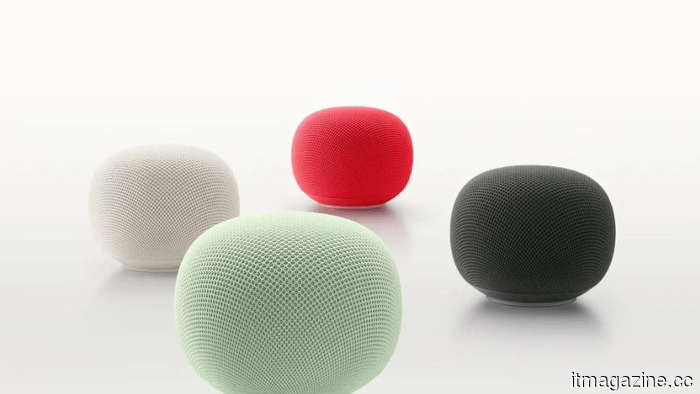 The Google Home Speaker is available for $99, but there is an additional charge for Gemini.
The $99 Google Home Speaker, Google's first smart speaker in six years, will be available starting June 25. However, to access Gemini Live and its top AI features, a subscription of $10 per month is required.
The Google Home Speaker is available for $99, but there is an additional charge for Gemini.
The $99 Google Home Speaker, Google's first smart speaker in six years, will be available starting June 25. However, to access Gemini Live and its top AI features, a subscription of $10 per month is required.
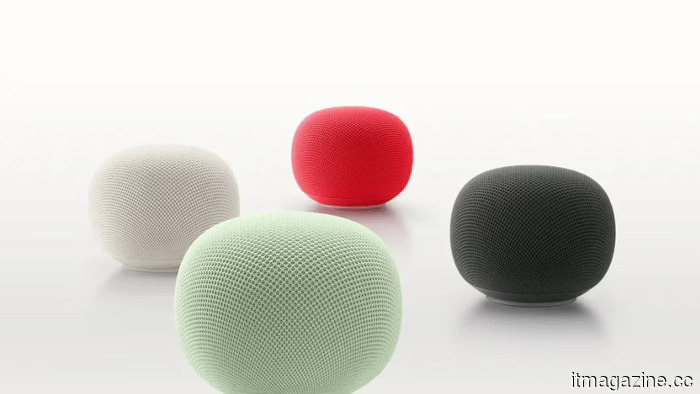 The Google Home Speaker is available for $99, but there is an additional cost for Gemini.
Google's first smart speaker in six years, the $99 Google Home Speaker, will be released on June 25, but access to Gemini Live and its top AI features requires a $10 monthly subscription.
The Google Home Speaker is available for $99, but there is an additional cost for Gemini.
Google's first smart speaker in six years, the $99 Google Home Speaker, will be released on June 25, but access to Gemini Live and its top AI features requires a $10 monthly subscription.
 SandboxAQ secures a $500 million award from the US to identify chip materials.
The US Commerce Department granted $500 million to SandboxAQ, backed by Nvidia, as part of the CHIPS Act to develop chip materials that are free of PFAS and rare-earth elements, while also acquiring an equity stake.
SandboxAQ secures a $500 million award from the US to identify chip materials.
The US Commerce Department granted $500 million to SandboxAQ, backed by Nvidia, as part of the CHIPS Act to develop chip materials that are free of PFAS and rare-earth elements, while also acquiring an equity stake.
 Estonia plans to assign ID numbers to AI agents.
Estonia has announced that it will be the first nation to assign personal ID numbers to AI agents, allowing individuals to avoid sharing their complete digital identity with a bot when it acts on their behalf.
Estonia plans to assign ID numbers to AI agents.
Estonia has announced that it will be the first nation to assign personal ID numbers to AI agents, allowing individuals to avoid sharing their complete digital identity with a bot when it acts on their behalf.
SandboxAQ secures a $500 million award from the US to search for materials for chips.
The US Commerce Department granted $500 million to Nvidia-supported SandboxAQ through the CHIPS Act for the development of chip materials that are free from PFAS and rare earth elements, while also acquiring an equity stake.