

Estonia plans to assign ID numbers to AI agents.
When an AI agent performs a task on your behalf today, it typically has to assume your identity. It logs in using your credentials, gaining access to everything. Estonia aims to change that.
The country intends to issue personal identification numbers for AI assistants, becoming the first nation to do so, as stated by Prime Minister Kristen Michal. The purpose is to provide agents with their own identities, allowing their actions to be restricted, monitored, and traced.
“It should not be the case that individuals are compelled to grant their AI assistants access to all their rights, services, and data,” Michal expressed on X. “Agents should have limited, manageable, and auditable permissions.”
Why a nation reliant on digital IDs requires a new one
Estonia is an ideal candidate for this initiative. Its 1.3 million citizens already utilize digital IDs for marriage, medical appointments, and signing documents, and its e-Residency program offers the same digital identity to foreign entrepreneurs.
However, that framework was built on the premise that only humans possess identity and accountability. An AI agent is not legally able to authenticate, sign documents, or assume responsibility, meaning it can only access a person's credentials in full.
Issuing IDs to agents seeks to address this issue, similar to how e-Residency established a legal identity for individuals who had never visited the country.
AI agents are already integrated into the government
This is not a theoretical consideration for Estonia. The country has deployed AI chatbots in every school through collaborations with OpenAI and others, and operates Bürokratt, an expanding network of AI agents managing public services.
Michal, who has an AI advisory council filled with tech entrepreneurs, recently created a “PM Cockpit” to monitor government objectives during a vibe-coding session using Anthropic’s Claude. Other nations are also progressing, from Ukraine’s Diia.AI to licensing pilot programs in Singapore.
The unresolved issues
Michal did not provide a start date or details on how liability would function if an agent with an independent ID makes an error. Those are the challenging questions that remain unanswered.
Granting machines official identities within essential state systems poses a significant accountability and security risk. However, it also reframes the issue of agents beneficially: the aim is not to liberate the agents but to maintain control over them in a visible manner, as Europe hastens to establish its own regulations on AI.
Other articles
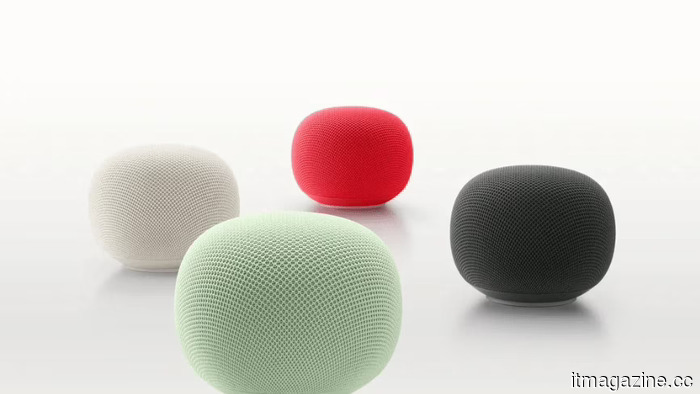 The Google Home Speaker is available for $99, but there is an additional charge for Gemini.
Google's first smart speaker in six years, the $99 Google Home Speaker, will be available on June 25. However, accessing Gemini Live and its top AI features requires a $10/month subscription.
The Google Home Speaker is available for $99, but there is an additional charge for Gemini.
Google's first smart speaker in six years, the $99 Google Home Speaker, will be available on June 25. However, accessing Gemini Live and its top AI features requires a $10/month subscription.
 Estonia will assign unique ID numbers to AI agents.
Estonia has announced that it will become the first nation to assign personal ID numbers to AI agents, allowing individuals to avoid sharing their complete digital identity with a bot when it acts on their behalf.
Estonia will assign unique ID numbers to AI agents.
Estonia has announced that it will become the first nation to assign personal ID numbers to AI agents, allowing individuals to avoid sharing their complete digital identity with a bot when it acts on their behalf.
 Beats Studio Buds receive a crucial update addressing a concerning microphone issue.
The recent firmware update for Apple's Beats Studio Buds addresses a Bluetooth microphone issue related to pairing mode, providing owners with a valid reason to verify if version 1B211 has been installed on their earbuds.
Beats Studio Buds receive a crucial update addressing a concerning microphone issue.
The recent firmware update for Apple's Beats Studio Buds addresses a Bluetooth microphone issue related to pairing mode, providing owners with a valid reason to verify if version 1B211 has been installed on their earbuds.
 SandboxAQ secures a $500 million award from the US to search for materials for chips.
The US Commerce Department granted $500 million to Nvidia-supported SandboxAQ through the CHIPS Act for the development of chip materials that are free from PFAS and rare earth elements, while also acquiring an equity stake.
SandboxAQ secures a $500 million award from the US to search for materials for chips.
The US Commerce Department granted $500 million to Nvidia-supported SandboxAQ through the CHIPS Act for the development of chip materials that are free from PFAS and rare earth elements, while also acquiring an equity stake.
 Mercedes' Chinese partner has created an electric vehicle that is priced below $10,000 and has a surprisingly stylish appearance.
The electric vehicle features a 15.6-inch display, Apple CarPlay, a dashcam, and offers a range of 450km. However, it will not be available in the US. That sums up the entire information.
Mercedes' Chinese partner has created an electric vehicle that is priced below $10,000 and has a surprisingly stylish appearance.
The electric vehicle features a 15.6-inch display, Apple CarPlay, a dashcam, and offers a range of 450km. However, it will not be available in the US. That sums up the entire information.
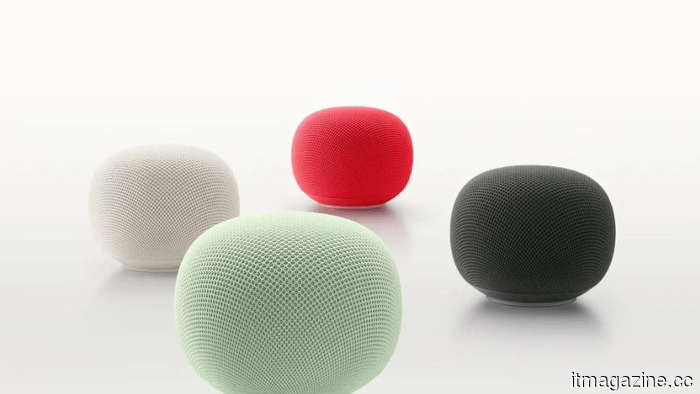 The Google Home Speaker is available for $99, but there is an additional charge for Gemini.
The $99 Google Home Speaker, Google's first smart speaker in six years, will be available starting June 25. However, to access Gemini Live and its top AI features, a subscription of $10 per month is required.
The Google Home Speaker is available for $99, but there is an additional charge for Gemini.
The $99 Google Home Speaker, Google's first smart speaker in six years, will be available starting June 25. However, to access Gemini Live and its top AI features, a subscription of $10 per month is required.
Estonia plans to assign ID numbers to AI agents.
Estonia has announced that it will be the first nation to assign personal ID numbers to AI agents, allowing individuals to avoid sharing their complete digital identity with a bot when it acts on their behalf.