

Estonia will assign ID numbers to AI agents.
When an AI agent acts on your behalf today, it typically impersonates you. It logs in using your credentials, which gives it access to everything. Estonia aims to change this.
The country plans to issue personal identification numbers specifically for AI assistants, making it the first nation to do so, according to Prime Minister Kristen Michal. The concept is to provide an AI with its own identity, allowing its actions to be limited, monitored, and tracked.
“It cannot be that people are compelled to grant their AI assistants access to all their rights, services, and data,” Michal mentioned on X. “Agents must have restricted, manageable, and auditable permissions.”
Why a country built on digital IDs requires a new one
Estonia is the ideal location for this initiative. Its 1.3 million citizens already utilize digital IDs for activities such as marriage, medical visits, and signing documents, and its e-Residency program provides the same digital identity to foreign entrepreneurs.
However, that system was based on the premise that only humans possess identity and accountability. An AI agent lacks the legal capacity to authenticate, sign, or assume responsibility, meaning it can presently only borrow a user’s credentials in full.
Assigning unique IDs to agents is intended to bridge that gap, similar to how e-Residency established a legal identity for individuals who had never been in the country.
The agents are already integrated into government operations
This is not a theoretical scenario for Estonia. The country has deployed AI chatbots in all schools through collaborations with OpenAI and other organizations, and operates Bürokratt, an expanding network of AI agents managing public services.
Michal, who has an AI advisory council comprising tech entrepreneurs, recently developed a "PM Cockpit" to track governmental priorities leveraging Anthropic's Claude during a coding session. Other regions like Ukraine and Singapore are also advancing in this area, from projects like Diia.AI to licensing initiatives.
The unresolved aspects
Michal did not specify a start date or clarify how liability would be determined if an agent with its own ID errs. These difficult questions remain unanswered.
Granting machines a formal identity within essential state systems is a significant accountability and security risk. Nevertheless, it shifts the narrative around agents: the objective is not to liberate them but to maintain them on a visible leash, as Europe strives to establish its own regulations regarding AI.
Other articles
 SandboxAQ receives a $500 million award from the US to identify chip materials.
The US Commerce Department granted $500 million to Nvidia-backed SandboxAQ through the CHIPS Act to develop chip materials that are free of PFAS and rare earth elements, while also acquiring an equity interest.
SandboxAQ receives a $500 million award from the US to identify chip materials.
The US Commerce Department granted $500 million to Nvidia-backed SandboxAQ through the CHIPS Act to develop chip materials that are free of PFAS and rare earth elements, while also acquiring an equity interest.
 Estonia will assign ID numbers to AI agents.
Estonia has announced that it will become the first nation to assign personal ID numbers to AI agents, allowing individuals to avoid sharing their complete digital identity with a bot to represent them.
Estonia will assign ID numbers to AI agents.
Estonia has announced that it will become the first nation to assign personal ID numbers to AI agents, allowing individuals to avoid sharing their complete digital identity with a bot to represent them.
 SandboxAQ secures a $500 million award from the US to identify chip materials.
The US Commerce Department granted $500 million to SandboxAQ, backed by Nvidia, as part of the CHIPS Act to develop chip materials that are free of PFAS and rare-earth elements, while also acquiring an equity stake.
SandboxAQ secures a $500 million award from the US to identify chip materials.
The US Commerce Department granted $500 million to SandboxAQ, backed by Nvidia, as part of the CHIPS Act to develop chip materials that are free of PFAS and rare-earth elements, while also acquiring an equity stake.
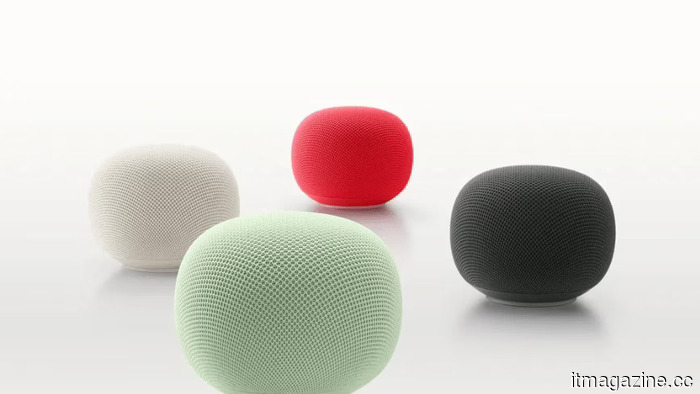 The Google Home Speaker is priced at $99, but Gemini comes at an additional cost.
Google's first smart speaker in six years, the $99 Google Home Speaker, is set to ship on June 25. However, to access Gemini Live and its top AI features, a $10 monthly subscription is required.
The Google Home Speaker is priced at $99, but Gemini comes at an additional cost.
Google's first smart speaker in six years, the $99 Google Home Speaker, is set to ship on June 25. However, to access Gemini Live and its top AI features, a $10 monthly subscription is required.
 SandboxAQ secures a $500 million contract from the U.S. to identify chip materials.
The US Commerce Department granted $500M to Nvidia-supported SandboxAQ through the CHIPS Act to develop chip materials that are free of PFAS and rare-earth elements, while also acquiring an equity share.
SandboxAQ secures a $500 million contract from the U.S. to identify chip materials.
The US Commerce Department granted $500M to Nvidia-supported SandboxAQ through the CHIPS Act to develop chip materials that are free of PFAS and rare-earth elements, while also acquiring an equity share.
 Smart glasses face issues with charging, and wireless power is on its way to address this problem.
NuCurrent's Fast Frames demonstration highlights a more efficient method for charging smart glasses, utilizing NFC wireless power to eliminate exposed contacts. This innovation keeps AI eyewear sealed, allows for quick recharging, and simplifies scalability across various designs.
Smart glasses face issues with charging, and wireless power is on its way to address this problem.
NuCurrent's Fast Frames demonstration highlights a more efficient method for charging smart glasses, utilizing NFC wireless power to eliminate exposed contacts. This innovation keeps AI eyewear sealed, allows for quick recharging, and simplifies scalability across various designs.
Estonia will assign ID numbers to AI agents.
Estonia has announced that it will be the first nation to assign personal ID numbers to AI agents, allowing individuals to avoid sharing their complete digital identity with a bot to represent them.