

Reports indicate that negotiations between Microsoft and Oracle for leasing cloud capacity have fallen through.
A deal that was reported to be worth over $3 billion fell apart due to a US government security framework that Oracle refused to incorporate, as stated by Business Insider. Oracle disputes this characterization, claiming the report is inaccurate.
Typically, the narrative surrounding the AI expansion involves companies securing more capacity than anticipated. However, in this case, it concerns a failed agreement. Discussions between Microsoft and Oracle for a cloud infrastructure leasing arrangement, reportedly exceeding $3 billion, did not succeed due to security and compliance issues, according to the report from Business Insider on Tuesday. Oracle maintains that this account is incorrect.
The crux of the issue, as per the report, was a specific certification. Oracle's public cloud does not have FedRAMP (Federal Risk and Authorization Management Program) certification, a necessary security framework for cloud providers dealing with US government data, and the company was unwilling to implement it.
An Oracle executive informed Business Insider that adding FedRAMP certification to its public cloud would require significant engineering efforts. Without this certification, Microsoft couldn't utilize the capacity it sought to lease for government-related workloads, which were essential for making the deal viable.
If accurate, this information reveals more than just the sum involved; it indicates that the obstacle was not financial or in terms of capacity, but rather the mundane requirements of compliance, which determine the workloads permissible on specific platforms. In a sector fixated on performance metrics and processing power, a multi-billion-dollar deal reportedly faltered due to a government security standard. Essentially, the fundamental requirements still dictate outcomes.
Oracle's response was adamant and specific, asserting that the Business Insider report contained inaccuracies. A spokesperson emphasized that Microsoft is both a partner and a customer of Oracle Cloud Infrastructure, highlighting a collaborative and productive relationship with frequent discussions about expanding their shared projects.
Oracle did not clarify which details it contested, resulting in a notable contradiction: a reported failed deal contrasted with Oracle's assertion that the description is incorrect.
The background for Microsoft's consideration of leasing capacity from a competitor lies in the relentless demand for AI. Microsoft has been investing heavily in computing resources, with significant commitments of A$25 billion in Australia and $3.2 billion in Sweden, among other investments, yet this has not been sufficient to meet the growing demand.
Leasing from Oracle would have enabled a quicker capacity increase compared to building infrastructure, illustrating why competing companies often cooperate. Meanwhile, Oracle has aggressively expanded its capacity and has faced scrutiny for it, spending $55.7 billion on data centers in its last fiscal year, surpassing its own forecasts. Concerns have arisen regarding the potential risk of its large commitments, particularly linked to a significant deal with OpenAI, being overly reliant on a limited customer base.
A reported $3 billion lease to Microsoft would have been advantageous for diversifying that customer base. If the deal did indeed fall through, it represents a setback for Oracle.
This scenario unfolds against a backdrop of growing concerns about the AI infrastructure expansion. Analysts at Goldman Sachs expressed caution, noting that the build-out had reached a "moment of vulnerability," where massive future commitments meet uncertainties regarding whether the anticipated demand will materialize as planned.
Whether or not the lease truly fell apart between two major players adds to this unease, suggesting that even the most expansion-focused companies are negotiating aggressively and rejecting unacceptable terms.
This situation creates a narrative beyond a simple disagreement. If Business Insider’s report is accurate, it highlights how compliance issues can jeopardize a multi-billion-dollar deal, even in a climate that is eager for capacity—serving as a reality check to the prevailing narrative that AI demand can easily overcome such hurdles.
Conversely, if Oracle's claims hold true, it portrays a picture of two strong competitors maintaining a close commercial relationship, indicating that reports of a rupture are exaggerated. Both perspectives are significant for an industry striving to understand the sustainability of the current spending surge, and the disparity in accounts is unlikely to be resolved until one party provides further clarification.
At present, the public record reflects two conflicting narratives: Business Insider claims the deal was aborted over FedRAMP issues, while Oracle asserts that the report is incorrect and that their relationship remains healthy.
According to the report, Microsoft is still exploring options for leasing cloud infrastructure, implying that regardless of the outcome with Oracle, the fundamental demand remains unchanged. The need for computing power is the one aspect all parties agree on.
Other articles
 Interpol has indicated a significant increase in cybercrime and scams throughout Asia.
A recent assessment by Interpol reveals that cybercrime accounts for approximately 30% of reported crime across much of Asia, with scam centers raking in nearly $40 billion annually.
Interpol has indicated a significant increase in cybercrime and scams throughout Asia.
A recent assessment by Interpol reveals that cybercrime accounts for approximately 30% of reported crime across much of Asia, with scam centers raking in nearly $40 billion annually.
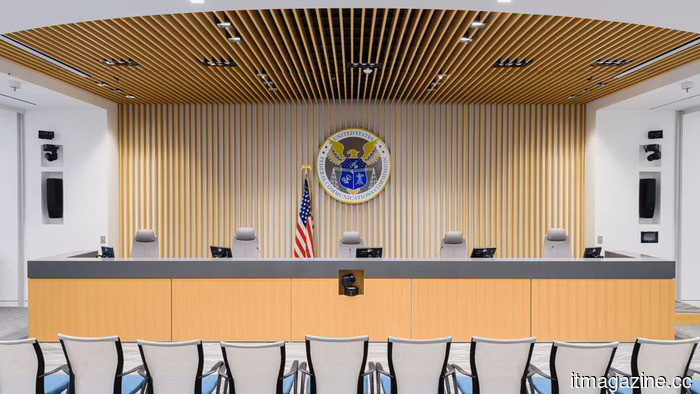 The FCC has reopened the possibility for Chinese toy drones, but strictly for the smallest varieties.
The FCC has decided to allow the importation of small Chinese toy drones once more, exempting those that weigh under 150g, lack a camera, do not have networking capabilities, and offer 10 minutes of flight time.
The FCC has reopened the possibility for Chinese toy drones, but strictly for the smallest varieties.
The FCC has decided to allow the importation of small Chinese toy drones once more, exempting those that weigh under 150g, lack a camera, do not have networking capabilities, and offer 10 minutes of flight time.
 Microsoft DeepSeek: a Chinese model for Copilot Cowork?
Microsoft is considering a self-hosted DeepSeek model to reduce expenses for Copilot Cowork, a move related to Chinese AI that may attract attention from the Trump administration.
Microsoft DeepSeek: a Chinese model for Copilot Cowork?
Microsoft is considering a self-hosted DeepSeek model to reduce expenses for Copilot Cowork, a move related to Chinese AI that may attract attention from the Trump administration.
 G7 leaders consider a pathway for 'trusted partners' to access America's leading AI models.
A few days after the US restricted foreign access to Anthropic’s leading models, G7 officials discussed a 'trusted partners' initiative with Washington in Evian.
G7 leaders consider a pathway for 'trusted partners' to access America's leading AI models.
A few days after the US restricted foreign access to Anthropic’s leading models, G7 officials discussed a 'trusted partners' initiative with Washington in Evian.
 Uber's robotaxi service is set to debut in Houston in 2027.
Uber is set to introduce its Lucid-Nuro robotaxi service in Houston by mid-2027, marking its second market in the United States and presenting a new challenge to Waymo in the latter's home territory.
Uber's robotaxi service is set to debut in Houston in 2027.
Uber is set to introduce its Lucid-Nuro robotaxi service in Houston by mid-2027, marking its second market in the United States and presenting a new challenge to Waymo in the latter's home territory.
 The FTC's investigation into Amazon's advertising practices may result in billions of dollars in penalties.
According to Bloomberg, the FTC has prepared a possible lawsuit alleging that Amazon has misled advertisers regarding concealed advertising costs, a litigation that could result in billion-dollar expenses.
The FTC's investigation into Amazon's advertising practices may result in billions of dollars in penalties.
According to Bloomberg, the FTC has prepared a possible lawsuit alleging that Amazon has misled advertisers regarding concealed advertising costs, a litigation that could result in billion-dollar expenses.
Reports indicate that negotiations between Microsoft and Oracle for leasing cloud capacity have fallen through.
According to Business Insider, a $3 billion agreement for Microsoft to lease Oracle's cloud capacity collapsed due to issues with the FedRAMP security framework. Oracle contests this narrative.