
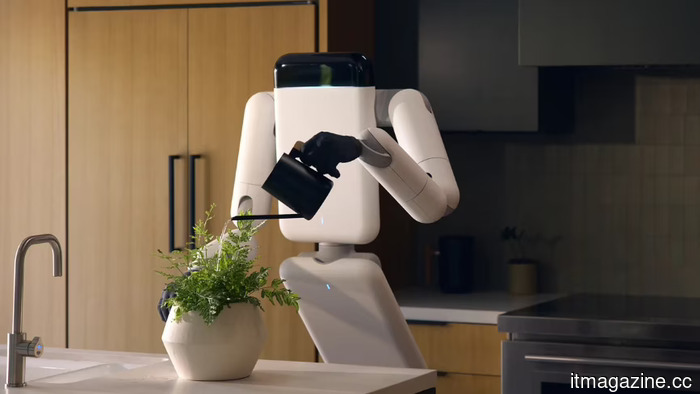
Genesis AI believes that wheels outperform legs in the robot race.
**TL;DR** Genesis AI introduced Eno, a wheeled robot featuring dexterous hands and a foundational model named GENE, positioning it as a more economical and practical alternative to humanoid robots. The French-American startup has secured $105 million in seed funding and aims for customer deployments by the end of 2026.
On Tuesday, as the robotics sector continued to invest heavily in humanoid-like machines, Genesis AI debuted a robot that intentionally does not move like a human. Eno is a wheeled robot equipped with a foldable tower and dexterous hands, backed by a foundational model claimed to provide human-like manipulation capabilities. This design challenges the industry's dominant belief that robots must resemble humans to be functional.
The competition against Genesis is immense. Figure AI carries a private valuation of $39 billion and has started deploying its Figure 03 humanoid in a Catalyst Brands warehouse for logistics, serving the parent company of JCPenney and Brooks Brothers. Furthermore, Hyundai and Boston Dynamics plan to manufacture 30,000 Atlas humanoids annually by 2028 for use in automotive factories in Georgia, while Norway’s 1X Technologies quickly sold its first batch of 10,000 home robots within five days of taking preorders.
This trend is also visible in China, where over 150 companies are targeting a market that saw approximately 14,000 units sold in 2025; however, only 23% of buyers reported satisfaction, revealing a disconnect between supply-side aspirations and demand-side realities that Genesis believes validates its approach.
According to Zhou Xian, co-founder and CEO of Genesis AI, “the toughest challenge in robotics is not locomotion, but manipulation," meaning the ability to handle objects with human-like dexterity. This quest has drawn significant investment; for instance, Chinese robot-hand maker Linkerbot aims for a $6 billion valuation due to its advanced grippers, managing to ship over 1,000 units each month.
Zhou, who earned a PhD from Carnegie Mellon, founded Genesis alongside Théophile Gervet, a former researcher at Mistral. The company maintains offices in Paris and San Francisco and employs around 60 staff members. Eno’s wheeled base arises from the conclusion that wheels are more affordable to manufacture, easier to stabilize, and safer around humans than bipedal legs, which pose ongoing engineering challenges at a commercial scale. The downside is Eno’s inability to ascend stairs; however, Genesis argues that this is seldom an issue for its targeted applications in logistics, manufacturing, hospitals, and hotels.
Unlike most robotics firms which use teleoperation (where a human controls the robot while its sensors capture movements, sometimes costing up to $6,000 per hour), Genesis created a sensor glove. This glove directly maps the movements between a human hand, the glove, and the robot's hand, costing approximately $300 per pair, or about 100 times less than typical teleoperation setups, and generating up to five times more useful training data per session.
This data supports GENE-26.5, the foundational model that Genesis showcased in May. In a public display, a single model operating on the same hardware completed cooking tasks, solved a Rubik's cube, played the piano, and assembled wire harnesses.
Genesis is not alone in questioning the dominance of humanoid designs. Sunday Robotics obtained $165 million in Series B funding at a $1.15 billion valuation for Memo, a wheeled domestic robot trained using data from sensor gloves worn in over 500 homes. Meanwhile, German startup Sereact has developed a "robot brain" that integrates with existing industrial equipment, with its Cortex model powering over 200 systems deployed for companies like BMW, Daimler Truck, and PepsiCo, completely avoiding the form debate.
On the other hand, Agility Robotics’ bipedal Digit has quietly emerged as the only humanoid generating revenue from commercial customers, having moved more than 100,000 totes in a GXO Logistics warehouse. This notable achievement stands in stark contrast to the industry's multi-billion-dollar valuations.
Genesis aims to enter a logistics sector crowded with established players, as Amazon has invested over €10 billion into its European fulfillment network and recently launched Proteus, a warehouse robot capable of understanding plain language instructions.
Genesis secured $105 million in seed funding, co-led by Eclipse Ventures and Khosla Ventures, with contributions from figures such as Eric Schmidt, Xavier Niel, MIT robotics professor Daniela Rus, and former Intel Labs head Vladlen Koltun. “Even in the most automated sectors, the ratio of robots to humans rarely surpasses 1:30,” noted Eclipse partner Charly Mwangi.
The company plans to initiate production and begin customer deployments by the end of 2026, initially focusing on logistics and manufacturing before branching out into hospitality and healthcare. The outcome of this endeavor, contrasting Genesis’s wheeled approach with the traditional humanoid
Other articles
 Arch Linux AUR affected by malware aimed at stealing developer credentials.
Attackers compromised more than 1,500 packages in Arch Linux's AUR to insert a credential stealer. The official repositories remain secure, but the trust model has been affected.
Arch Linux AUR affected by malware aimed at stealing developer credentials.
Attackers compromised more than 1,500 packages in Arch Linux's AUR to insert a credential stealer. The official repositories remain secure, but the trust model has been affected.
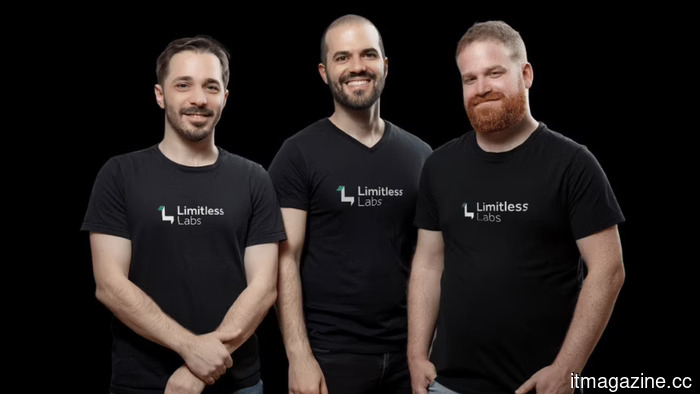 Limitless Labs secures $20 million to introduce AI technology to manufacturing environments.
Israel's Limitless Labs secured $20M in funding, co-led by Dell and Square Peg, to develop 'Physical AI' for CNC manufacturing. The company is already programming components for Blue Origin and Formula 1.
Limitless Labs secures $20 million to introduce AI technology to manufacturing environments.
Israel's Limitless Labs secured $20M in funding, co-led by Dell and Square Peg, to develop 'Physical AI' for CNC manufacturing. The company is already programming components for Blue Origin and Formula 1.
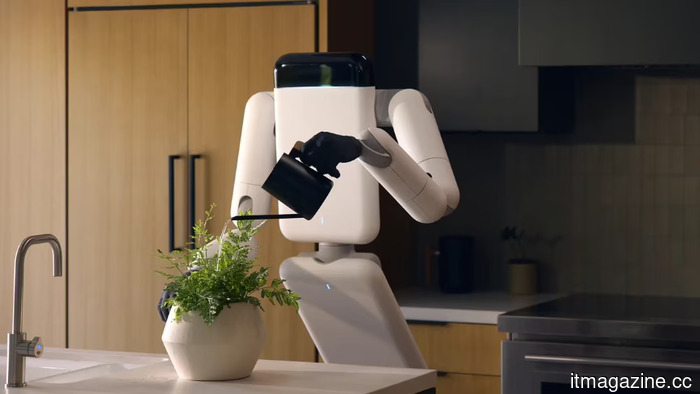 Genesis AI believes that wheels will outperform legs in the robot race.
Genesis AI introduced Eno, a wheeled robot developed using $300 sensor gloves, which contests the humanoid approach supported by $39 billion Figure AI and Boston Dynamics.
Genesis AI believes that wheels will outperform legs in the robot race.
Genesis AI introduced Eno, a wheeled robot developed using $300 sensor gloves, which contests the humanoid approach supported by $39 billion Figure AI and Boston Dynamics.
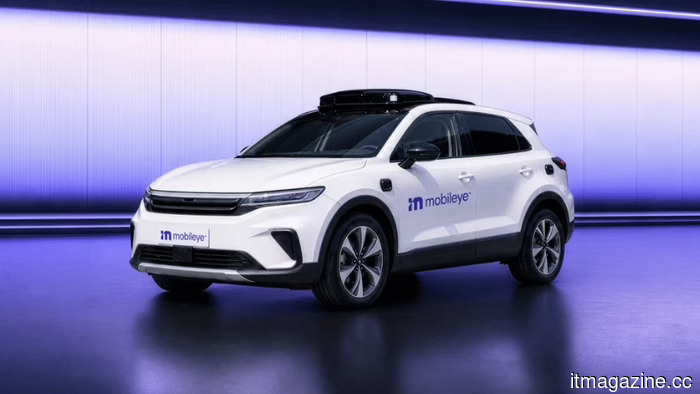 Mobileye plans to introduce its own robotaxi service in the United States in 2027.
Mobileye is set to introduce its own robotaxi service in a U.S. city by 2027, putting the self-driving technology provider in competition with the automakers that purchase Mobileye Drive from it.
Mobileye plans to introduce its own robotaxi service in the United States in 2027.
Mobileye is set to introduce its own robotaxi service in a U.S. city by 2027, putting the self-driving technology provider in competition with the automakers that purchase Mobileye Drive from it.
 The AI safety paradox of Anthropic: a timeline spanning six months.
Spanning a 19,000-word cautionary essay to a White House shutdown, Anthropic's last six months highlight the challenging circumstances faced by the AI industry's self-designated leader in safety.
The AI safety paradox of Anthropic: a timeline spanning six months.
Spanning a 19,000-word cautionary essay to a White House shutdown, Anthropic's last six months highlight the challenging circumstances faced by the AI industry's self-designated leader in safety.
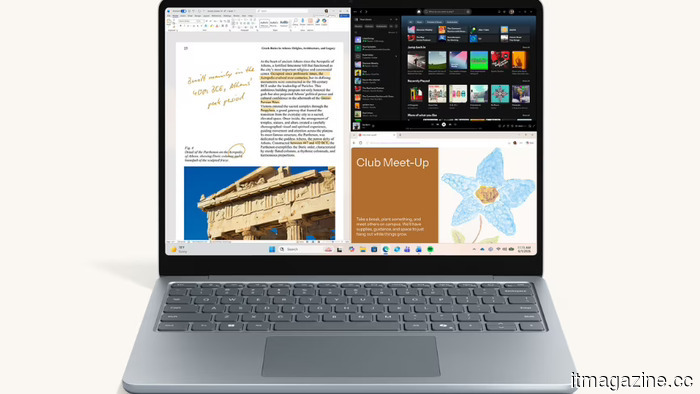 Microsoft's latest Surface Laptop features a trackpad that vibrates similar to a game controller.
The latest Surface Laptop and Surface Pro come with haptic trackpads that provide vibrations when you snap windows or arrange objects. They are ARM-only, with prices starting at $1,500, and there is no Intel version available.
Microsoft's latest Surface Laptop features a trackpad that vibrates similar to a game controller.
The latest Surface Laptop and Surface Pro come with haptic trackpads that provide vibrations when you snap windows or arrange objects. They are ARM-only, with prices starting at $1,500, and there is no Intel version available.
Genesis AI believes that wheels outperform legs in the robot race.
Genesis AI introduced Eno, a wheeled robot developed using $300 sensor gloves, challenging the humanoid approach supported by $39 billion firms Figure AI and Boston Dynamics.