
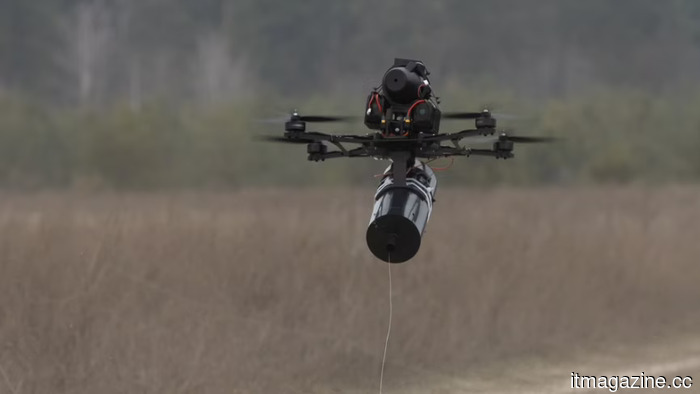
A Czech AI startup claims it can identify drones through sound for €150 per sensor and aims to integrate this technology into power grids initially.
Czech startup Neuron Soundware has developed an AI-based acoustic detection system known as Sound Shield, which recognizes drones by their engine noises through microphone sensors priced between €100 and €150 each. This system serves as a passive, low-cost alternative to radar, aimed at detecting low-flying drones above urban areas, infrastructure, and military sites. For the past decade, the company has utilized AI to analyze sounds from industrial machinery for clients like Airbus, Siemens, and BMW, and is now applying this same technology for airspace defense.
Sound Shield operates using small sensors called nEdge Minis, which consume only 1 watt of power and continuously monitor for the sound patterns of drone engines. These sensors transmit data to a computing platform powered by Nvidia’s Jetson modules, which runs neural networks locally to compare incoming sounds against a database of known drone acoustic signatures. When a threat is identified, the system notifies a central command platform with details about the drone's estimated speed, altitude, and direction.
This system takes advantage of a key limitation in drone design; while radar-absorbing materials and stealth features can make drones difficult to detect, they cannot eliminate the mechanical noise from rotors and engines. Each drone has a unique acoustic signature that Neuron Soundware claims can be recognized in real-time across multiple sensor locations.
Pavel Konečný, the founder and CEO of Neuron Soundware, presents Sound Shield as a dual-use technology intended first for electrical transformer stations. “They can continuously monitor the condition of the transformer and other vital components of the distribution system, detecting internal discharges, oil leaks, or any operational anomalies,” Konečný explained. “Simultaneously, their microphones are attuned to the sky.”
This dual-use aspect is key for commercial viability. Instead of requiring governments to finance a dedicated drone detection system from scratch, Neuron Soundware suggests utilizing existing infrastructure that already requires acoustic monitoring. The company believes this approach will minimize the number of sensors needed and provide governments with an extensive air defense system at low incremental costs for installation and power.
European nations are urgently seeking affordable drone detection solutions after conflicts in Ukraine and Iran showed how inexpensive UAVs can inflict significant damage on military assets. For instance, Ukrainian officials reported that during Operation Spiderweb in June 2025, $2,000 drones were used to destroy an estimated $7 billion in Russian bombers, although Russia claimed much lower losses. The large disparity between the cost of drones and the destruction they can cause has made counter-drone systems one of the fastest-growing areas in defense procurement.
The counter-drone market is anticipated to surge from around $6.6 billion in 2025 to $20 billion by 2030. Startups across Europe are securing funds to develop national counter-drone capabilities, and NATO countries bordering Russia have agreed to build a drone detection wall extending from Norway to Poland. Sound Shield aims to complement radar and radio-frequency detection rather than serve as a substitute.
The economic justification is clear. Modern radar systems that can detect small drones are significantly more expensive than a network of nEdge Minis and actively broadcast their location with each sweep. In contrast, Sound Shield’s sensors are passive, emitting no signals that adversaries could detect or disrupt.
However, there are trade-offs in terms of range and reliability. Acoustic drone detection has known limitations that the original material does not address. Most acoustic systems can typically detect drones effectively from about 300 to 500 meters under ideal conditions, with performance dropping considerably in windy, rainy, or noisy urban settings. Background noise from traffic, wildlife, and industrial operations can result in false positives.
Additionally, newer drone designs often include quieter motors that lower their acoustic signature, making them harder to detect. Neuron Soundware asserts that its nEdge PRO computing module can process data from sensors up to a 20-kilometer radius, but independent validation of this range claim has yet to be published.
The company has raised around €7.4 million from investors including Inven Capital, J&T Ventures, and Lead Ventures, along with €7 million from the European Innovation Council. It has over 130 industrial installations on four continents that monitor machinery through acoustic methods. Whether transitioning from monitoring pumps and turbines to tracking hostile drones in contested airspace is as feasible as the company claims remains to be seen in practical scenarios.
Other articles
 According to reports, Apple’s 2027 roadmap includes AirPods featuring a built-in camera.
The much-speculated camera-enabled AirPods from Apple may launch in 2027, allowing Siri to comprehend a user's surroundings and respond to inquiries about the environment.
According to reports, Apple’s 2027 roadmap includes AirPods featuring a built-in camera.
The much-speculated camera-enabled AirPods from Apple may launch in 2027, allowing Siri to comprehend a user's surroundings and respond to inquiries about the environment.
 Android 17 is set to significantly enhance the gaming experience on foldable devices.
Android 17 is committing further to mobile gaming by introducing a layout designed for foldable devices, customizable controller settings, and performance enhancements aimed at minimizing stutter.
Android 17 is set to significantly enhance the gaming experience on foldable devices.
Android 17 is committing further to mobile gaming by introducing a layout designed for foldable devices, customizable controller settings, and performance enhancements aimed at minimizing stutter.
 Google has launched Android 17, featuring Gemini Intelligence, a foldable gaming mode, and enhanced privacy controls.
Android 17 begins its rollout to Pixel phones today, featuring Bubbles multitasking, gaming for foldable devices, Gemini Intelligence, and updated security defaults.
Google has launched Android 17, featuring Gemini Intelligence, a foldable gaming mode, and enhanced privacy controls.
Android 17 begins its rollout to Pixel phones today, featuring Bubbles multitasking, gaming for foldable devices, Gemini Intelligence, and updated security defaults.
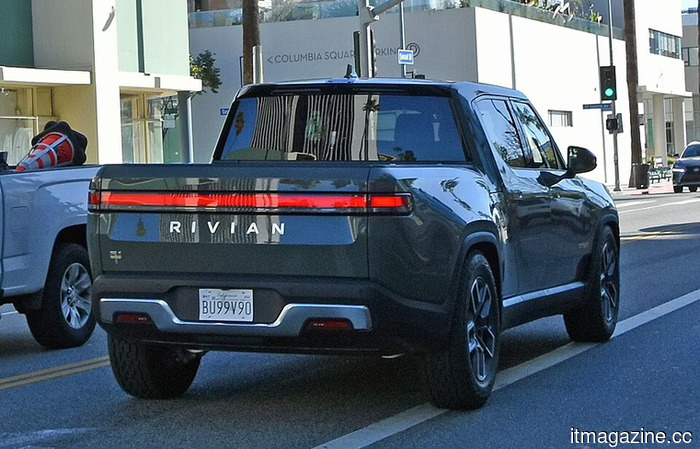 Rivian has terminated hundreds of employees just a week after initiating R2 deliveries in its pursuit of achieving its first profitability.
Rivian reduced its workforce in service and customer teams by just under 2%, a week following the commencement of R2 deliveries. The company incurred a loss of $3.6 billion in 2025, having delivered 42,247 vehicles.
Rivian has terminated hundreds of employees just a week after initiating R2 deliveries in its pursuit of achieving its first profitability.
Rivian reduced its workforce in service and customer teams by just under 2%, a week following the commencement of R2 deliveries. The company incurred a loss of $3.6 billion in 2025, having delivered 42,247 vehicles.
 Your smart home devices may unknowingly be involved in a cybercrime network.
Certain internet-enabled devices might have concealed software backdoors that enable cybercriminals to direct traffic through home networks, commit fraud, and initiate cyberattacks without the owner's awareness.
Your smart home devices may unknowingly be involved in a cybercrime network.
Certain internet-enabled devices might have concealed software backdoors that enable cybercriminals to direct traffic through home networks, commit fraud, and initiate cyberattacks without the owner's awareness.
 Qualcomm introduces Snapdragon Reality Elite along with a white-label toolkit for AI glasses, predicting that the future platform will not be a smartphone.
Snapdragon Reality Elite, START, smart eyewear, AI-enabled wearables, XREAL, Project Aura, Play for Dream, Inspecs, mixed reality, XR, NPU, Cristiano Amon, white label, AR1+.
Qualcomm introduces Snapdragon Reality Elite along with a white-label toolkit for AI glasses, predicting that the future platform will not be a smartphone.
Snapdragon Reality Elite, START, smart eyewear, AI-enabled wearables, XREAL, Project Aura, Play for Dream, Inspecs, mixed reality, XR, NPU, Cristiano Amon, white label, AR1+.
A Czech AI startup claims it can identify drones through sound for €150 per sensor and aims to integrate this technology into power grids initially.
Neuron Soundware's Sound Shield employs AI-driven microphones that range in price from €100 to €150 each to acoustically identify drones, presenting a cost-effective alternative to radar technology.