
Tesla provided European regulators with inaccurate self-driving safety information.
Tesla presented self-published safety statistics to regulators in Sweden and the Netherlands, which independent traffic-safety researchers claim could be considered misleading marketing, according to a Reuters analysis of documents obtained via public records requests.
This data was part of Tesla's efforts to obtain broader approval for its Full Self-Driving (FSD) system in Europe, where the company aims to regain lost market share. The key assertion put forth by Tesla and its executives is that FSD is up to ten times safer than human drivers. However, Reuters discovered several flawed comparisons underlying this statistic, designed to enhance the appearance of safety beyond what the actual data supports.
One slide serves as an example, where Tesla informed regulators that FSD-equipped cars could travel over seven times farther between crashes than the average US driver. Researchers noted that this figure relies on an unrealistic premise: that every vehicle on US roads would be replaced by an FSD-equipped Tesla, each being at least seven times safer than the car it replaced. When framed this way, the assertion becomes more of a theoretical scenario than an actual metric.
In addition, there are concerns regarding the comparisons being made. Some of Tesla's statistics only account for the more serious crashes in its fleet—those severe enough to trigger an airbag—while juxtaposing them with broad crash statistics that include numerous minor incidents. Experts in safety told Reuters that contrasting a specific category of accidents with a broader one can create an impression of performance that wouldn't hold up under a direct comparison.
Regulatory bodies are paying close attention. Dudley Curtis from the European Transport Safety Council expressed worry about Tesla providing “unreliable safety data” from the U.S. to Swedish regulators. The issue is not just that the figures may inflate the system's safety, but also that they were given to officials responsible for determining if the system can be safely deployed on European roads.
This data dispute adds to pre-existing concerns raised by regulators. European officials have scrutinized FSD regarding issues such as speeding, behavior on icy roads, and driver distraction. Furthermore, the name "Full Self-Driving" has faced criticism, particularly from Dutch regulators who feel it exaggerates a system that still requires human supervision. Approval for FSD has appeared uncertain for several months.
The Netherlands is particularly significant because its vehicle authority is the primary organization evaluating FSD for the European market, meaning the quality of Tesla's submitted data is crucial rather than a minor detail. Throughout this reporting, Tesla has not retracted its figures.
The next steps depend on the regulators assessing this information, and a safety argument based on comparisons deemed invalid by researchers represents a weaker position than the headline figure implies.
Other articles
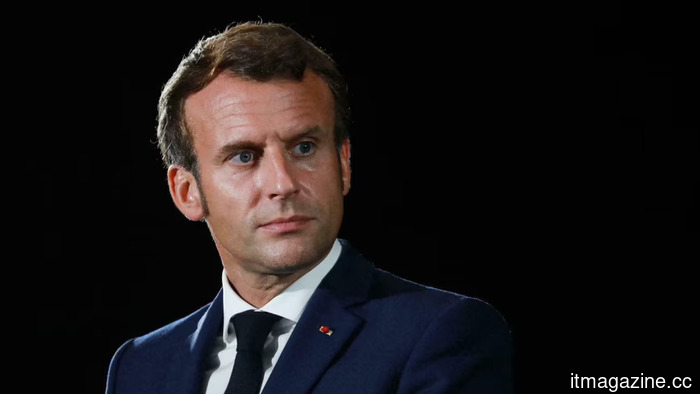 France is organizing the G7, promoting an AI initiative that relies on the wealth of others.
While France hosts the G7, Macron is looking to AI to shape his legacy, supported by SoftBank’s plan for data centers worth up to €75 billion and a €93 billion investment from Choose France.
France is organizing the G7, promoting an AI initiative that relies on the wealth of others.
While France hosts the G7, Macron is looking to AI to shape his legacy, supported by SoftBank’s plan for data centers worth up to €75 billion and a €93 billion investment from Choose France.
 The US directive to prevent foreign access to Anthropic's leading models signifies a shift in policy.
Washington instructed Anthropic to exclude foreign nationals from accessing Fable 5 and Mythos 5. The company responded by disabling these products globally and described the action as excessive.
Fox purchases Roku in a $22 billion streaming investment.
Fox purchases Roku for $160 per share, which values the company at around $22 billion, in order to combine its live sports and news offerings with the platform that reaches 100 million streaming households.
The US directive to prevent foreign access to Anthropic's leading models signifies a shift in policy.
Washington instructed Anthropic to exclude foreign nationals from accessing Fable 5 and Mythos 5. The company responded by disabling these products globally and described the action as excessive.
Fox purchases Roku in a $22 billion streaming investment.
Fox purchases Roku for $160 per share, which values the company at around $22 billion, in order to combine its live sports and news offerings with the platform that reaches 100 million streaming households.
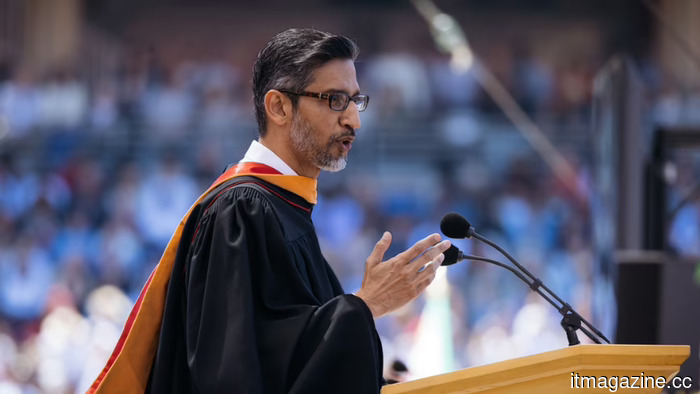 Sundar Pichai of Google opted for a message of optimism regarding AI at Stanford, yet many graduates walked out regardless.
Sundar Pichai from Google delivered the commencement speech for Stanford's Class of 2026, avoiding the topic of AI while students exited in protest of the Project Nimbus contract.
Sundar Pichai of Google opted for a message of optimism regarding AI at Stanford, yet many graduates walked out regardless.
Sundar Pichai from Google delivered the commencement speech for Stanford's Class of 2026, avoiding the topic of AI while students exited in protest of the Project Nimbus contract.
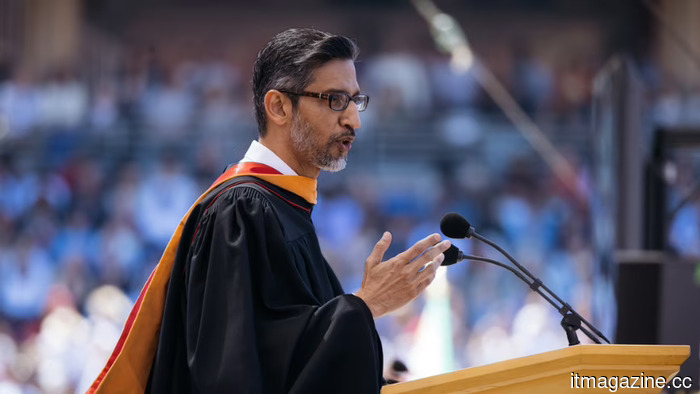 Sundar Pichai from Google opted for a positive outlook on AI at Stanford. Nonetheless, graduates still walked out.
Sundar Pichai from Google delivered the commencement address for Stanford's Class of 2026, avoiding the topic of AI while students left in protest over the Project Nimbus contract.
India's Razorpay has submitted a confidential filing for its IPO.
Razorpay has submitted confidential IPO documents to SEBI, with estimates suggesting the issue could be between Rs 5,000 and 6,000 crore, one year after shifting its domicile to India.
Sundar Pichai from Google opted for a positive outlook on AI at Stanford. Nonetheless, graduates still walked out.
Sundar Pichai from Google delivered the commencement address for Stanford's Class of 2026, avoiding the topic of AI while students left in protest over the Project Nimbus contract.
India's Razorpay has submitted a confidential filing for its IPO.
Razorpay has submitted confidential IPO documents to SEBI, with estimates suggesting the issue could be between Rs 5,000 and 6,000 crore, one year after shifting its domicile to India.
Tesla provided European regulators with inaccurate self-driving safety information.
A review by Reuters revealed that Tesla provided self-reported FSD safety data to regulators in Sweden and the Netherlands, which researchers claim are misleading.