
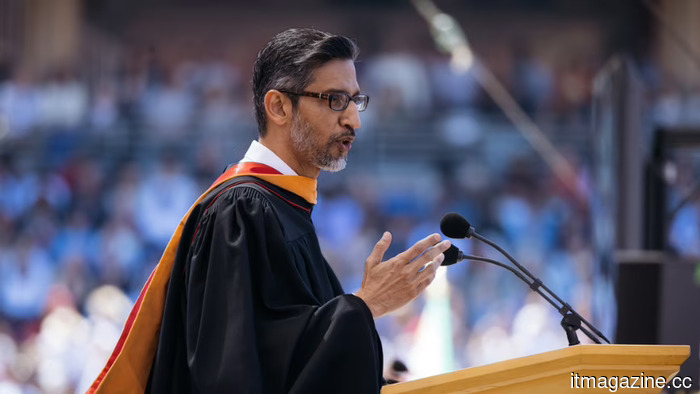
Sundar Pichai from Google opted for a positive outlook on AI at Stanford. Nonetheless, graduates still walked out.
The individual leading one of the largest artificial-intelligence companies globally stood to address Stanford’s graduating class and largely chose not to discuss artificial intelligence. Sundar Pichai, the CEO of Google and Alphabet, delivered the speech during the university's 135th commencement on Sunday, June 14, at Stanford Stadium, selecting topics that diverged from the area for which he is most recognized.
He acknowledged his choice to forgo the topic with a joke, pointing out the challenge of avoiding a conversation about AI given the last two letters of his last name, before shifting to share advice he labeled as “technology agnostic.”
This was a strategic move. Executives in the tech industry have faced difficulties during graduation ceremonies this season; for instance, Eric Schmidt, Pichai's predecessor at Google, was booed at the University of Arizona earlier this year for highlighting AI's potential, and Pichai seemed intent on not repeating that situation.
Instead, he offered a personal narrative framed around three principles: embrace optimism, tackle challenging tasks, and pursue what truly excites you. His optimism was accompanied by a personal anecdote.
When he first arrived from Chennai for his inaugural winter term, Pichai viewed the hills around him as brown but was corrected by his host, Jane Earl, who remarked, “We prefer to call it golden.” This shift in perspective—from brown to golden—became a central metaphor of his address. He referenced his journey through Google, including his work on Chrome, as evidence supporting the other two principles, concluding by urging the graduates to “set your heart ablaze.”
Pichai stated that this was only his second commencement address and his first before a live audience; his previous one took place in 2020, filmed in his backyard for a graduating class that could not meet in person. He holds a master’s degree in materials science and engineering from Stanford, which added a layer of symmetry to his return.
However, the most significant aspect of the event was not part of his speech. As Pichai took the podium, a group of graduates stood up and exited the stadium. This protest had been organized weeks in advance by Stanford Students for Justice in Palestine and was focused not on AI or employment impacts but rather on Google’s involvement in Project Nimbus, a contract valued at approximately $1.2 billion that entails Google and Amazon providing cloud and AI services to the Israeli government.
This distinction is crucial, as it's easy to misinterpret the walkout as a commentary on AI, which it was not. The students were protesting a particular business relationship, not the technology itself, and blending the two scenarios reduces a purposeful political statement to a more palatable narrative about graduates' anxieties over technology. The two events shared a setting, but they were not the same issue.
Project Nimbus has sparked controversy within Google for years. Established in 2021, the contract has been the subject of ongoing internal protests, including a series of employee layoffs in 2024 following sit-ins at corporate offices and has frequently been targeted by campus activists who view the university's connections to the tech sector as valid subjects for critique.
The Stanford walkout represented the latest display of a movement that predates this commencement by a significant margin, which is part of why its organizers could plan it so far in advance.
Collectively, the optics of the situation conveyed their own message. A CEO of a tech company racing to incorporate AI into every product spent his time at the podium discussing golden hills and hard work, while the actual controversy disrupting the ceremony was related to a defense-contract cloud deal rather than anything he mentioned. For a leader adept at staying on message, it appears the safest narrative this year was the one that included the least amount of technology.
Sundar Pichai’s comments have since been fully published on Google’s blog. For the organizers of the walkout, that act was the main point, and it occurred before he had even concluded his opening remarks.
Other articles
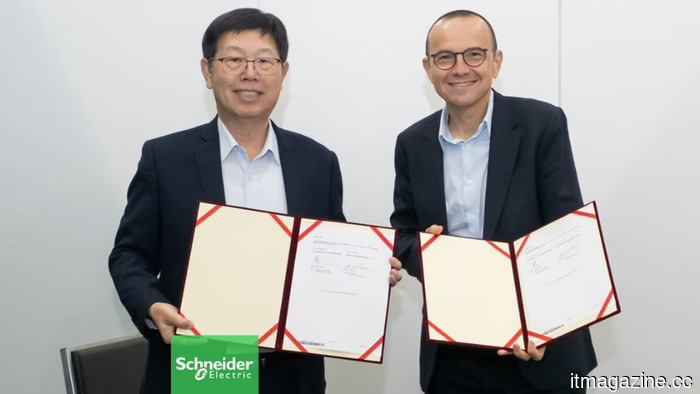 Schneider Electric collaborates with Foxconn to develop AI data-center infrastructure.
Schneider Electric and Foxconn have revealed a partnership to jointly create reference designs for advanced AI data centres, with production expected to commence later this year.
Schneider Electric collaborates with Foxconn to develop AI data-center infrastructure.
Schneider Electric and Foxconn have revealed a partnership to jointly create reference designs for advanced AI data centres, with production expected to commence later this year.
 The US directive to prevent foreign access to Anthropic's leading models signifies a shift in policy.
Washington instructed Anthropic to exclude foreign nationals from accessing Fable 5 and Mythos 5. The company responded by disabling these products globally and described the action as excessive.
India's Razorpay submits application for IPO via the confidential route.
Razorpay has submitted confidential IPO documentation to SEBI, with estimates valuing the offering between Rs 5,000 and 6,000 crore, following its move to India last year.
The US directive to prevent foreign access to Anthropic's leading models signifies a shift in policy.
Washington instructed Anthropic to exclude foreign nationals from accessing Fable 5 and Mythos 5. The company responded by disabling these products globally and described the action as excessive.
India's Razorpay submits application for IPO via the confidential route.
Razorpay has submitted confidential IPO documentation to SEBI, with estimates valuing the offering between Rs 5,000 and 6,000 crore, following its move to India last year.
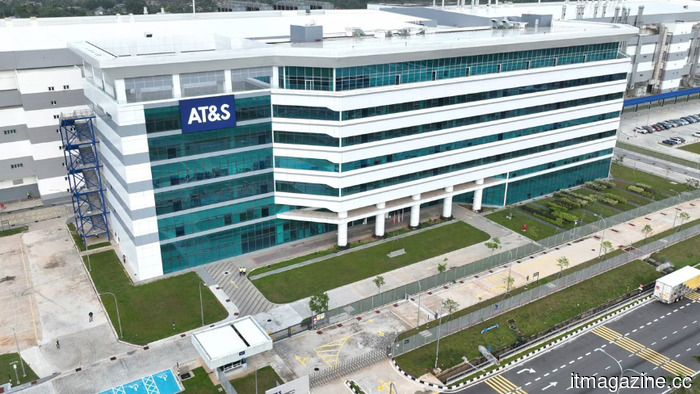 AT&S invests as much as €2 billion in Malaysia and China to capitalize on the AI chip surge.
Austria's AT&S plans to invest up to €2 billion to increase IC-substrate capacity in Malaysia and China for artificial intelligence and high-performance computing, supported by an agreement with AMD.
Schneider Electric and Foxconn collaborate on AI data center infrastructure.
Schneider Electric and Foxconn have revealed a partnership to jointly create reference designs for future AI data centres, with manufacturing expected to begin later this year.
AT&S invests as much as €2 billion in Malaysia and China to capitalize on the AI chip surge.
Austria's AT&S plans to invest up to €2 billion to increase IC-substrate capacity in Malaysia and China for artificial intelligence and high-performance computing, supported by an agreement with AMD.
Schneider Electric and Foxconn collaborate on AI data center infrastructure.
Schneider Electric and Foxconn have revealed a partnership to jointly create reference designs for future AI data centres, with manufacturing expected to begin later this year.
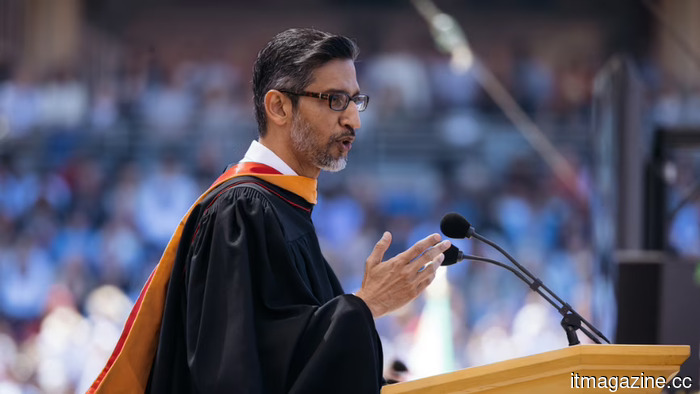 Sundar Pichai from Google opted for a positive outlook on AI at Stanford, yet graduates still chose to walk out.
Sundar Pichai from Google delivered the commencement address for Stanford's class of 2026, avoiding discussions on AI while students exited due to issues related to the Project Nimbus contract.
Sundar Pichai from Google opted for a positive outlook on AI at Stanford, yet graduates still chose to walk out.
Sundar Pichai from Google delivered the commencement address for Stanford's class of 2026, avoiding discussions on AI while students exited due to issues related to the Project Nimbus contract.
Sundar Pichai from Google opted for a positive outlook on AI at Stanford. Nonetheless, graduates still walked out.
Sundar Pichai from Google delivered the commencement address for Stanford's Class of 2026, avoiding the topic of AI while students left in protest over the Project Nimbus contract.