
NewCore secures $66 million to provide AI agents with a distinct identity.
NewCore has emerged from stealth mode with $66 million in funding to address a problem that many companies have yet to recognize: identifying who or what is accessing their systems. This identity-security startup, located in Tel Aviv and San Francisco, is developing a platform designed to manage both human employees and autonomous AI agents within a unified framework, all while achieving a valuation of $300 million.
This funding round actually consists of two parts: a $16 million pre-seed round led by Index Ventures and Cyberstarts, followed by an expanded seed round led by Evolution Equity Partners, which brought the total funding to $66 million at the same $300 million valuation.
The impressive backgrounds of the team play a critical role in their pitch. CEO Zohar Alon, a former founder of cloud-security firm Dome9 (which was later acquired by Check Point), leads the team alongside co-founders Amihai Neiderman, who previously directed research at Unit 8200 and founded Nym Health, and Erez Yarkoni, a former CIO at T-Mobile US and Telstra. Notable Israeli security founders, including Wiz’s Assaf Rappaport and Cyera’s Yotam Segev, have also joined as angel investors.
What NewCore is developing is aligned with a trend that’s already underway. Businesses are utilizing AI agents that operate autonomously, querying databases, transferring funds, and submitting tickets, all of which require credentials, permissions, and audits in the same way that human users do. Currently, this process is disorganized: agents frequently use human logins or function with static keys that go unmonitored.
NewCore aims to be the authoritative system for managing these identities by granting credentials to agents, defining their permissions, and tracking their activities, integrating this with the company’s human workforce management. It is approaching the agent challenge as a core reason to completely redefine workforce identity, which is why it claims it is competing directly with Microsoft and Okta, the current leaders in this area.
Additionally, the company offers an “Agentic Skill” that enables coding agents like Anthropic’s Claude Code, OpenAI’s Codex, and Cursor to access corporate systems as managed identities instead of relying on borrowed credentials.
Although it is still in the early stages, NewCore is operational with fewer than 10 customers and over 10 design partners, planning to start monetizing this summer. Therefore, the $300 million valuation reflects a strategic bet on market timing as the number of non-human identities within organizations is rapidly increasing, and security teams are becoming aware that an AI agent with inappropriate permissions poses a significant security risk.
This concern, more than any specific feature, is what NewCore is marketing. However, Microsoft and Okta are actively progressing, and the field for “identity for agents” is becoming increasingly competitive rather than an open opportunity. Currently, NewCore’s advantage lies in its investors and the confidence the founders have in the venture.
The challenge will be determining whether a security-centric identity framework for agents can evolve into a standalone product, or whether it will simply become a feature absorbed by the established players before a startup can establish ownership in the space.
Other articles
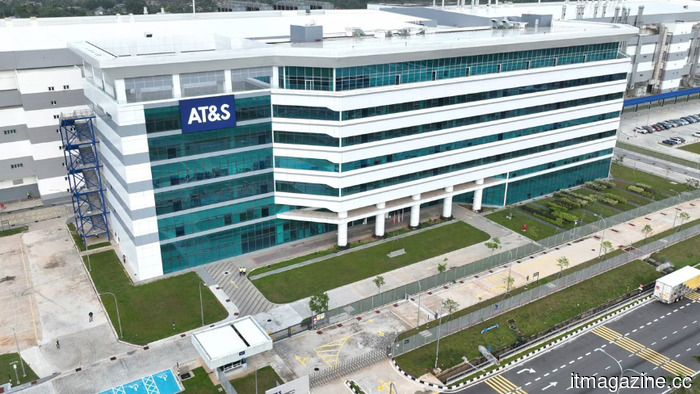 AT&S invests as much as €2 billion in Malaysia and China to capitalize on the AI chip surge.
Austria's AT&S plans to invest up to €2 billion to increase IC-substrate capacity in Malaysia and China for artificial intelligence and high-performance computing, supported by an agreement with AMD.
AT&S invests as much as €2 billion in Malaysia and China to capitalize on the AI chip surge.
Austria's AT&S plans to invest up to €2 billion to increase IC-substrate capacity in Malaysia and China for artificial intelligence and high-performance computing, supported by an agreement with AMD.
 Opinion: Who determines who is allowed to use a specific software?
On one Friday night, the most intelligent software in the world went offline at the request of a single government. While the order could be overturned, the precedent it set will remain.
Opinion: Who determines who is allowed to use a specific software?
On one Friday night, the most intelligent software in the world went offline at the request of a single government. While the order could be overturned, the precedent it set will remain.
 Sundar Pichai from Google opted for a positive outlook on AI at Stanford, yet graduates still chose to walk out.
Sundar Pichai from Google delivered the commencement address for Stanford's class of 2026, avoiding discussions on AI while students exited due to issues related to the Project Nimbus contract.
Fox purchases Roku in a $22 billion streaming investment.
Fox purchases Roku for $160 per share, which values the company at around $22 billion, in order to combine its live sports and news offerings with the platform that reaches 100 million streaming households.
Sundar Pichai from Google opted for a positive outlook on AI at Stanford, yet graduates still chose to walk out.
Sundar Pichai from Google delivered the commencement address for Stanford's class of 2026, avoiding discussions on AI while students exited due to issues related to the Project Nimbus contract.
Fox purchases Roku in a $22 billion streaming investment.
Fox purchases Roku for $160 per share, which values the company at around $22 billion, in order to combine its live sports and news offerings with the platform that reaches 100 million streaming households.
 Tesla provided European regulators with inaccurate self-driving safety information.
A review by Reuters revealed that Tesla provided self-reported FSD safety data to regulators in Sweden and the Netherlands, which researchers claim are misleading.
Tesla provided European regulators with inaccurate self-driving safety information.
A review by Reuters revealed that Tesla provided self-reported FSD safety data to regulators in Sweden and the Netherlands, which researchers claim are misleading.
NewCore secures $66 million to provide AI agents with a distinct identity.
NewCore has come out of stealth mode with $66 million in funding at a $300 million valuation, aiming to protect the identities of employees and AI agents, targeting competitors like Microsoft and Okta.