
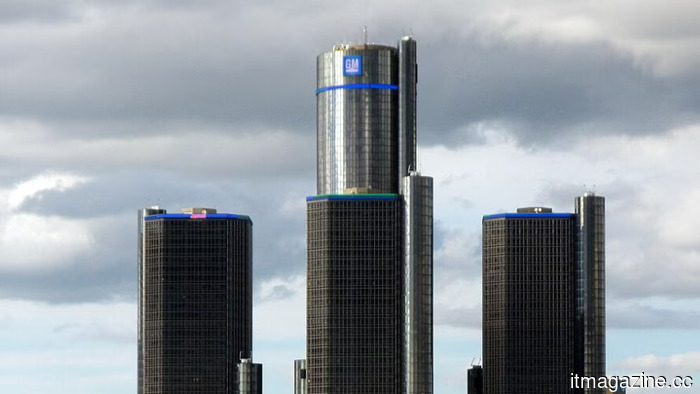
GM states that its autonomous vehicles will ultimately function as robotaxis.
GM's chief product officer has stated that the company's personal autonomy technology will grow to cover the robotaxi market, leaving open the possibility of entering the ride-hailing sector. In December 2024, General Motors shut down Cruise, its $10 billion robotaxi division. However, 18 months later, the chief product officer claims that GM's autonomous vehicles will ultimately be able to function as robotaxis. Sterling Anderson, former lead of Tesla's Autopilot, told Business Insider that GM's strategy for personal autonomy is on a path that seems destined to overlap with the robotaxi business model.
“Eventually, these two will come together. The areas we operate in are very similar to those of a robotaxi company,” Anderson explained. “At that point, the question is, ‘Why wouldn't we also provide a robotaxi-type service?’”
Anderson's strategy initiates with highway driving and then expands outward. GM is segmenting the driving experience, first focusing on long highways before moving to major roads and urban areas. The goal is that by the time the system can handle various types of roads, its coverage will be similar to what a dedicated robotaxi service requires.
The basis for this expansion lies in Super Cruise, GM's hands-free, eyes-on driver assistance system. In April, GM announced that customers had accumulated one billion hands-free miles using this feature across approximately 750,000 vehicles, covering 700,000 miles of North American roads. The company plans to implement eyes-off highway driving on the Cadillac Escalade IQ by 2028, enhancing Super Cruise from Level 2+ to Level 3 with lidar, radar, and cameras.
To develop this technology, GM has been discreetly reassembling the team it had previously disbanded. Reports indicate that the company has brought back around 100 former Cruise employees, including senior managers who have resumed their former roles. GM also hired Ronalee Mann, a previous executive at Cruise and Tesla, to oversee product operations under Anderson and recruited engineers from Nvidia, Uber, and Zoox.
This rehiring marks a turnaround from a difficult transition. GM purchased Cruise in 2016 for $581 million and invested over $10 billion in the division before its closure. The decision to shut down followed a 2023 incident in San Francisco where a Cruise robotaxi was involved in a collision dragging a pedestrian, leading California regulators to revoke the company's driverless license.
Anderson joined GM in May 2025 with a compensation package of $40 million and has since emerged as a possible successor to CEO Mary Barra. Before joining GM, he co-founded Aurora Innovation, which launched the first fully driverless trucking service in the US, operating between Houston and Dallas. His hiring indicated GM's commitment to autonomy even after stepping back from the dedicated robotaxi model.
The competitive environment has significantly changed since the collapse of Cruise. Waymo now provides over 500,000 paid rides weekly across 10 US metropolitan areas and is rolling out its more affordable sixth-generation Ojai robotaxi for further scaling. Tesla has begun a limited robotaxi service in Austin using a camera-only system. Amazon's Zoox operates around 50 robotaxis in San Francisco and Las Vegas.
Traditional automakers are also making moves. Hyundai-supported Motional relaunched a robotaxi service with Uber in Las Vegas in March and aims to offer fully driverless rides there by the end of 2026. Rivian struck a $1.25 billion agreement with Uber in March to deploy up to 50,000 autonomous R2 vehicles in 25 cities by 2031, beginning in San Francisco and Miami in 2028.
GM's approach is a slower, lower-risk alternative to establishing a separate robotaxi fleet. By first embedding autonomy in personal vehicles, the company avoids the significant capital costs associated with running its ride-hailing network while still gathering necessary driving data and regulatory approvals for future market entry. The one billion miles already driven with Super Cruise provides GM with a dataset that few competitors, aside from Tesla and Waymo, can match.
The effectiveness of this strategy hinges on execution speed. GM is aiming for eyes-off highway driving in 2028, coinciding with the anticipated deployment of Rivian’s autonomous R2s to transport Uber passengers. “If that’s the direction the world takes, our autonomous vehicles will also function as robotaxis,” Anderson stated.
Other articles
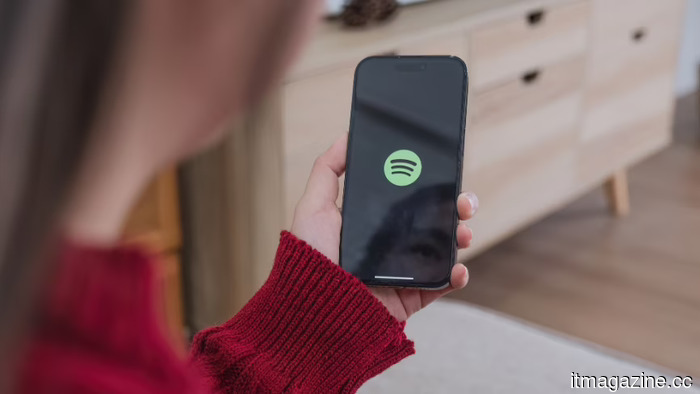 Spotify has taken down 57,000 counterfeit podcast episodes that were promoting the sale of illegal drugs following pressure from Congress.
Spotify removed 57,000 fraudulent podcast episodes and 3,500 accounts that were promoting illegal drugs following a US Senate inquiry that highlighted the extent of the issue.
Spotify has taken down 57,000 counterfeit podcast episodes that were promoting the sale of illegal drugs following pressure from Congress.
Spotify removed 57,000 fraudulent podcast episodes and 3,500 accounts that were promoting illegal drugs following a US Senate inquiry that highlighted the extent of the issue.
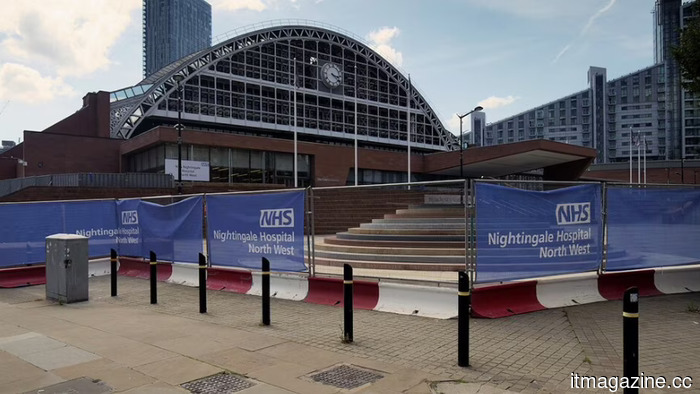 NHS England launches Microsoft 365 Copilot for 505,000 employees in the largest implementation of AI in healthcare.
NHS England is providing 505,000 clinicians and staff with access to Microsoft 365 Copilot following a trial involving 30,000 participants, which indicated an average time saving of 43 minutes per day.
NHS England launches Microsoft 365 Copilot for 505,000 employees in the largest implementation of AI in healthcare.
NHS England is providing 505,000 clinicians and staff with access to Microsoft 365 Copilot following a trial involving 30,000 participants, which indicated an average time saving of 43 minutes per day.
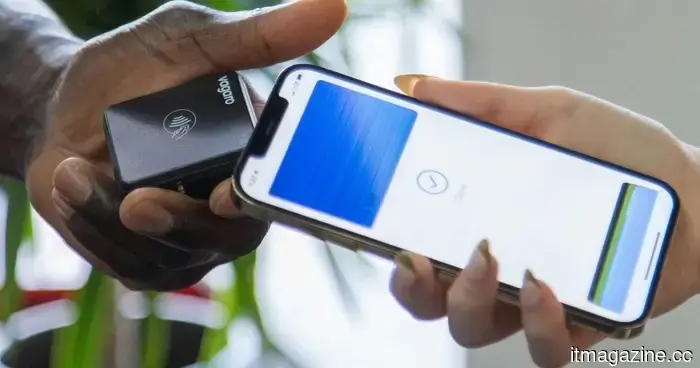 The Apple Pay update in iOS 27 will eliminate the need for you to search for the correct card before making a purchase.
Apple has revamped the Apple Pay checkout, allowing you to switch cards just by tapping on them, at last.
The Apple Pay update in iOS 27 will eliminate the need for you to search for the correct card before making a purchase.
Apple has revamped the Apple Pay checkout, allowing you to switch cards just by tapping on them, at last.
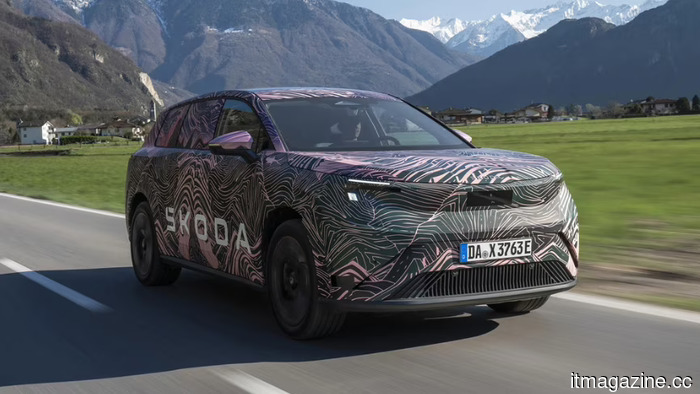 Skoda's Peaq is a seven-seater electric SUV that is priced several thousand less than the Kia EV9.
Skoda's Peaq flagship SUV features seven seats, a range of 600 km, and V2H charging, starting at approximately €50,000, which is cheaper compared to the Kia EV9 and Hyundai Ioniq 9.
Skoda's Peaq is a seven-seater electric SUV that is priced several thousand less than the Kia EV9.
Skoda's Peaq flagship SUV features seven seats, a range of 600 km, and V2H charging, starting at approximately €50,000, which is cheaper compared to the Kia EV9 and Hyundai Ioniq 9.
 You might get your first glimpse of the Steam Machine in just a few days.
According to a new leak, Steam Machine reviews may be published after June 23, and the console includes some unexpected features.
You might get your first glimpse of the Steam Machine in just a few days.
According to a new leak, Steam Machine reviews may be published after June 23, and the console includes some unexpected features.
 Fable 5 compared to GPT 5.5: Anthropic's model excelled in every benchmark, but then was withdrawn by the government.
Anthropic's Fable 5 outperformed OpenAI's GPT 5.5 in every significant AI benchmark before a US export control directive took it offline just three days after its release.
Fable 5 compared to GPT 5.5: Anthropic's model excelled in every benchmark, but then was withdrawn by the government.
Anthropic's Fable 5 outperformed OpenAI's GPT 5.5 in every significant AI benchmark before a US export control directive took it offline just three days after its release.
GM states that its autonomous vehicles will ultimately function as robotaxis.
GM's chief product officer, Sterling Anderson, states that the company's focus on personal autonomy will intersect with the realm of robotaxis, leaving possibilities open.